Iran protests Norway’s inaction over unauthorized Starlink operations
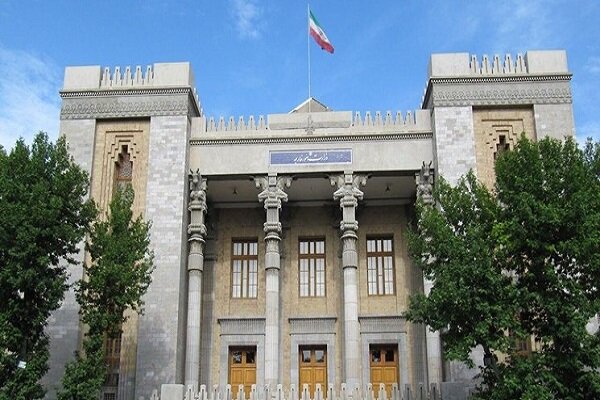
TEHRAN— Iran has formally protested to Norway over the continued operation of unauthorized Starlink satellite internet terminals inside Iranian territory, urging Oslo to take immediate steps to halt transmissions that violate Iran's sovereignty and national security.
Iranian Foreign Ministry Director General for International Peace and Security Mohammad Hassan-Nejad Pirkoohi summoned Norwegian Ambassador to Tehran Paul Bjornstad on Sunday and conveyed Tehran’s formal protest over Norway’s failure to take effective action against unauthorized Starlink operations, according to Iran’s Foreign Ministry.
During the meeting, Hassan-Nejad outlined the use of Starlink’s satellite communications infrastructure by the United States and Israel to support interventionist activities against Iran.
He said Tehran strongly objected to Norway’s continued failure to fulfill its responsibilities as the administration responsible for registering the Starlink satellite network with the International Telecommunication Union (ITU).
The Iranian official referred to decisions and conclusions reached by the ITU’s Radio Regulations Board (RRB) over the past several years, saying they require Norway to take appropriate measures to prevent unauthorized Starlink transmissions from operating inside Iranian territory.
ITU has examined the dispute since 2023
The dispute is not new and has been under consideration by the ITU’s Radio Regulations Board since 2023.
According to documents published by the ITU, Iran has repeatedly reported the continued operation of Starlink terminals on its territory without authorization. The Board has also repeatedly urged Norway and the United States to take appropriate measures to have unauthorized Starlink terminals in Iran disabled.
The ITU’s regulatory framework states that transmitting earth stations may operate within a country only when authorized by that country’s administration. The Board has specifically cited Article 18 of the Radio Regulations and Resolution 22 concerning the operation of transmitting earth stations.
At its 98th meeting, the Board concluded that there was evidence of unauthorized Starlink transmissions inside Iran and urged Norway to take all appropriate measures within its capacity to immediately cease such transmissions, including remotely disabling terminals where necessary. The Board also asked Norway and the United States to explain why it had not been possible to disable unauthorized terminals in Iran in the same way that Starlink terminals had reportedly been disabled in several other countries.
The Board subsequently maintained its position. At its 100th meeting, it noted Norway’s unwillingness to enforce earlier decisions requiring the immediate cessation of unauthorized Starlink transmissions, while also noting that Starlink had demonstrated the technical capability to identify and remotely disable terminals operating illegally in a particular area.
At its 101st meeting, the Board said the actions of Norway were not compliant with obligations under relevant ITU resolutions and Article 18 of the Radio Regulations. It nevertheless concluded that it did not have the authority to suspend the frequency assignments of satellite systems because of non-compliance by the notifying administration.
Iran calls for immediate action
Against this background, Hossein-Nejad told the Norwegian ambassador that Tehran had repeatedly followed up on the issue but had yet to see effective action.
He called on Norway to immediately convey and act upon Iran’s request for urgent measures to stop Starlink transmissions operating without authorization inside Iran.
The Iranian official also handed Bjornstad a formal diplomatic note of protest, formally placing Tehran’s objections on record.
The issue has particular significance because Starlink terminals are relatively small and portable, making it difficult for Iranian authorities to identify and locate every unauthorized terminal across the country. The ITU has acknowledged this difficulty, while also noting that the satellite operator possesses the capability to geolocate terminals and remotely disable them.
In its latest published consideration of the matter, the ITU’s RRB said the issue had remained unresolved since its 92nd meeting in March 2023. It again called on Norway and the United States to take appropriate action to have the Starlink operator disable unauthorized transmissions within Iranian territory, while also asking Iran to continue efforts, to the extent possible, to identify and deactivate unauthorized terminals.
The dispute therefore extends beyond a bilateral disagreement between Tehran and Oslo, touching on the international regulation of satellite communications, the obligations of administrations responsible for satellite network filings, and the ability of satellite operators to prevent services from being provided in territories where they have not been authorized.
For Tehran, however, the matter has an additional national-security dimension. Iranian officials have repeatedly accused the United States and Israel of exploiting communications and satellite technologies in support of activities directed against the Islamic Republic. The latest diplomatic protest consequently combines a regulatory demand with a broader objection to the use of foreign technological infrastructure inside Iran's territory without authorization.
Tehran is now calling on Norway to translate the ITU’s repeated recommendations and decisions into concrete measures and to ensure that Starlink transmissions from unauthorized terminals inside Iran are brought to an immediate halt.
Starlink could become a military target
Iran successfully disabled Starlink terminals during events last winter and possesses additional technologies to identify and block their activities, Supreme Council of Cyberspace Secretary Mohammad Amin Aghamiri said. Speaking at an internet businesses conference, he warned that satellite communications infrastructure could become a legitimate military target if used as an instrument of war.
Aghamiri also said Iranian cybersecurity authorities contained the most recent cyberattacks, keeping vital public services operational while minimizing disruptions and public concern during the conflict.
Leave a Comment