Food security assured for next six months, deputy minister says
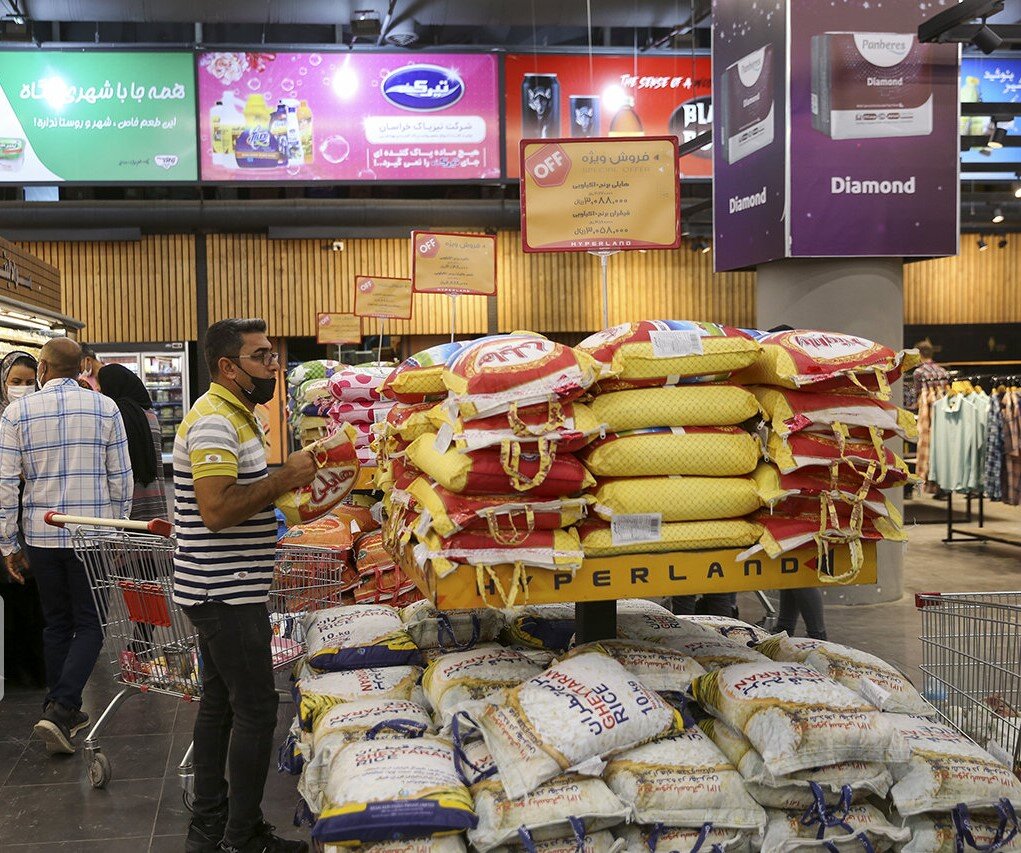
TEHRAN – Iran has enough stocks of essential goods to meet domestic demand for the next six months, even if all of the country's borders were to close, a deputy agriculture minister said, describing current reserves as the strongest in two decades.
Mohammadreza Talaei, deputy minister for trade development at the Agriculture Ministry, said the country's stocks of essential goods were at an “ideal” level, with around 5.5 million tons of commodities currently held at ports.
Speaking at a ceremony marking the departure of the former head and the appointment of an acting head of Jahad Esteghlal Institute, Talaei said the successful management of imports of four million tons of goods without major disruption demonstrated the organization's operational capacity, particularly compared with supply crises between 2015 and 2017 involving commodities such as wheat.
He said Jahad Esteghlal had also successfully countered market manipulation and prevented dumping, in which goods are sold below their production cost. When corn prices fluctuated between 50,000 and 700,000 rials per kilogram, for example, careful management of imports and timely market supply helped keep prices around 580,000 rials, he added.
Talaei also praised Parviz Jafari's management of the Government Livestock Affairs Support Company, saying effective management of the supply of protein products had helped keep market prices balanced despite inflationary pressures.
He said the country's current reserves were unprecedented in the past 20 years and would ensure food security and the supply of essential goods for six months, even in the unlikely event of all borders being closed.
Livestock support company clears debts to importers
Parviz Jafari, the company's former head, presented a report on his 15 months in office, saying he had transformed its heavy liabilities and depleted reserves into quality stocks while clearing its debts.
When the 14th administration took office, the company had no soybean meal reserves, only 120,000 tons of corn and 30,000 tons of soybeans, and foreign-currency debts exceeding 60 trillion tomans, he said.
Today, the company's outstanding foreign-currency obligations have fallen to less than one percent, while it holds high-quality reserves and owes no money to importers, Jafari added.
Masoud Namazi, the former head of Jahad Esteghlal Institute, said the institution's profit had climbed to 18 trillion rials ($36 million) last year from 900 billion rials.
He forecast a profit of more than 60 trillion rials ($120 million) over the next 10 months.
Namazi added that all outstanding international obligations had been settled over the past two years and that all legacy cases had been resolved.
Seyed Saeed Rad, head of the Government Trading Corporation of Iran, said managing trade and supply chains during wartime and economic crises had been particularly challenging.
He described managing the poultry production chain and importing 4 million tons of goods over the past two and a half years as strategic achievements, saying the scale of the operations showed that state trading involved far more than routine commercial activity.
Importing four million tons of goods was equivalent to managing a fleet of 70 ships, each with a capacity of 70,000 tons, Rad said. The operation involved substantial additional costs, including inspections at origin and destination, food and drug standards, quarantine, veterinary procedures, flag fees and customs duties, alongside the complexities of foreign-currency allocation and banking procedures.
He praised the Livestock Affairs Support Company for supplying essential commodities such as corn, barley and meat, saying its management of poultry production had helped prevent a major disruption in the production chain.
Akbar Fathi, the Agriculture Ministry's deputy for planning and economic affairs, said the ministry had faced one of the most difficult periods in the country's economic history over the past two years, amid intensified sanctions, two wars and the implementation of economic reforms, including the removal of preferential exchange rates.
He said the Livestock Affairs Support Company had played a key role by managing strategic reserves and building stocks beyond expected levels, thereby countering claims of shortages. The company had also successfully implemented a contract-based poultry production program during the difficult period of exchange-rate liberalization.
EF/
Leave a Comment