Rediscovering Dr. Abdolhossein Zarrinkoub: A Scholar Who Shaped Persian Cultural Studies
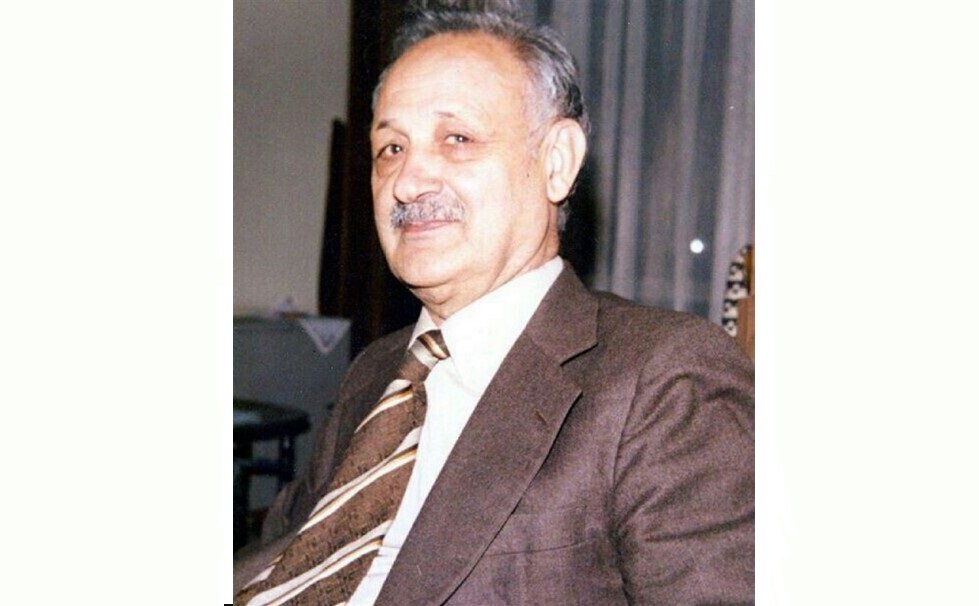
For readers, students, and researchers around the globe seeking a profound entry into Eastern culture, Middle Eastern history, and Persian literature, few scholars provide as illuminating a gateway as Dr. Abdolhossein Zarrinkoub (1923–1999). A preeminent Iranian historian, literary critic, Islamic scholar, and polymath, Zarrinkoub dedicated more than five decades of his life to bridging the wisdom of classical Eastern heritage with modern comparative humanities.
Author of over fifty books and hundreds of research articles, Zarrinkoub revolutionized the study of Persian poetics, Islamic historiography, and mystical philosophy. His groundbreaking scholarship offers an authentic, rigorous, and deeply humanistic invitation for international audiences and students of Eastern languages to discover the rich cultural, literary, and historical legacy of Iran and the wider Islamic world.
From Traditional Learning to Western Thought
Abdolhossein Zarrinkoub was born on March 19, 1923 (late Esfand 1301 SH) in the historic city of Borujerd, located in Lorestan province in western Iran. Raised in a devout family, his father, Abd-al-Karim, originally worked as a goldsmith (zargar) before transitioning to horticulture and farming out of religious scrupulosity (makruh). His father regularly hosted preachers, religious scholars, and reciters of Shi'ite elegiac literature (rawzah-khvani) in their home, exposing the young Zarrinkoub early on to classical Arabic, theology, and Islamic history.
At his father’s encouraging, Zarrinkoub pursued traditional Islamic clerical studies (talabagi) at the Bahr al-Ulum seminary (Madrasa-ye Nurbakhsh) in Borujerd under Shaikh Ali Jawaheri. When the seminary closed in 1940, he moved to Tehran to complete his secondary education at Dabirestan-e Marvi. In Tehran, he deepened his study of dialectical theology (ʿelm-e kalam) and Islamic philosophy at the traditional Khan Marvi and Mohammadiva seminaries, learning under the renowned encyclopedic scholar Allama Abu'l-Hasan Sha'rani. Sha'rani demonstrated how traditional Islamic learning could be harmonized with an appetite for foreign languages and global knowledge.
Parallel to his seminary studies, Zarrinkoub taught himself introductory French and English. He also pursued Middle Persian (Pahlavi) and Avestan language studies. His early independent reading introduced him to the evolutionary social theories of British philosopher Herbert Spencer and the comparative anthropological frameworks of James George Frazer’s “The Golden Bough.”
This unique synthesis of traditional Eastern poetics and Western social theory inspired Zarrinkoub’s first monograph, “Falsafeh-ye She'r ya Tarikh-e Tatawwor-e She'r va Sha'eri “(“The Philosophy of Poetry or the History of the Development of Poetry”), published in Borujerd in 1944 (1323 SH) when he was just twenty-two years old. The book applied evolutionary frameworks to the development of Persian poetic forms. Reviewed enthusiastically in the prestigious journal “Sokhan” by prominent scholar Parviz Natel Khanlari, the young author was praised for his creative adaptation of Western critical sources. Khanlari subsequently introduced Zarrinkoub to the celebrated modernist fiction writer Sadeq Hedayat.
A Distinguished Career and a Lifelong Partnership
In 1945, after achieving the highest score nationwide on the university entrance examinations for both the Faculty of Islamic Studies (Ma'qul o Manqul) and the Faculty of Letters and Humanities at the University of Tehran, Zarrinkoub chose the Faculty of Letters for his degree. He earned his Bachelor of Arts degree in Persian Language and Literature in 1948 while teaching in secondary schools across Borujerd, Khorramabad, and Tehran, and editing the weekly journal “Mehregan.” In 1955 (1334 SH), Zarrinkoub completed his doctoral dissertation, “Naqd al-She'r: Tarikh va Usul-e An” (“Literary Criticism: Its History and Principles”), under the mentorship of the legendary scholar Badiozzaman Forouzanfar.
A defining milestone in Zarrinkoub's life occurred in August 1953 (Mordad 1332 SH) with his marriage to Dr. Qamar Arian (1922–2012). The two had first met as graduate classmates in the doctoral program at the University of Tehran. Qamar Arian was a pioneering female scholar who scored second nationwide in the doctoral entrance examinations. She completed her doctoral thesis on “Chehreh-ye Masih dar Adab-e Farsi” (“The Representation of Christ in Persian Literature”) under Ali-Asghar Hekmat, exploring Christian motifs, iconography, and terminology across classical Persian poetry.
Having no children, Zarrinkoub and Arian turned their home into a dedicated research sanctuary. Their marriage evolved into a celebrated five-decade intellectual partnership marked by mutual editorial consultation, joint writing, and extensive international academic travel across Europe, North America, India, Pakistan, and the Middle East. In an act reflecting their joint commitment to preserving culture for future generations, the couple bequeathed their personal library of over 6,500 rare books, manuscripts, and academic journals to the Center for the Great Islamic Encyclopaedia (CGIE) in Tehran.
From National History to a Universal Vision
Zarrinkoub’s historiographical and literary career is distinguished by several landmark monographs that reflect a maturing methodological vision:
- “Do Qarn Sokut” (“Two Centuries of Silence”): First serialized in “Mehregan” and published as a book in 1951 (1330 SH), this celebrated work examined the two centuries in Iran following the 7th-century Arab-Muslim conquest up to the rise of the Tahirid Dynasty. Written during a period of intense mid-century nationalism, the first edition presented the post-conquest era as a time of national eclipse and cultural disruption. However, in a famous self-critical preface to the revised 1957 (1336 SH) second edition, Zarrinkoub candidly acknowledged his earlier emotional bias and youthful exuberance. He clarified that by "silence," he specifically referred to the eclipse of written Persian prose by Arabic in formal administrative contexts, rather than social or intellectual stagnation. The book was later translated into English by Paul Sprachman (“Two Centuries of Silence,” Mazda Publishers, 2017).
- “Kar-nameh-ye Islam” (“The Record of Islam”): Published in 1969 (1348 SH), this masterwork marked a major evolution in Zarrinkoub's historical outlook. Diverging from narrow nationalist perspectives, Zarrinkoub celebrated Islamic civilization as a cosmopolitan, universal culture. He emphasized its spirit of scientific tolerance (tasamuh), open inquiry, and capacity to integrate Persian, Greek, Syriac, and Indian heritages into a flourishing global renaissance.
- “Naqd-e Adabi” (“Literary Criticism”): Published in two volumes in 1959 (1338 SH) based on his doctoral thesis, this work revolutionized Persian literary studies. Zarrinkoub critiqued traditional formalist rhetoric and anecdotal biographies (tadhkirahs), introducing systematic analytical methodologies drawing from history, aesthetics, psychology, and sociology.
- “Farar az Madrasah” (“Escape from the Madrasa”): Published in 1974 (1353 SH), this intellectual biography explored the life and existential crisis of medieval theologian Abu Hamid al-Ghazali, tracing his journey from institutional dogma toward experiential Sufi mysticism. The book was later translated into Turkish as “Medreseden Kaçış” (2007).
- Monographs on Mysticism and Classic Poets: Zarrinkoub authored definitive biographical and analytical studies on key pillars of Persian literature, including Hafez (“Az Kucheh-ye Rendan”, 1970), Nezami Ganjavi (“Pir-e Ganjeh dar Jostoju-ye Nakojabad”), and Mansur al-Hallaj (“Sho'leh-ye Tur”). His collection “Ba Karevan-e Holleh” introduced twenty-eight major classical Persian poets to students and general readers.
- Rumi Studies (Mowlana-pazhuhi): Zarrinkoub produced an influential trilogy on Jalal al-Din Rumi: “Serr-e Ney” (“The Secret of the Reed,” 2 vols., 1986), a detailed commentary on the Masnavi that won Iran's Book of the Year Award; “Bahr dar Kuzeh” (“Sea in a Jug,” 1987), an aesthetic study of Rumi's allegories; and “Pelleh Pelleh ta Molaqat-e Khoda” (“Step by Step up to Union with God,” 1991), a spiritual biography of Rumi. The biography was translated into English by Majdoddin Keyvani (Mazda Publishers, 2009).
Zarrinkoub on the International Academic Stage
Dr. Zarrinkoub’s fluency in classical Eastern languages alongside English, French, German, and Italian positioned him as a vital bridge between Eastern academic traditions and Western scholarship. Early in his career, he translated key European works into Persian, including Aristotle’s “Poetics” (“Fan-e She'r,” 1958), Verdun-Léon Saulnier’s treatises on medieval and Renaissance French literature, Félicien Challaye’s “Métaphysique,” and Vladimir Minorsky’s commentary on Khaqani’s Christian Qasida.
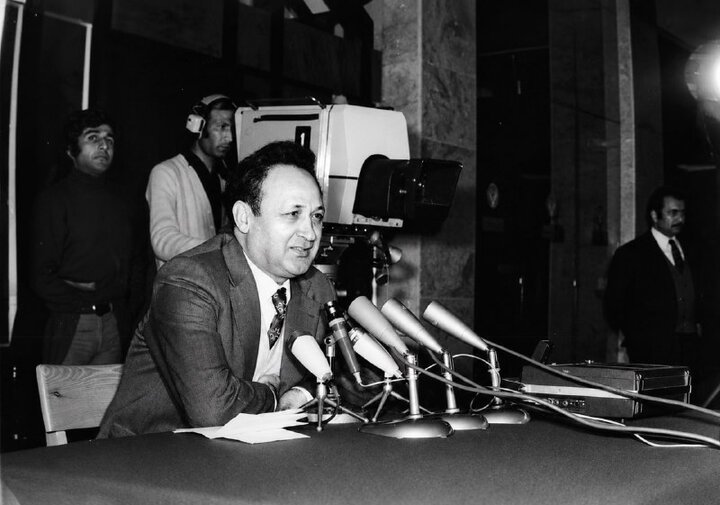
Zarrinkoub was appointed associate professor at the University of Tehran in 1956 (1335 SH) and full professor in 1960 (1339 SH), teaching Islamic history, religions, theology, and Sufism. Between 1968 and 1971 (1347–1349 SH), he served as a visiting professor of Iranian studies and Islamic history at Princeton University and the University of California, Los Angeles (UCLA). He also lectured at Oxford University, the Sorbonne, and at international conferences in Geneva, Vienna, New Delhi, Baghdad, Munich, and Paris.
His international publications include:
- The Cambridge History of Iran: Author of Chapter 1, "The Arab Conquest of Iran and its Aftermath," in Volume 4 (The Period from the Arab Invasion to the Saljuqs, Cambridge University Press, 1975).
- Reference Encyclopedias: Author of foundational entries for Brill's Encyclopaedia of Islam, the Encyclopædia Iranica, and Gholam-Hossein Mosaheb's Dayerat al-Ma'aref-e Farsi.
- International Monographs: Author of Nezami: A Lifelong Quest for a Utopia, published in Rome in 1977.
“Neither East nor West, but Human”: A Legacy for a New Generation
Zarrinkoub summarized his overarching scholarly ethos in the motto "Neither Eastern, Nor Western — Human" (Nah Sharqi, Nah Gharbi — Ensani). He rejected both insular traditionalism and uncritical Westernization (Gharbzadegi), advocating instead for an open, self-critical, and empathetic engagement with universal human heritage.
For students of Persian, Arabic, and Middle Eastern languages, reading Zarrinkoub offers an invaluable educational experience. His writing combines rigorous academic evidence with an elegant prose style, making complex historical, theological, and poetic concepts accessible without sacrificing scholarly precision.
Dr. Zarrinkoub passed away in Tehran on September 15, 1999 (24 Shahrivar 1378 SH) at the age of seventy-seven due to heart and eye ailments. He was laid to rest in the Artists' Section of Behesht-e Zahra Cemetery in Tehran, where his wife Dr. Qamar Arian was buried beside him thirteen years later.
Today, his extensive body of work stands as a testament to a life dedicated entirely to learning, teaching, and humanistic understanding—a timeless invitation for global readers to explore the poetry, history, and spirit of Iran.
References
Afshar, Iraj. "ʿAbd al-Ḥosayn Zarrinkub." Nama-ye Farhangestan 4, no. 2 (1999): 7–20.
- Arian, Qamar. "Yek Omr Zendagi-ye Farhangi" ["A Lifetime of Cultural Life"]. Interview by Mina Mousavi. Ettela'at / Cultura, 2010.
- Center for the Great Islamic Encyclopaedia (CGIE). "Zarrinkoub, Abdolhossein." Great Islamic Encyclopaedia, Vol. 26. Tehran: CGIE Publications, 2025.
- Ehteshami, Azin. "Historical Perception of Architecture and Cultural History Approach." Art and Design Review 6, no. 2 (2018): 76–95. https://doi.org/10.4236/adr.2018.62008.
- Kavak, Mümine Selime. "Medreseden Kaçış: İmam Gazzâlî'nin Hayatı, Fikirleri ve Eserleri, yazan Abdülhüseyin Zerrinkub" ["Escape from the Madrasa: The Life, Thought, and Works of Imam al-Ghazali by Abdolhossein Zarrinkoub"]. MetaScientia: Journal of the History and Philosophy of Science 1, no. 2 (2025): 485–495. https://doi.org/10.5281/zenodo.18064447.
- Mirsepassi, Ali, and Tadd Graham Fernée. The Intellectual Thought of Al-Ghazālī. Cambridge: Cambridge University Press, 2024. https://doi.org/10.1017/9781009538114.
- Noorniya, Noormohamad, Ahmad Razi, and Alireza Nikooyi. "Theoretical Sources of Literary Criticism of Afghanistan." New Literary Studies 58, no. 1 (2025): 45–71. https://doi.org/10.22067/jls.2025.90140.1630.
- Shohani, Siavash. "Do Ta'vil az Yak Tamaddon: Bazkhvani-ye Do Asar-e Abdolhossein Zarrinkoub" ["Two Interpretations of One Civilization: A Re-reading of Two Works by Abdolhossein Zarrinkoub"]. History and Islamic Civilization 5, no. 10 (2009): 157–200.
- Sosar, Ayşe. "Modern İran’da Milliyetçi Tarih Yazımına Bir Örnek: Do Karn Sükût" ["An Example of Nationalist Historiography in Modern Iran: Do Qarn Sokut"]. Şarkiyat Mecmuası - Journal of Oriental Studies 45 (2024): 67–94. https://doi.org/10.26650/jos.1498138.
- Sprachman, Paul. "ZARRINKUB, ʿABD-AL-ḤOSAYN." Encyclopædia Iranica, online edition, December 13, 2021. http://www.iranicaonline.org/articles/zarrinkub-abd-al-hosayn.
- Tofighi, Fatima. "A Reassessment and Critique of the East-West Discourse in the Thought of Iranian Contemporary Scholars of Religion, with Emphasis on Second Pahlavi Era." Iranian Studies 13, no. 1 (2023): 1–20. https://doi.org/10.22059/jis.2023.336408.1071.
- Zarrinkoub, Abdolhossein. Step by Step up to Union with God: Life, Thought and Spiritual Journey of Jalal-al-Din Rumi. Translated by Majdoddin Keyvani. Costa Mesa, CA: Mazda Publishers, 2009.
- Zarrinkoub, Abdolhossein. Two Centuries of Silence: An Account of Events and Conditions in Iran During the First Two Hundred Years of Islam, from the Arab Invasion to the Rise of the Tahirid Dynasty. Translated by Paul Sprachman. Costa Mesa, CA: Mazda Publishers, 2017.
Leave a Comment