Iran seeks deeper ties with neighbors, puts Caucasus and Central Asia in focus
TEHRAN — Iran is stepping up efforts to expand political, economic and people-to-people engagement with neighboring and friendly countries, with recent high-level contacts with Azerbaijan and Uzbekistan highlighting Tehran’s emphasis on closer ties with its northern neighbors and partners across the Caucasus and Central Asia.
Iranian President Masoud Pezeshkian has repeatedly identified relations with neighboring, friendly and like-minded countries as a priority of Tehran’s foreign policy. The latest diplomatic activity with Baku and Tashkent has given fresh impetus to that approach, focusing particularly on trade, investment, transportation, energy, cultural exchanges and the implementation of existing agreements.
Azerbaijan: Turning a shared border into a bridge
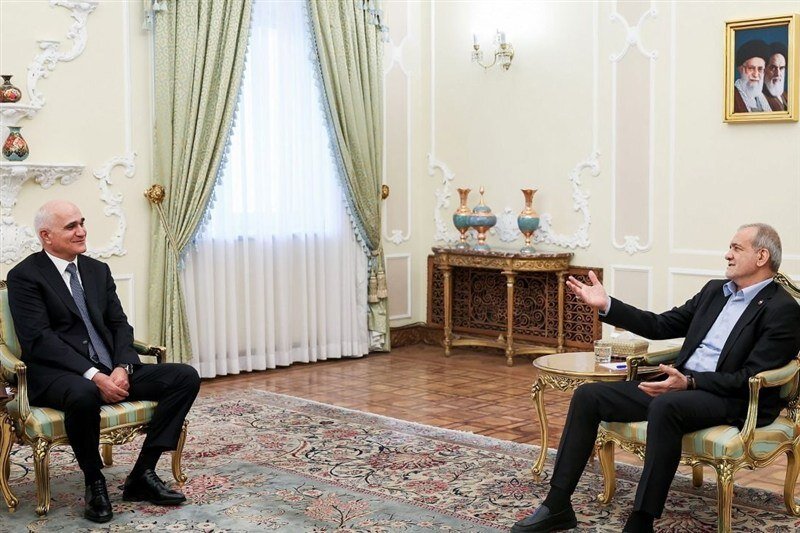
In Tehran on Tuesday, Pezeshkian told Azerbaijani Deputy Prime Minister Shahin Mustafayev that the Republic of Azerbaijan occupies a special position in Iran’s neighborhood policy, stressing the need to make full use of the opportunities provided by the two countries’ shared geography and common ties.
Pezeshkian said the common border should be regarded as an opportunity for greater interaction rather than an obstacle to closer relations. He described the two countries as relatives and brothers and called for broader cooperation across scientific, cultural, economic, political and security fields.
The Iranian president also stressed the importance of transportation and communications networks in bringing the two countries and their peoples closer together, calling for the expansion and integration of land, air and rail connections.
The emphasis on connectivity is significant given Iran’s geographical position as a link between the Persian Gulf, the Caucasus, Central Asia and wider Eurasian markets. Strengthening cross-border infrastructure and transit routes can provide a practical foundation for expanding trade and economic exchanges while reinforcing Iran’s role in regional connectivity.
Mustafayev, meanwhile, briefed Pezeshkian on his talks with several Iranian ministers and reaffirmed Baku’s determination to develop relations with Tehran. He stressed the need to follow up on existing agreements and understandings, particularly in transportation and communications, and to make greater use of available capacities.
The Azerbaijani delegation’s visit comes amid continued high-level engagement between the two countries. On September 29, Azerbaijani President Ilham Aliyev also spoke by phone with Pezeshkian, with the two leaders recalling their recent meeting in Bishkek and noting that an Azerbaijani government delegation was in Iran for talks on bilateral issues.
Uzbekistan: Expanding the northern and central Asian dimension
At the same time, Pezeshkian and Uzbek President Shavkat Mirziyoyev discussed ways to broaden bilateral relations during a telephone conversation on Tuesday.
Pezeshkian said Iran was determined to strengthen ties with Uzbekistan through joint efforts and called for greater use of the two countries’ existing capacities. He also emphasized the importance of expanding bilateral cooperation and strengthening people-to-people contacts.
Mirziyoyev said relations between Tehran and Tashkent were steadily expanding, particularly in economic, investment, cultural and humanitarian fields, and stressed the importance of continued diplomatic exchanges and consultations. The two presidents also exchanged views on regional issues and upcoming events.
The conversation underscores the broader geographical scope of Iran’s neighborhood diplomacy. While Azerbaijan represents a key dimension of Iran’s engagement with the South Caucasus, Uzbekistan provides an important avenue for strengthening ties with Central Asia, a region where Iran seeks to expand trade, transit and economic cooperation.
Connectivity as a Tool of Regional Engagement
For Tehran, the drive to strengthen relations with northern neighbors is not limited to political dialogue. Transportation corridors, border infrastructure and economic connectivity are increasingly viewed as practical instruments for turning geographical proximity into sustained cooperation.
Iran has also emphasized the implementation of bilateral agreements with Armenia, particularly those related to transit routes. During a meeting with Armenian Prime Minister Nikol Pashinyan on the sidelines of the UN General Assembly in New York this month, Pezeshkian said developing cooperation with the region and neighboring countries remained a firm policy of Tehran.
Iranian Foreign Minister Abbas Araghchi has similarly said that greater priority has been given to neighboring countries under the Pezeshkian administration, with the stated objective of ensuring peace and security in Iran’s immediate surroundings and creating opportunities for economic, political and cultural cooperation.
The approach reflects Tehran’s longstanding geographic reality: Iran shares borders with the South Caucasus, Central Asia through regional transit networks, the Persian Gulf and South Asia, giving it access to several major trade corridors linking Asia, Europe and the Middle East.
Against this backdrop, closer engagement with Azerbaijan, Armenia, Uzbekistan and other neighboring and regional states forms part of Iran’s broader effort to expand regional cooperation, diversify economic and diplomatic partnerships, and capitalize on its geographic position.
For Tehran, the emphasis is increasingly on converting proximity into connectivity and connectivity into sustained economic and political interaction — particularly across the Caucasus and Central Asia, where transport corridors and regional trade can serve as tangible foundations for closer relations.
Leave a Comment