US sanctions the entire ICC to shield American and Israeli war criminals
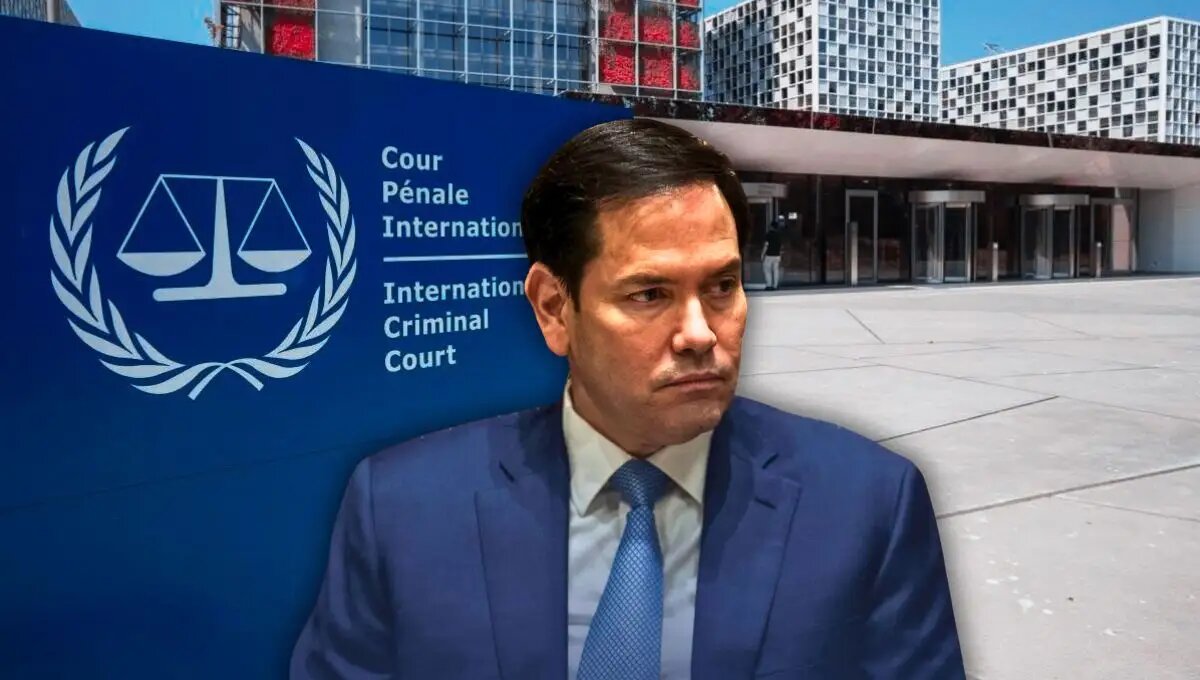
TEHRAN — The United States placed the International Criminal Court under sanctions on Friday, October 9, dropping any pretense that its quarrel was limited to individual judges and prosecutors.
Secretary of State Marco Rubio announced the measure in a video statement that left little room for interpretation. “Either the ICC will end its threats, or we will end the ICC,” he said.
Rubio called the tribunal a “rogue court” and promised to “ban transactions” with it, “cutting off their resources and crippling its ability to operate.”
He said Trump “will never allow the International Criminal Court to prosecute Americans,” then told allies who sit on the court while relying on American troops for their defense to “rein in the court.”
A blacklist with a clock attached
The Treasury Department added the court to its list of Specially Designated Nationals. All property the ICC holds in the United States is blocked, and no one under American jurisdiction may supply it with funds, goods, or services.
The court has about 900 staff. Banks, insurers, and software vendors that keep serving it now risk penalties, and since banks tend to over-comply with sanctions, the real damage could exceed the legal text, up to exclusion from dollar transactions.
Washington attached a 180-day general license covering maintenance of operations, with narrower carve-outs for cloud and software services, the pension plan and detainees.
The State Department says the window exists so member states can show “meaningful progress” on “fundamental U.S. concerns,” and that it can be adjusted if they fail. Critics see an ultimatum with a calendar.
The court prepared for this, swapping Microsoft for Germany’s openDesk, dropping insurer Axa and paying staff months ahead. More than 90 percent of its processes had relied on U.S. technology. Mark Kersten of the University of the Fraser Valley warned that “the worst-case scenario has come about.”
Diplomats at the court’s annual assembly said in December that the administration had pressed it to drop its investigations in Palestine and Afghanistan, and to amend the Rome Statute so nationals of non-members, meaning Americans and Israelis, could never be prosecuted. The assembly refused, though it did not name Washington.
Condemnation and political messages
Hours earlier, the Nobel Peace Prize went to Navi Pillay, a South African jurist and former ICC judge who oversaw the 2025 UN report concluding that Israel’s actions in Gaza constituted genocide.
The committee said judges and institutions of international law are “under political attack.” Law professor William Schabas called the prize “a kind of polite endorsement” of that report. “There’s often a political message lurking behind the award of the Nobel Peace Prize, and I think this year is no exception,” he said.
The ICC called the sanctions “an assault on the rule of law and on the very foundations of the international legal order” and warned that “the Court cannot stand alone.” UN Secretary-General Antonio Guterres said he was “deeply alarmed,” and rights chief Volker Turk called the measures “unacceptable.”
Human Rights Watch’s Philippe Bolopion said the aim is to “destroy” the court and “shield U.S. and Israeli officials from facing charges.” Amnesty International said this “existential attack must fail.”
Israel cheered. “Thank you for your leadership,” Netanyahu wrote, calling the ICC “a political body that poses a mortal threat to law-abiding democracies worldwide.” The charge comes from a man the court wants arrested.
Britain, Denmark, France, Germany, Italy, the Netherlands, Canada and Japan said they “regret and strongly disagree.” Belgium’s Maxime Prevot said “Europe must act” and urged activating the EU Blocking Statute, which would bar European firms from complying with the sanctions.
Palestinian rights groups say similar calls have gone unanswered since April, calling that “complicity through inaction.”
The warrants behind it
The trigger came in November 2024, when judges issued arrest warrants for Israeli Prime Minister Benjamin Netanyahu and former War Minister Yoav Gallant over war crimes and crimes against humanity in Gaza, chiefly the use of starvation as a method of warfare.
Neither Israel nor the United States belongs to the court. The ICC has long held that crimes committed on the territory of a member state, Palestine included, fall within its reach whatever the suspect’s passport says.
Washington’s second grievance is Afghanistan, where an inquiry could touch CIA torture at secret sites in Romania, Lithuania and Poland. The court has deprioritized that strand since 2021 and has never sought to prosecute an American.
That has not slowed the campaign. Executive Order 14203, signed February 6, 2025, opened the way. Sanctions fell on 13 ICC officials, among them half of the 18 judges and former prosecutor Karim Khan, then on UN Special Rapporteur Francesca Albanese in July 2025 and on the Palestinian groups Al-Haq, Al Mezan and the Palestinian Center for Human Rights in September.
Last month Trump told the UN General Assembly the court was an “evil group of people” and demanded that members withdraw.
A 2002 law, nicknamed the “Hague Invasion Act,” authorizes the president to use “all means necessary and appropriate” to free certain Americans and allied personnel detained by the court. The threat of force has thus been enshrined in U.S. law against a tribunal that has never prosecuted a U.S. citizen.
Leave a Comment