In Gaza, floods finish what the bombs started
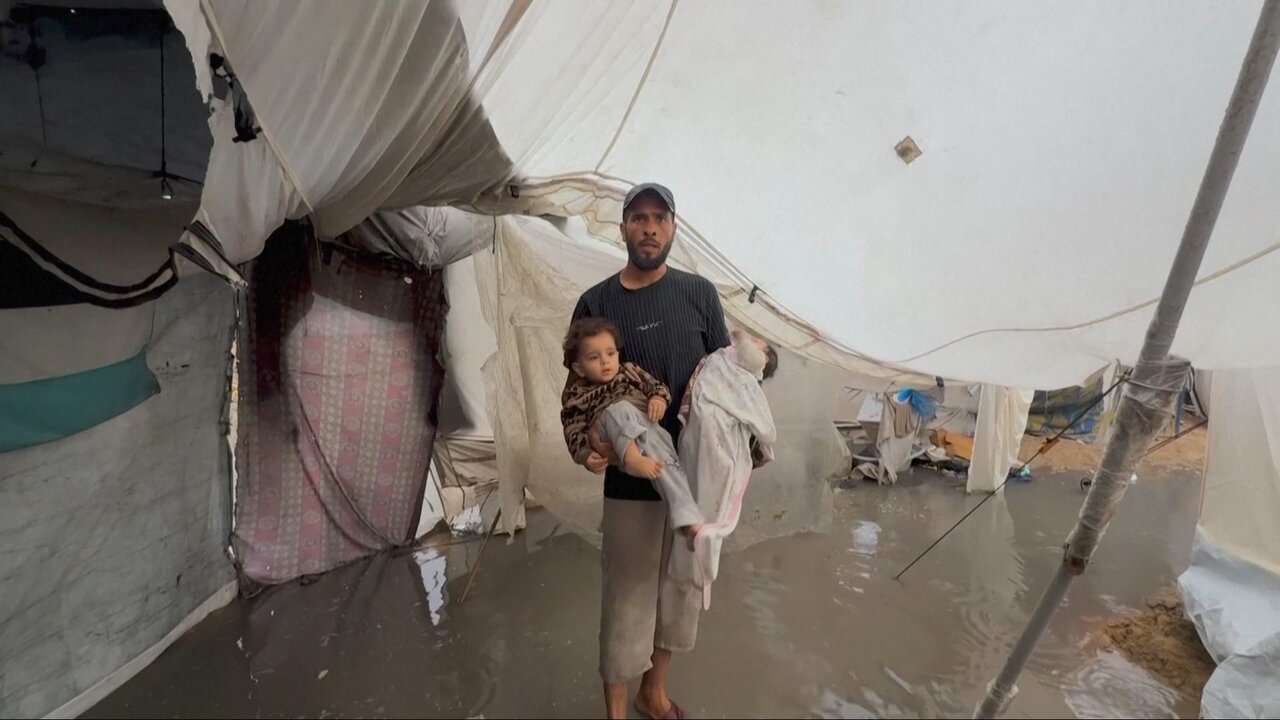
TEHRAN – When a shelter collapses in Gaza, the casualties are counted, the world moves on and the real questions go unanswered.
Most coverage treats the flooding in Gaza as a natural disaster layered onto a humanitarian one. That framing misses what the rain exposes. This is not a population caught in bad weather. It is a population the occupying regime has driven from its homes, now living in tents that were never built to keep out a storm, in a territory where the regime has destroyed most of the housing stock and infrastructure.
A tent is not a home, even if people adapt to it. Neither is it a solution to reconstruction when distributed in large numbers. It is a marker of an emergency that was supposed to end with a ceasefire.
That ceasefire was guaranteed by several states that could not deliver the guarantee, and by a guarantor like the United States, which openly backs the occupying regime with money, weapons, and logistics. The tents are the shape the response has taken.
The rain becomes more than weather here. The international system has settled for managing the disaster rather than solving it. Much of the humanitarian response has come to resemble a media spectacle, with events and activities nowhere near the top of the list of priorities. Global calls for reconstruction, for the evacuation of the sick, for healthcare, and for adequate shelter no longer carry weight. These failures are not marginal. They are the response itself, and they reveal a choice: to contain the catastrophe rather than end it.
The result is a population exposed to the regime’s bombardment and to the elements alike, in shelters that can protect it from neither. Displaced people in Gaza have lost their homes and the basic conditions that make a shelter livable. They face continuous aggression and a tightening squeeze on the population.
A family can no longer ask whether it will get a new tent or replace one piece of fabric with another. The real question is whether a person can live the rest of their life in a place that cannot protect them from the weather, or from the bullets and missiles the regime keeps firing.
This is where the flooding stops being weather and becomes policy. The regime’s bombardment destroyed the homes; its blockade has kept the tents from becoming anything more; and now the rain is allowed to finish the job. None of this is neglect. It is the design of the conditions in which Palestinians are meant to conclude that Gaza is no longer livable, that leaving is the only remaining option.
Allowing displacement shelters to flood serves the regime’s ethnic cleansing policy as much as the bombs did. What it wants is not a population sheltering in Gaza but a population that gives up on it.
It will not get that. Palestinians have endured more than three years of this genocide, through the worst of it, and they have not broken. They are still in Gaza, still rebuilding what can be rebuilt and rejecting the policies being set for them by the Zionist regime.
Gaza’s displacement camps fill with water and the rubble keeps growing, and still the population holds. That resolve is the one thing the occupying regime has not been able to bomb, starve, or wash away.
The greater danger is what the flooding normalizes. The worst nightmare for people in Gaza today is not only a storm. It is the continuation of a condition that the Israeli regime is making permanent. Displacement has become a way of life, as if it were eternal. The denial of the most basic rights to Palestinians has become an ordinary matter in regional and global consciousness. The world will not fail to see Gaza’s suffering; the danger is that it will see it and adjust.
The discussion should not be confined to international bodies and governments, or to relief institutions counting how many tents were flooded and how much aid arrived, aid that comes only when it is nearly too late. Who can pressure the United States, the one power arming and shielding Tel Aviv? That is the question the counting avoids.
Pressure on Washington is avoided for a reason. The United States is not one actor among many in this genocidal war; it is the condition that makes the others possible. Its arms, its funding, and its diplomatic cover are what allow Tel Aviv to keep going, and what allow everyone else to keep declaring while doing little.
European governments can outsource their conscience to statements because Washington absorbs the cost. Regional governments can outsource their leverage to rhetoric because Washington absorbs the risk. The result is a system in which responsibility is distributed so widely that no one is accountable for ending a genocide, only for managing its consequences.
Changing that requires making the cost of support higher than the cost of restraint, and that is a decision only a handful of capitals have made. That handful is not enough. What Gaza needs is a global effort, and that is not what it has.
The floods will recede, as they did last year and the year before, and the tents will dry. The storms will come again, and so will the Palestinian people who refuse to leave. The world can treat this as man-made, or it can treat it as evidence of what the U.S.-backed regime has allowed to become permanent. Either way, Gaza’s reality during these storms must not become a passing news item.
The images of children sleeping in flooded tents must not become familiar scenes that lose their power to provoke anger.
Leave a Comment