Arab countries oppose US attack on Iran
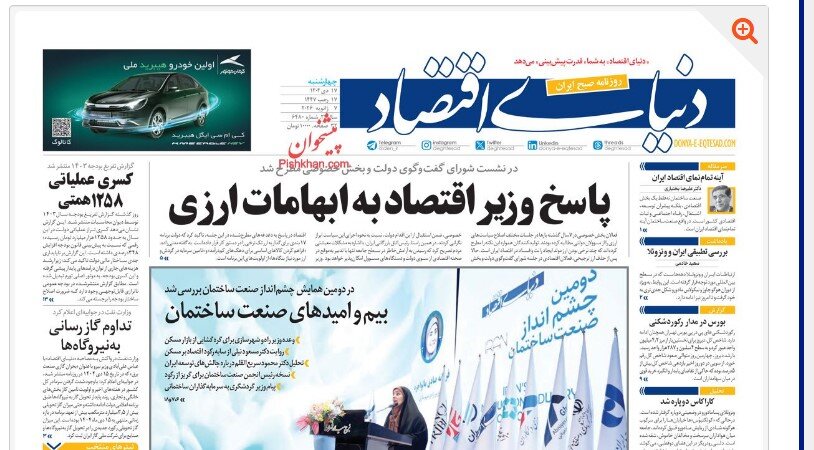
TEHRAN - Donya-e-Eqtesad, in a note, addressed Arab countries’ opposition to a possible U.S. attack on Iran. According to the newspaper, from the perspective of the Persian Gulf (Arab) countries, the red lines have been repeatedly violated, and the possibility of war is looming large with the passage of time.
The Persian Gulf countries escaped unharmed from Iran’s retaliatory attacks on Israel and the U.S. during the 12-day war in June 2025. However, Iran’s decision to respond to the U.S. bombing of its nuclear facilities by attacking the Al-Udeid air base in Qatar was a significant move. There are several reasons why officials in the Gulf Cooperation Council and other regional countries want to reduce tensions with Iran. Recent developments in Yemen have highlighted the Saudis’ interests in preventing further state collapse and fragmentation of power in areas vital to the country’s security. Policymakers in Doha are aware not only of the threat of new attacks on Qatar, but also of the expansion of natural gas liquefaction capacity at the North Field, the first phase of which is currently being completed.
Arman-e-Emrooz: The response will be decisive
Arman-e-Emrooz wrote about a possible war between the U.S. and Iran. It says American decision-makers have two views of the war: zero casualties for the U.S. and minimal damage to equipment. If the U.S. has the illusion that the war will be limited and controllable, Iran's message is exactly the opposite. Tehran has warned that it will respond to any attack in a way that the war will get out of control, and the cost for the other side will be much higher than a limited blow. One of the most important components taken into account in Trump's calculation is Iran's condition at home. It has been proven to the Americans that any type of external blow can lead to the restoration of Iran's national cohesion, especially if society considers the threat as a "danger to the integrity of the country." If the U.S. thinks it can achieve results with simultaneous pressure from inside and outside, the failure of internal pressures will upset this calculation. In such a situation, a military attack no longer serves the role of a "final blow" and is likely to turn into a difficult, long, and costly war for them.
Khorasan: Pentagon and the reproduction of regional insecurity
In an analysis, Khorasan discussed the simultaneous trip of U.S. political envoys and military commanders to Israel and wrote: The publication of the Pentagon's national security strategy, with special emphasis on West Asia, highlights the position of the Zionist regime as the only active proxy of the United States. The continued military attacks on Gaza and the blockade of humanitarian aid to the enclave can all be analyzed within the framework of this strategy. Developments in Syria are also in line with this purpose. The symmetry of these trips with the intensification of the multi-layered war against Iran, from sanctions and military threats to media operations, indicates the completion of the psychological warfare. The dispatch of U.S. warships to the region also falls within this scenario. The result of such a policy is to create a crisis without a clear horizon. Only through collective vigilance, practical support for Palestine, and a demand for the complete withdrawal of the United States from the region can the cycle of bloodshed and instability be prevented from repeating.
Javan: Iran is ready for a big response
Javan examined Iran’s readiness for any attack in an article. Following the American military moves, including the dispatch of
Abraham Lincoln Carrier Strike Group to the region, Tehran emphasizes that it is ready for any scenario. While Iran is preparing for a possible confrontation, regional countries and resistance groups also emphasize their opposition to any aggression against Iran. The Turkish foreign minister warned just a few days ago that putting the Iranians in a bind will cause them to prepare for the worst-case scenario. The Lebanese Supreme Council also announced that the United States will never be able to force the Islamic Republic to submit. In response to the hostile approach of the United States and the Zionist regime, Iran has begun the process of deploying anti-ship missiles along the coast of the Persian Gulf. The Islamic Revolution Guard Corps is also reinforcing its military buildup in the strategic Strait of Hormuz, a move that has clear operational and deterrent dimensions. Thus, if the flames of a war flare up, Iran will seize and close one of the most strategic points in the world with heavy fire against the enemy.
Leave a Comment