Spain’s break with the West: How Sánchez turned Madrid into a voice against the war on Iran
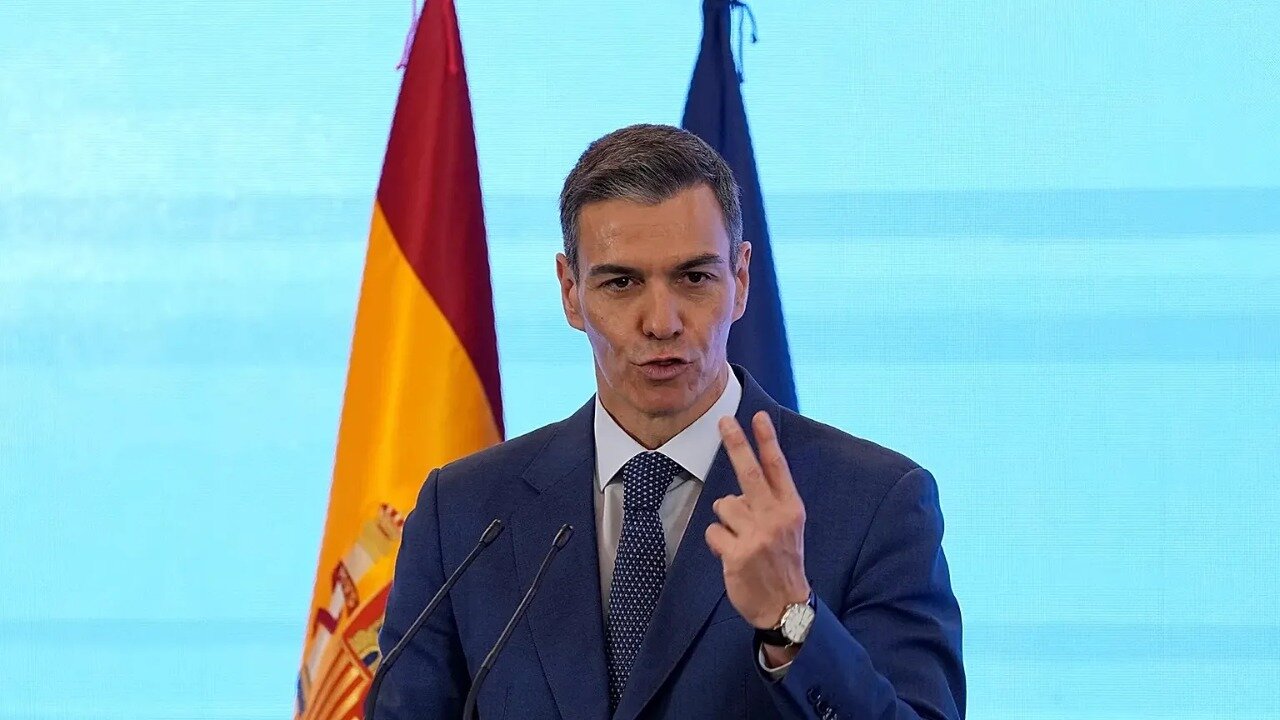
TEHRAN - The joint war the United States and Israel launched against Iran can be seen as one of the most complex and consequential geopolitical crises of the past decade. It not only reshaped the security landscape of the Middle East but also strained divisions within the Western bloc, challenged the future of the transatlantic alliance, and even placed the concept of the international order under significant pressure.
Within this context, Spain’s position under Prime Minister Pedro Sánchez stood out as one of the most distinctive and at times controversial responses among Western countries. Unlike several of its European and American allies, Spain not only withheld support for the military operations but also repeatedly described them as illegal, unnecessary, and contrary to the principles of international law, eventually escalating to a level of diplomatic tension with both Washington and Tel Aviv.
This stance cannot be understood as a merely situational reaction to an unfolding crisis; rather, it must be analyzed within the broader evolution of Spain’s foreign policy in recent years. Under Sánchez’s government, Spanish foreign policy has gradually shifted away from the traditional model of full alignment with the United States and toward a form of active multilateralism, a stronger emphasis on international law, and a greater pursuit of strategic autonomy within the European framework. In this approach, the use of force is only considered legitimate when grounded in international legal authority, and any unilateral military action especially outside the framework of the United Nations is met with serious scrutiny and opposition. It was precisely this intellectual and strategic framework that shaped Spain’s distinct response to the war.
At the outset of the crisis, the Spanish government clearly articulated its position with the phrase “No a la guerra” (No to war). This expression, repeatedly used by Sánchez in official speeches, was not merely a political slogan but rather a concise summary of a multi-layered stance: moral opposition to violence against civilians, legal opposition to violations of international law, and political opposition to military-centric approaches to conflict resolution. In this context, Sánchez stressed that “one cannot respond to an illegal act with another illegal act,” repeatedly warning that the repetition of past war patterns particularly the legacy of the Iraq War could have devastating consequences for global stability.
One of the most significant aspects of this policy was the translation of rhetoric into concrete action. Spain took the unusual step, particularly for a NATO member, of refusing to allow the United States to use its military bases in Rota and Morón for operations related to the Iran conflict. Reports also suggested that restrictions were imposed on the use of Spanish airspace for military-related movements. These measures demonstrated that Spain’s position was not confined to discourse alone but had evolved into a form of operational independence in foreign policy, an approach that inevitably increased tensions with the United States.
These tensions escalated further when then–US President Donald Trump threatened to restrict or completely sever trade relations with Spain in response to its refusal. In contrast, Sánchez consistently defended his position in public addresses, framing Spain’s stance not merely as a political choice but as a moral and legal obligation. He also emphasized in international meetings that the world must not return to a war-driven model of conflict resolution and should instead learn from past interventions in the Middle East.
Alongside tensions with Washington, Spain’s relationship with Israel deteriorated significantly. From the outset, the Spanish government characterized Israeli military actions alongside US operations as illegal, gradually adopting an increasingly forceful tone. The most striking moment came during Sánchez’s press conference in Beijing, following his meeting with Chinese President Xi Jinping, when he directly accused the Israeli government of fundamentally violating international law. He stated: “International law is today fundamentally being violated by one country, which is the government of Israel.” This remark represented one of the most explicit and forceful official statements Spain had made during the war, signaling a new phase of overt diplomatic confrontation.
These statements are consistent with the broader trajectory through which Spain has evolved from a cautious critic into a more assertive actor in challenging the prevailing international order. Sánchez reiterated that Spain had from the very beginning considered the US- and Israeli-led war a “mistake” and “illegal,” maintaining this position consistently over time. This continuity reflects a notable coherence in Spain’s foreign policy discourse, grounded in the defense of an international legal order rather than purely geopolitical calculations.
In parallel with its political positioning, Spain has also sought to play an active diplomatic role in managing the crisis. One of the most important steps in this regard was the reopening of the Spanish embassy in Tehran following the ceasefire between the United States and Iran. This decision, taken under the direction of Spanish Foreign Minister José Manuel Albares, reflected Madrid’s intention to preserve diplomatic channels with Tehran and potentially contribute to de-escalation efforts. The return of Spanish diplomats to Tehran carried not only practical significance but also an important political message: Spain intended to remain an active participant in crisis management rather than a passive observer.
Domestically, these policies are deeply rooted in Spain’s political and social structure. Sánchez’s government is based on a coalition of left-leaning parties that have historically opposed military interventions and emphasized diplomacy and human rights. Moreover, Spanish public opinion remains highly sensitive to foreign military engagements. The memory of the 2003 Iraq War, which triggered widespread protests and contributed to a change in government still plays a central role in the country’s political consciousness and acts as a deterrent against involvement in similar conflicts. Sánchez himself has explicitly referenced this experience as a historical warning for contemporary policymaking.
Economically, the Iran war also created significant challenges for Spain. Rising energy prices, global market instability, and disruptions to trade routes prompted the Spanish government to approve multi-billion-euro support packages to mitigate the impact of the crisis. This demonstrates that Spain’s foreign policy is shaped not only by political principles but also by economic considerations and constraints.
At the European level, Spain’s position contributed to highlighting divisions within the European Union. While countries such as Germany, the United Kingdom, and Italy adopted more cautious and US-aligned approaches, Spain emerged as one of the most vocal critics. These differences reignited debates over “European strategic autonomy” and underscored the lack of full consensus within the EU when confronted with major international crises.
Overall, Spain’s approach to the US-Israeli war against Iran can be understood as a combination of legal idealism, political realism, and domestic calculation. Through its explicit opposition to the war, refusal to participate militarily, restriction of logistical cooperation, intensified criticism of both Israel and the United States, and simultaneous maintenance of diplomatic channels such as the reopening of its embassy in Tehran, Spain has sought to define a more independent and differentiated foreign policy path. Although this approach has involved both external pressure and internal challenges, it may, in the long term, strengthen Spain’s position as a more autonomous, critical, and potentially mediating actor in the international system. This crisis ultimately illustrates that in today’s world, foreign policy is more than ever shaped at the intersection of international law, domestic politics, and geopolitical competition and that states capable of balancing these dimensions effectively are likely to play a more influential role in shaping the future global order.
Leave a Comment