Iraq nears government formation breakthrough
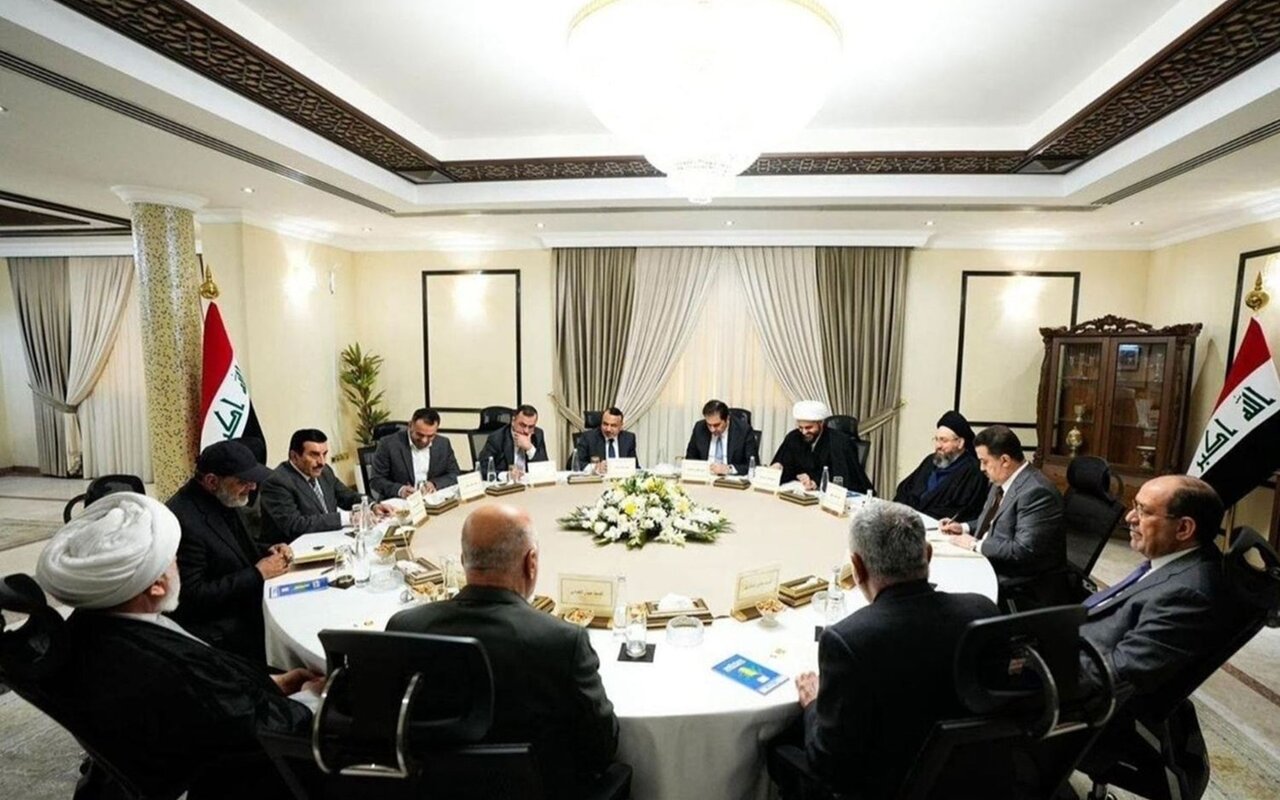
TEHRAN – Iraq advances toward selecting a prime minister as political factions intensify negotiations following the presidential appointment.
Iraq is edging closer to breaking its political deadlock more than five months after parliamentary elections, as momentum builds toward forming a new government.
Recent developments, most notably the appointment of a president, have cleared a key procedural hurdle, allowing the next phase of the process to begin.
Attention is now focused on the Coordination Framework, the largest bloc in parliament, which is working to settle on its nominee for prime minister. While Prime Minister Mohammed Shia al-Sudani is seeking a second term, he faces competition from within the alliance, particularly from former Prime Minister Nouri al-Maliki, who continues to wield significant influence.
A third figure, Bassem al-Badri, has emerged as a serious contender. A senior member of Nouri al-Maliki’s Islamic Dawa Party, al-Badri is seen by some as a potential consensus choice. He currently heads the Accountability and Justice Commission, the body responsible for implementing de-Baathification measures aimed at removing members of Saddam Hussein’s former Ba’ath Party from state institutions.
According to political sources, al-Badri has secured the support of seven of the Coordination Framework’s 12 committee leaders. He needs one more vote to reach the required two-thirds majority under the bloc’s internal rules and formally clinch the nomination.
The bloc, which controls around 185 of the 329 seats in parliament, is required to name a prime minister by April 26 under Iraq’s constitutional framework.
Although the government formation process has been lengthy, several institutional steps have gradually fallen into place. Parliament elected its speaker and two deputies in late December.
More recently, on April 11, Kurdish politician Nizar Amidi was chosen as president after months of negotiations among Kurdish factions following the November elections.
Amidi, the candidate of the Patriotic Union of Kurdistan, was elected during a parliamentary session held on Saturday, succeeding former President Abdul Latif Rashid. His appointment followed a prolonged dispute among Kurdish parties over who should take on the largely ceremonial but constitutionally essential role. The vote itself had been delayed twice, with 16 candidates initially in the race.
In the second round, Amidi won decisively, securing 227 votes. His rival, Muthanna Amin, received 15 votes, while seven ballots were ruled invalid. After being sworn in, Amidi pledged to uphold the principle of “Iraq First.”
His election effectively unlocks the next stage of government formation.
Under Iraq’s power-sharing system, the presidency is reserved for a Kurdish figure, the premiership for a Shia politician, and the speakership of parliament for a Sunni.
Crucially, the constitution requires that a president be in office before the largest parliamentary bloc can formally nominate a prime minister. The president must then approve that nomination, enabling the formation of a government.
With this requirement now fulfilled, the Coordination Framework has a 15-day window to agree on its candidate.
Amidi brings decades of experience to the presidency. He became a close aide to former President Jalal Talabani. Between 2008 and 2014, he managed Talabani’s office, further consolidating his role within Iraq’s political establishment.
He later served as director of the President’s Office under three successive presidents, Fouad Massoum, Barham Salih, and Abdul Latif Rashid, giving him extensive experience within the workings of the position.
With the presidency settled, internal negotiations within the Coordination Framework have intensified. The bloc held a key meeting on Monday at the residence of Ammar al-Hakim, leader of the National State Forces Alliance, to discuss potential candidates.
According to the bloc’s Secretary-General, Abbas Radi, the talks were constructive but inconclusive. “All views regarding the candidate for prime minister were presented and discussed, but the issue requires more time,” he said in remarks to the Iraqi News Agency.
Another Coordination Framework meeting was scheduled for Tuesday, before an announcement was expected on Wednesday, as the bloc works to bridge differences and reach an agreement within the constitutional timeframe.
Alongside al-Sudani and former Premier al-Maliki, several other names are reportedly under consideration. These include former Prime Minister Haider al-Abadi, who served from 2014 to 2018, former Planning Minister Ali al-Shukri, and Mohammed Sahib al-Darraji, a technical adviser in the current government.
The outcome of these deliberations will shape Iraq’s political trajectory at a critical moment. The next government will be tasked with tackling persistent economic challenges, improving public services, and maintaining stability.
This comes against the backdrop of unprecedented regional tensions that continue to place Iraq in a delicate position. Iraqi officials have repeatedly raised objections over American violations of national sovereignty, including the illegal use of its airspace.
At the same time, resistance factions operating under the banner of the Islamic Resistance in Iraq have launched attacks targeting U.S. military bases and Zionist-linked interests following the illegal U.S.-Israeli war against neighboring Iran, which began on February 28.
These operations were paused under a two-week ceasefire agreement between Iran and the United States on April 8. However, the truce is set to expire on Wednesday, raising the prospect of renewed escalation.
Resistance factions have already warned that they will resume and expand their operations if the aggression against the Islamic Republic of Iran starts again.
Several Iraqi resistance groups have also warned they are closely monitoring American movements in the Iraqi Kurdistan region amid reports that the U.S. and Zionist regime are arming terrorist groups in the area to stage ground operations in Iranian territory.
Iraqi officials have warned that any attempts by the United States or the Zionist regime to destabilize the Islamic Republic could have serious consequences that extend beyond Iran and directly affect Iraq’s security and stability. They emphasize that the two countries are deeply interconnected, meaning that tensions in one country can quickly spill over into neighboring states, particularly Iraq, which continues to face a sensitive and complex security environment.
They further stress that Iraq has a strong interest in regional calm and de-escalation. In their view, any actions aimed at destabilizing neighboring Iran risk triggering a chain of events that could undermine Iraq’s security, disrupt internal stability, and complicate ongoing efforts to maintain calm after the defeat of Daesh, a key challenge for the next government.
Leave a Comment