Zobeiri: Guardian of the Persian Gulf’s millennia-old heritage
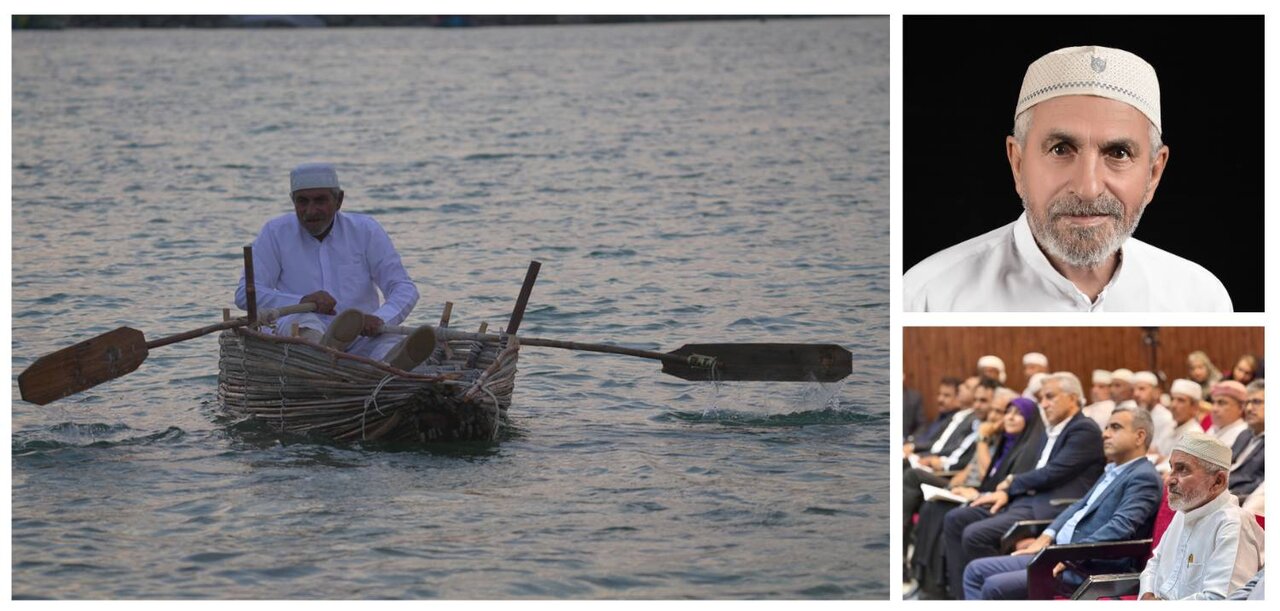
Until recently, few imagined human presence on Iran’s Persian Gulf islands extended beyond the last millennium. But archaeological research has transformed this understanding. Excavations on Qeshm Island pushed settlement back nearly 5,000 years, while stone tools on Bam-e Qeshm hinted at an even older past. The discovery of Paleolithic sites on Hormuz Island—Chand-Derakht and Sang-e Ghorab—revealed that Middle Paleolithic populations lived there between 150,000 and 40,000 years ago, highlighting the Persian Gulf’s role in early human migrations. Long before these scientific findings, Master Mohammad Zobeiri had already grasped this deep historical continuity, preserving it in the Deyrestan Anthropology Museum and his book Ganz-e Bapu.
Zobeiri is one of Qeshm Island’s most respected cultural figures. His wisdom is rooted in the living heritage of the Persian Gulf. For years, his home has remained open to those drawn to the region’s culture, offering generous hospitality infused with the spirit of the southern islands. While many tributes have honored his work, true preservation of his legacy lies in recognizing, applying, and continuing his knowledge—a responsibility for researchers, cultural administrators, and all who care for this land. Zobeiri’s home has long been a gathering place for scholars, travelers, and admirers of southern Iranian culture.
Born 1949, in the village of Shib Deraz on Qeshm Island, Zobeiri received only a fourth-grade formal education in a traditional maktab school. Yet his restless curiosity drove him beyond these limits. As a youth, he traveled between the island, the southern Persian Gulf shores, and Oman’s Al-Batinah coast—a centuries-old crossroads of trade and cultural exchange. A brief visit to relatives in the UAE during the 1990s transformed his life: seeing an islander’s home in Abu Dhabi preserving old objects and heirlooms left a deep impression. Years later, that experience inspired the creation of one of southern Iran’s most important indigenous anthropology museums.
Zobeiri devoted nearly two decades to collecting and preserving Qeshm’s material heritage, leading to the establishment of the Deyrestan Anthropology Museum in 2019. Today, the museum welcomes thousands of visitors annually. With authenticity and foresight, Zobeiri shaped this private museum, opening new horizons for engaging with Persian Gulf heritage. He embodies dignity, generosity, and selflessness—a living cultural treasure.
Throughout the years, Zobeiri’s writing has remained simple, sincere, and enduring. He collects words and idioms once part of everyday life on Qeshm but now vanishing from collective memory. He continues writing and preparing new publications that preserve and reinterpret southern Iran’s cultural memory.
Zobeiri is not only a guardian of objects and words but also of intangible heritage. As leader of the traditional ritual music ensemble Azva (featuring bamboo cane dances) and the Rezif tradition, he directs performers from elderly masters to younger generations. These musical traditions, still played at local ceremonies and weddings, preserve the historical memory of Gulf coastal communities. One of Zobeiri’s greatest concerns is encouraging children and school students to participate alongside elder seafarers, ensuring the transmission of this ritual heritage continues.
He stands as a self-made guardian of heritage, demonstrating that meaningful cultural influence does not require academic titles—only sincere love for one’s homeland and devotion to preserving its memories, words, and stories, even with only a few years of formal education. He is the living memory of Qeshm Island: a figure who, through indigenous wisdom and a spirit of dialogue, keeps Iran’s cultural heritage raised along its southernmost maritime frontiers. Long before “safeguarding intangible heritage” became a global concern, Zobeiri had already chosen a life devoted to preservation—working through hardship and conviction to rescue the memory of the island.
The story of every land is shaped by devoted, reflective individuals. Zobeiri belongs to this lineage—a quiet fisherman who, amid the waves of time, gathers words, proverbs, stories, and melodies. What distinguishes him is his profound bond with the people and collective memory of the Persian Gulf. He belongs to a rare generation for whom culture is not merely an object of study, but a way of living.
AM
Leave a Comment