China: The dragon rewriting America’s strategic map
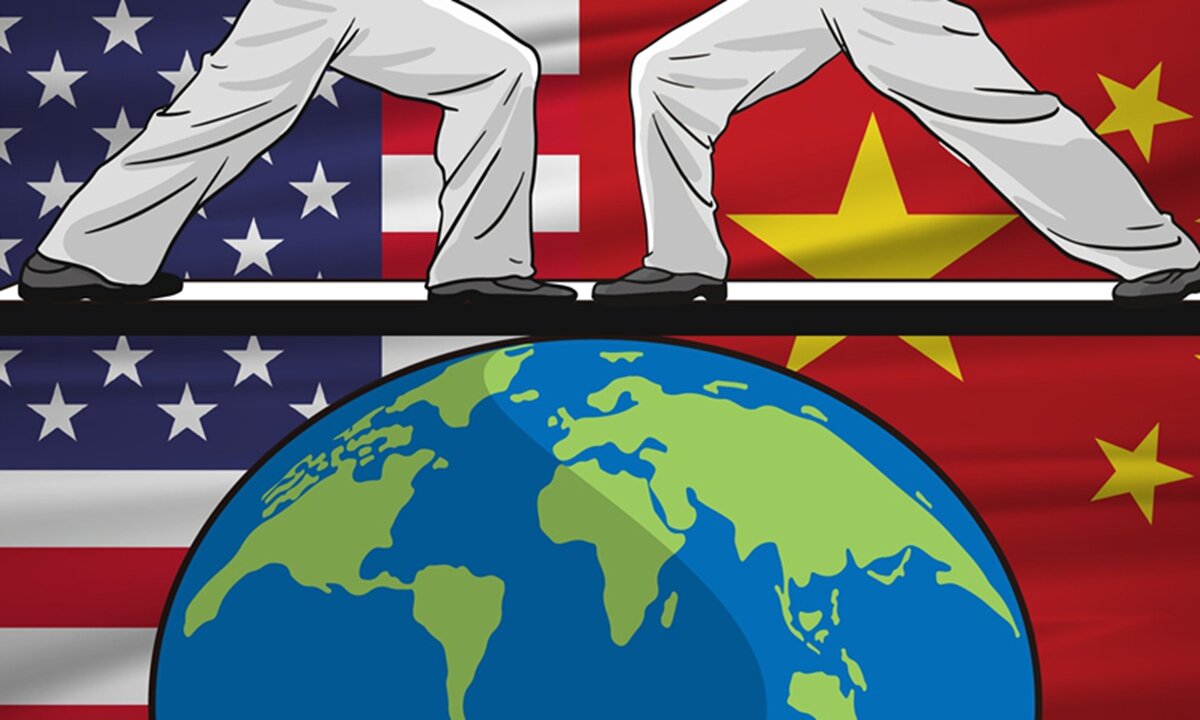
TEHRAN - China today is no longer merely a rising economic power; it has become one of the most important strategic actors in the international system. It is a player that has managed to create a coherent link between economy, technology, trade, infrastructure, diplomacy, and security. This very feature distinguishes China from many other emerging powers. If in the past the standing of states was defined mainly by military capability, China has now shown that through economic and strategic tools, it is possible to gradually alter the global balance of power and even challenge America’s plans and calculations.
A major part of China’s strength stems from its enormous economic capacity. The country is not only the world’s great factory, but has also become one of the most important consumer markets, technological hubs, centers of investment, and pillars of global supply chains. China’s influence in industrial production, renewable energy, digital infrastructure, maritime trade, and exports has enabled it to create a network of interdependence with many of the world’s economies. This interdependence is China’s most important strategic shield, because confronting Beijing is not merely a political decision for the United States and its allies; it carries direct costs for the global economy as well.
In this context, the Belt and Road Initiative should be seen as one of China’s most important strategic instruments. This initiative is not simply an economic project; it is a network of geopolitical influence stretching from Asia to Africa, and from the Middle East to Europe. Through investment in ports, railways, roads, energy infrastructure, and communications, China has connected itself to the heart of global developments while simultaneously limiting America’s sphere of influence in many regions. In other words, by building new routes of trade and influence, China is drawing a kind of parallel order in contrast to the traditional order led by Washington.
The United States understands this process well, and for that reason has in recent years pursued a strategy of containing China with greater intensity. The tariff war, technological restrictions, pressure on Chinese companies, efforts to reduce supply-chain dependence on Beijing, and the strengthening of security alliances in Asia are all part of this policy. Washington is concerned that China may gain a superior position not only in the economy, but also in advanced technologies such as artificial intelligence, semiconductors, telecommunications, and clean energy. From the American perspective, Chinese dominance in these fields could lead to a fundamental shift in the structure of global power.
At the same time, China’s response to America’s designs has been less about direct and hasty confrontation and more about strategic patience, internal development, and the gradual expansion of influence. Beijing seeks to institutionalize its power across different layers of the international system without entering a full-scale war. Unlike the interventionist model often associated with the United States, China relies more on economics, connectivity, investment, and long-term partnerships. This is precisely what makes competition with China so complicated for Washington: in many cases, China advances not through military invasion, but through contracts, ports, technology, and markets.
Ultimately, China’s economic-strategic power should be regarded as one of the most important drivers of the transition from a unipolar world to a more complex and multi-centered order. The United States remains a major and influential power, but it can no longer act as it once did without a serious rival. By relying on its economy, technology, and geopolitical reach, China is not only weathering American pressure, but in many cases changing the very rules of the game. The future of the international system will depend to a large extent on this rivalry—a rivalry that is no longer simply a contest between two states, but a struggle over the shape of the world to come.
Mahdi Zolfaghari is an associate professor in the Department of Asian Studies, Allameh Tabataba’i University
Leave a Comment