Gambler’s hand revealed to Iran
Trump uses Bessent to wage economic war, while Field Marshal Asim Munir seeks a face-saving U.S. exit from the Iran war in Tehran.
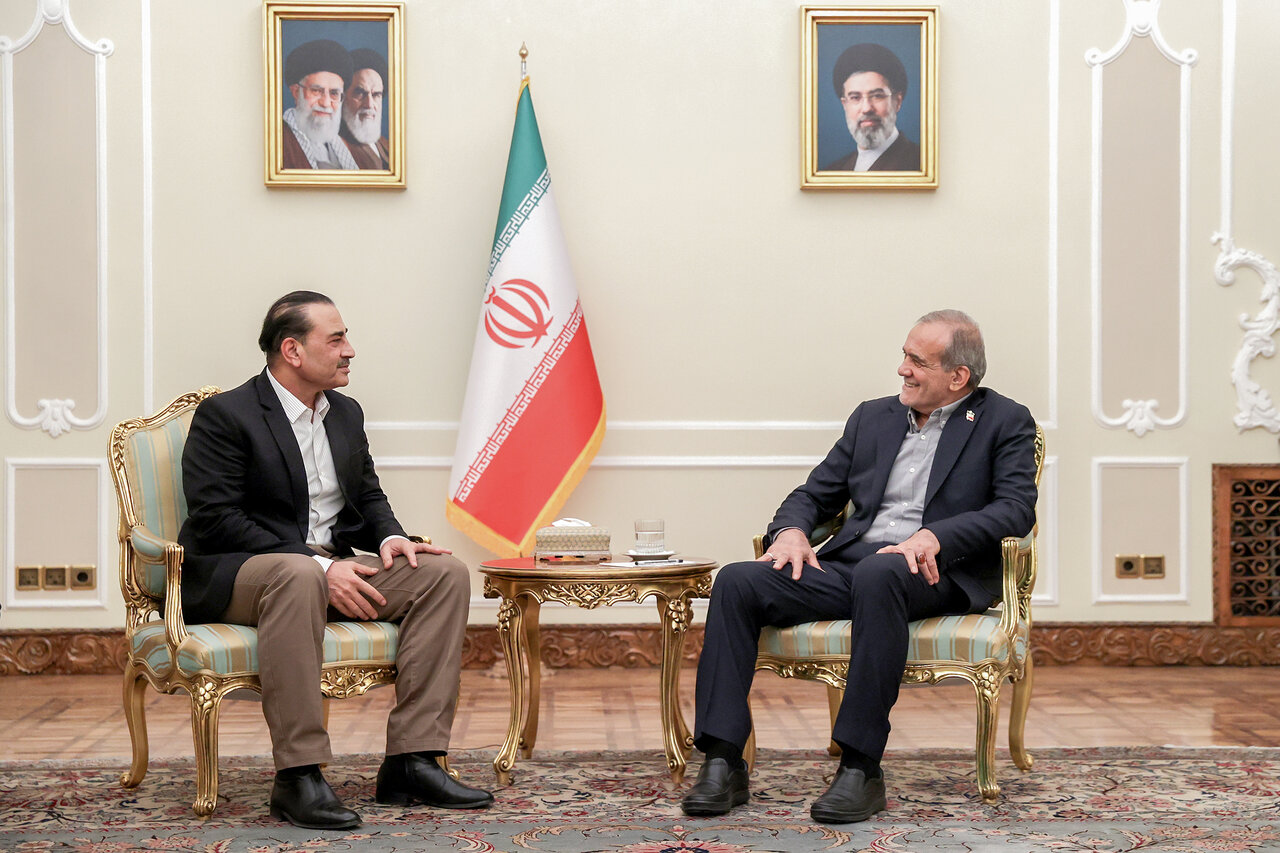
TEHRAN — Pakistan’s Chief of Defense Forces, Field Marshal Syed Asim Munir, and Interior Minister Mohsin Naqvi wrapped up a day-long official visit to Tehran on Monday night after holding talks with senior Iranian political and security leadership aimed at advancing a comprehensive framework for resolving regional issues.
“Our discussion focused on the Iran-US conflict, tensions in the Middle East, the way forward, and the steps needed by both sides for the restoration of the Islamabad MoU,” Naqvi said in a post on X, referring to the Pakistani-mediated memorandum of understanding that President Donald Trump signed with Iran on June 17.
Naqvi added, “The Iranian President candidly shared his government’s perspective and concerns, and we had a very constructive exchange on the issues involved. Significant progress was made, and the meeting concluded on a highly positive note.”
The Pakistani-mediated MoU established framework terms to cease hostilities between Iran and the US. While subsequent US aerial strikes and naval blockades disrupted the agreement, Pakistan had already demonstrated its diplomatic role by helping facilitate the April 8 ceasefire that paused the 39-day war that the US and Israel launched on Iran on February 28.
The Pakistani delegation held comprehensive discussions with Iranian President Masoud Pezeshkian, Supreme National Security Council (SNSC) Secretary Mohsen Rezaei, Parliament Speaker Mohammad Baqer Qalibaf, Foreign Minister Abbas Araghchi, and Interior Minister Eskandar Momeni. Pakistan says the Iranian leadership highly appreciated Islamabad’s constructive role and sincere efforts in facilitating dialogue and de-escalation.
Seyed Mehdi Tabatabaei, deputy for communications and information at the Iranian President’s Office, also described Munir’s trip as “highly productive.”
“Contrary to some inaccurate media speculation, the visit of Field Marshal Asim Munir, the army chief of friendly Pakistan, to Iran was highly productive and yielded significant diplomatic achievements, the results of which will become apparent soon,” Tabatabaei wrote on X.
In a meeting with the Pakistan delegation, President Pezeshkian stated that the United States must abandon its reliance on force and bullying, warning that such an approach will only complicate efforts to implement the MoU and resolve regional issues.
“The United States must correct its tone and approach in interacting with Iran,” the president said. “Relying on coercion and bullying will only make the implementation process more complicated.”
Pezeshkian highlighted the Iranian nation’s resilience and steadfastness, attributing it to national unity and cohesion. “Drawing on this solidarity, our nation will overcome any pressure or threat,” he stated.
Pezeshkian also hoped that Islamabad’s diplomatic efforts would contribute to the growing prosperity, dignity, and pride of the region and the wider Islamic world.
Field Marshal Munir, for his part, thanked President Pezeshkian for his efforts to foster stability and calm in the region. He stressed that diplomatic processes must be examined with the utmost precision and care to advance shared goals and reach a comprehensive agreement.
He said cultural commonalities between Iran and Pakistan represent a valuable asset for overcoming current complex conditions and charting a bright future.
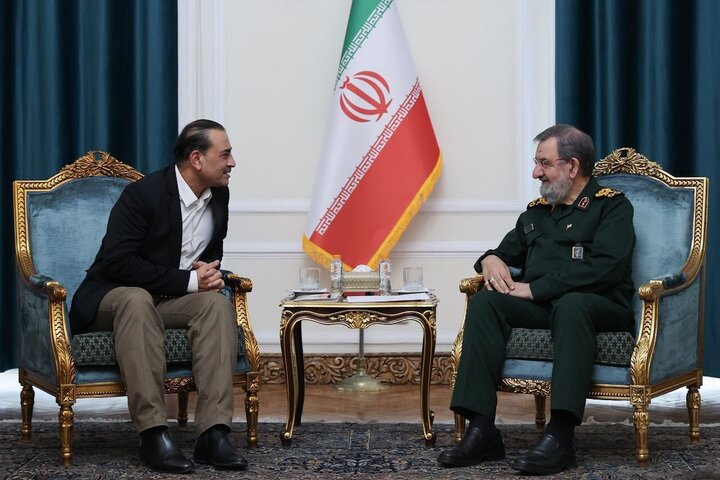
During a separate meeting with Field Marshal Munir, the secretary of SNSC said Iran remains distrustful of the United States. Washington, he added, must take practical steps to implement the provisions of the Pakistan-brokered MoU.
Iran’s Parliament speaker also pointed to the US failure to honor its commitments under the memorandum of understanding as he held talks with the visiting Pakistani delegation.
“The commitments made by both sides under the memorandum of understanding are clear. It was the United States’ failure to honor its commitments that undermined regional stability and gave us yet another reason not to trust Washington,” Qalibaf told Asim Munir. The top Pakistani military official, for his part, reiterated that he would continue efforts to help restore regional peace.
The US escalates economic war
While backchannel diplomatic efforts unfolded in Tehran, the Trump administration on Monday announced a parallel plan to isolate Iran’s economy by threatening to impose secondary sanctions on countries supporting Iran.
“We are launching an economic onslaught against Iran’s financial connections around the globe,” Treasury Secretary Scott Bessent said as he unveiled the new sanctions scheme, dubbed “Operation Economic Outcast.”
Trump is calling world leaders and making “specific requests to cease their interactions” with Iran, Bessent said at the Treasury Department.
“Any entity that facilitates money laundering on behalf of Iran will be removed from the US dollar system,” he said. “The clock just started ticking.”
Bessent suggested at Monday’s event that China would not be exempt.
“We want to make clear here today that no one is above the reach of U.S. sanctions,” Bessent said when asked if the administration would target Chinese banks, or if it would avoid doing so in order to preserve relations with Beijing. “If they facilitate transactions and are part of the ecosystem that turns Iranian oil into money, into repression, they will be targeted.”
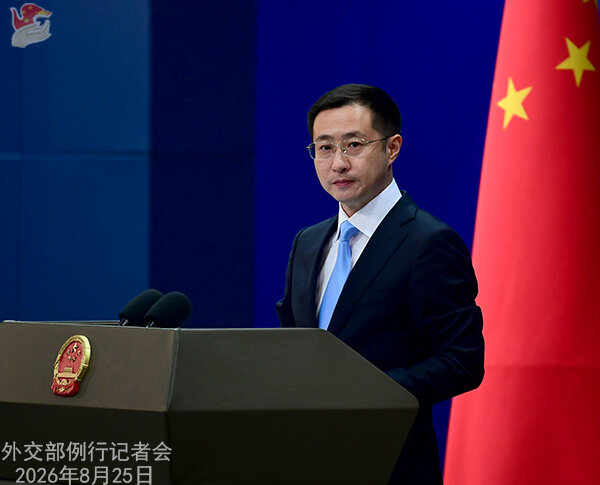
In response, China vowed to protect its interests. Foreign Ministry spokesman Lin Jian said China was firmly opposed to "illegal unilateral sanctions" and would take "all necessary measures" to safeguard its rights.
Lin added: "Cooperation between China and Iran has always been conducted within the framework of international law and should not be interfered with or disrupted."
Qatar also described US sanctions on Iran as unilateral and reiterated its firm backing for mediation efforts to bridge the divide between the two sides.
Taken together, these developments expose the growing contradictions at the heart of Trump’s Iran policy. On the one hand, Trump is sending Bessent to press ahead with yet another round of economic warfare against Iran, threatening countries and financial institutions that continue to maintain legitimate economic ties with Tehran. On the other hand, Washington is turning to Pakistan’s top military leadership to help persuade Iran to revive a diplomatic process that could pull the United States out of the quagmire created by its failed war.
The contradiction could hardly be more striking.
While Bessent announced what the Trump administration calls “Operation Economic Outcast,” threatening secondary sanctions against countries and entities dealing with Iran, Asim Munir was in Tehran holding high-level talks with Iran’s political and security leadership. It appears that his mission was not to deliver another threat from Washington, but to help revive a diplomatic framework that the United States itself failed to honor.
That contrast lays bare the limits of Trump’s approach. Washington is simultaneously escalating pressure on Tehran and seeking a diplomatic channel through Islamabad to address the very crisis that its own military and economic policies have deepened.
Iran, however, made clear that diplomacy cannot succeed through pressure and intimidation. In other words, Tehran is not closing the door to diplomacy. It is demanding that Washington stop trying to force its way through that door.
Amid the US failure in the war on Iran, the pattern is becoming increasingly clear. Washington continues to reach for the same instruments—military pressure, sanctions, threats and economic coercion—while simultaneously searching for intermediaries capable of creating an exit from the confrontation.
Trump therefore finds himself caught between two contradictory impulses: escalating the pressure in the hope of forcing Iran into submission, while seeking mediation to prevent the confrontation from spiraling further.
That is the behavior of a gambler who keeps doubling down after a series of losses, hoping that the next move will reverse his fortunes.
But Iran’s resilience, the failure of military pressure to produce capitulation, the continued resistance to economic coercion and the growing willingness of regional actors to pursue diplomacy have made Washington’s predicament increasingly difficult to conceal.
Trump may continue to raise the stakes, but the more he does so, the clearer the contradictions become. One hand is pushing sanctions and threats; the other is reaching for diplomacy through Islamabad.
Ultimately, the US president is acting like a desperate gambler trying to recover his losses by placing yet another bet. But this time, there is little left to conceal: the losing gambler’s cards are now fully exposed on the table.
Leave a Comment