Five-year Iran-Poland study sheds new light on life in Iran before the Medes
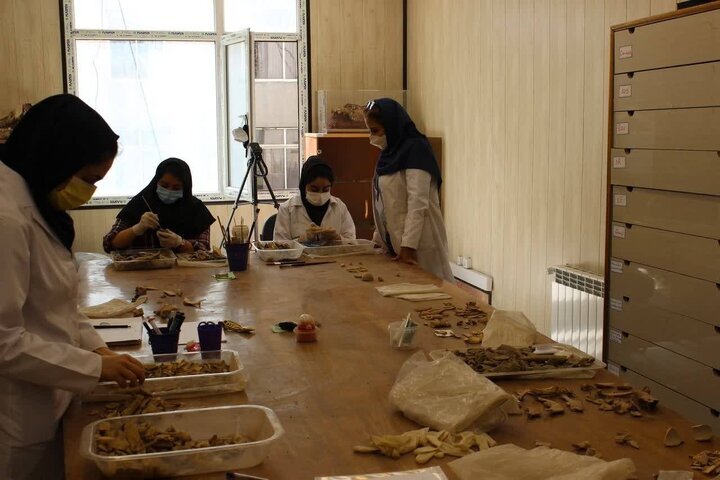
TEHRAN - A five-year joint research project by the University of Tehran and the University of Warsaw has shed new light on the lives of communities in central Iran before the rise of the Median state, challenging the long-held view that Iron Age populations in the region were predominantly nomadic pastoralists.
The research examined human remains from the Iron Age II and III cemetery at Qareh Tepe in Sagzabad, in Iran’s Qazvin Plain, dating to approximately 1,100–750 BC. The findings have been published in three scientific papers in international academic journals following detailed bioarchaeological and archaeometric analyses, ISNA reported on Monday.
The international project was jointly led by Mostafa Dehpahlavan, a faculty member of the University of Tehran’s Department of Archaeology and head of the Qareh Tepe Sagzabad excavation team, and Arkadiusz Soltysiak of the University of Warsaw. Researchers including Joanna Trebicka, Rafal Fetner, Elham Farnam, Marjan Mollabeyrami and Zahra Alinezhad also contributed to the project.
The findings suggest that the inhabitants of Qareh Tepe in the late second and early first millennia BC were a largely settled, agro-pastoral community with strong ties to the local environment.
For decades, the scarcity of clear settlement evidence and the concentration of archaeological discoveries in cemeteries had led researchers to associate much of the central Iranian plateau during the Iron Age with mobile herding communities. The new isotopic and osteological evidence provides a more complex picture of subsistence and mobility in the region before the emergence of early states.
Evidence from human remains
Bioanthropological examinations were conducted on the remains of at least 52 individuals, including 18 men, nine women, four adults of undetermined sex, and 21 infants and children.
Dental caries affected about 21 percent of individuals examined, a finding consistent with regular access to carbohydrate- and starch-rich foods associated with agriculture.
Researchers also identified signs of physiological stress, including indicators associated with iron deficiency and anemia, in the cranial vault and eye sockets. These conditions were more frequently observed among adults than children.
Evidence of physical trauma was also recorded. Injuries consistent with blows from sharp and blunt objects were identified on the skulls of two adult men and one woman, suggesting episodes of physical violence or social tension within the community.
Isotopes provide clues to diet and farming
Researchers analyzed stable carbon and nitrogen isotopes from 53 human dentin samples and 30 animal bone and dentin samples to reconstruct dietary patterns and subsistence strategies.
The nitrogen isotope values in the collagen of Qareh Tepe residents were unusually high compared with those reported from other contemporary sites on the Iranian plateau. The researchers argue that the elevated values cannot be explained solely by high meat consumption.
Instead, they suggest that intensive agriculture and the widespread use of animal manure to enrich agricultural soils may have contributed to the isotopic signature. Such practices would be consistent with intensive land management within a relatively limited and densely populated area of the Qazvin Plain’s alluvial fan.
The findings suggest evidence supporting a settled agricultural economy rather than a predominantly mobile pastoralist way of life.
The researchers also identified significant differences in carbon isotope values between men and women, potentially indicating differences in the sources of grain or in dietary practices between the sexes.
Tracing mobility and geographic origins
Another major component of the project involved analyzing radiogenic strontium isotope ratios in tooth enamel from 60 individuals. The method can help researchers distinguish people who grew up locally from those who may have originated elsewhere.
The analysis was designed to assess the extent of mobility within the Qareh Tepe population and identify possible migrants, providing additional evidence for understanding patterns of settlement and movement in the region during the Iron Age.
The researchers say the combined osteological and isotopic evidence offers a more nuanced picture of communities living in the Qazvin Plain between roughly 1200 and 750 BC, a period preceding the formation of early states in Iran.
AM
Leave a Comment