Construction of 75,000 rental housing units forecasted
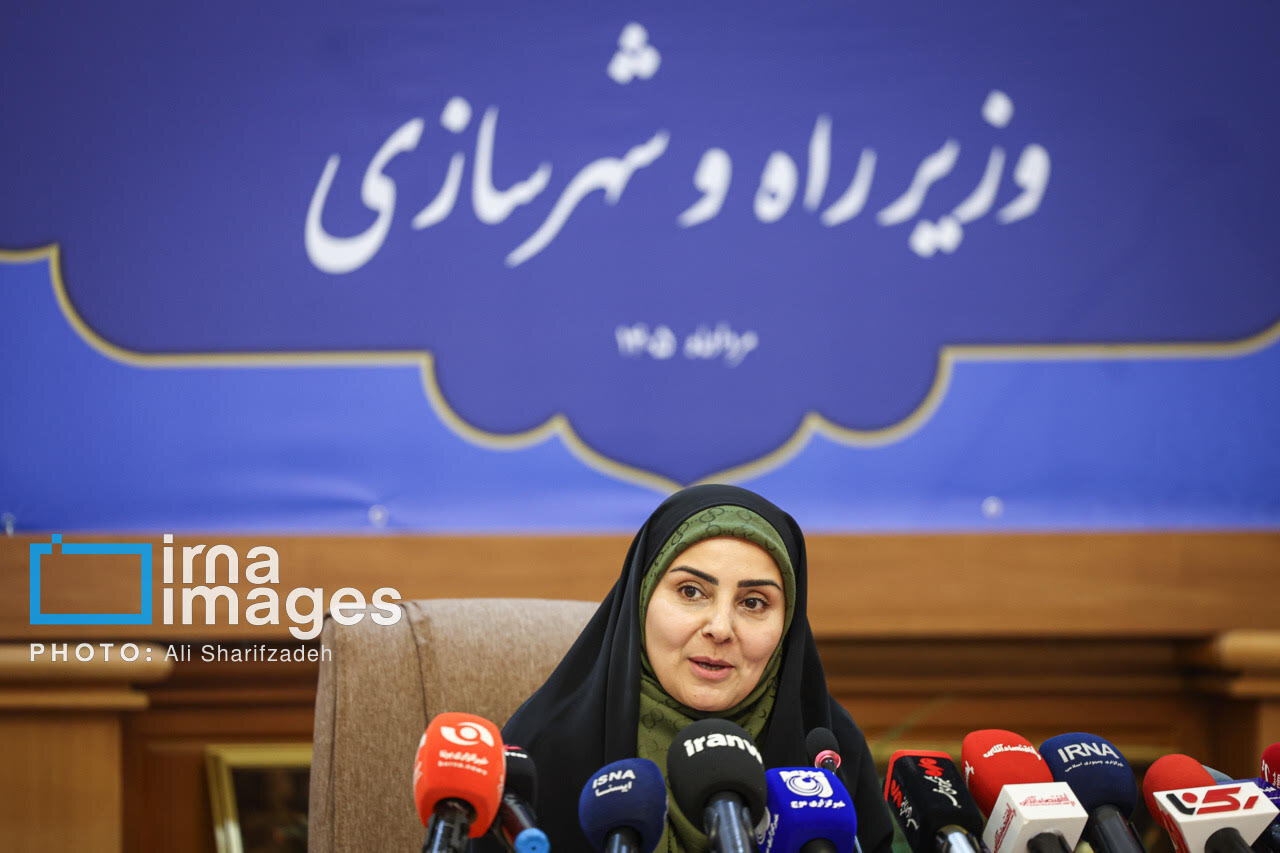
TEHRAN- The Minister of Transport and Urban Development has announced the start of construction for 94,000 worker housing units and a forecast for building 75,000 rental housing units, stating that in the first phase, 6,000 rental units will be allocated to young couples.
According to a Tuesday report by IRNA from the Ministry of Transport and Urban Development, Farzaneh Sadegh detailed some of the actions taken by the 14th administration in the housing sector.
Referring to the government's plans in the worker housing sector, she said: "Alongside supportive housing and housing for the underprivileged, we have begun construction of 94,000 worker housing units with the cooperation of the Ministry of Cooperatives, Labor and Social Welfare, the Ministry of Industry, Mining and Trade, and factories."
The Minister of Transport and Urban Development added: "In this plan, the land is either supplied by the Ministry of Transport and Urban Development, or factories and industrial units have the required land, and they also consider special facilities for their workers."
She continued: "Additionally, the required land for about 200,000 more units has been identified, and we will pursue worker housing alongside other programs."
She also announced the implementation of a 50,000-unit plan for underprivileged housing by the Islamic Revolution Housing Foundation, saying: "The land for 40,000 units of this number has been supplied by the National Land and Housing Organization, and construction operations for 18,000 units have also begun."
The Minister of Transport and Urban Development added: "These 50,000 underprivileged housing units are progressing with the same low-interest facilities from the Housing Foundation, and preparation costs will not be charged to applicants. The facilities considered for 350,000 underprivileged housing units can also be used in this sector."
Referring to the government's program for developing rental housing, she said: "Another action we have initiated in the supply and demand sector is the rental housing scheme, which, despite having relevant laws and regulations, governments have rarely pursued over the past 20 years."
The Minister of Transport and Urban Development emphasized: "For people to become homeowners, especially lower-income groups and young couples, ownership is not the only solution. Rental housing with a lease period of four to five years and rent lower than the market rate can help solve the housing problem for people, particularly the first to fifth income deciles."
She added: "Our initial forecast was for 10,000 units, but due to problems, especially those caused by the war and reconstruction issues, we were able to secure resources for 6,000 units, and their registration was also carried out during Government Week."
The Minister of Transport and Urban Development said: "Based on the studies conducted, we hope to deliver 6,000 housing units to young couples who have been married for less than five years within the next one to two months."
She considered this action as the first step in the rental housing sector and added: "Our vision is to build 75,000 rental housing units, and in this regard, numerous meetings have been held with developers, builders, and facilitators to involve the private sector in worn-out urban textures in this area."
She continued: "In this plan, we can provide land or facilities to the private sector, and given the expansion of boundaries and capacities created, we can provide grounds for their participation, so that a portion of private sector participation with the government is allocated to rental housing."
The Minister of Transport and Urban Development noted: "Although this initiative has a difficult start, it will certainly be effective. We have also entered into discussions with municipalities in this regard, and the rental housing issue must be pursued so that we can bring applicants to the occupancy stage."
She added: "The concept of this action is that people do not have to remain in the cycle of waiting for ownership for years and be under heavy rent pressure during this period; therefore, a portion of applicants can benefit from this process and take advantage of rental housing."
The Minister of Transport and Urban Development announced the allocation of 216,000 land plots under the Population Youth Plan, saying: "Over 80% of these allocations have taken place in the past two years."
She said: "It has been decided to allocate land to families with three children, with the method of allocation varying in different cities; in some cities, one plot is allocated to one family, and in some areas, due to density and existing plans, one plot is allocated to two or three families, which in most cases is two families."
The member of the 14th administration's cabinet added: "So far, 216,000 land plots have been allocated under the Population Youth Plan, of which over 80% have been allocated in the last two years."
Stating that the number of applications in this sector exceeds 600,000, she said: "For the approximately 216,000 cases where land has been allocated, the important point is that the land must first be prepared and have the capability for habitation and construction."
Sadegh continued: "By prepared land, I mean land that, when given to a family, allows them to begin construction. The preparation cost per hectare is a significant amount, and in addition, infrastructure and connections for water, electricity, gas, and other services must also be provided."
The Minister of Transport and Urban Development emphasized: "I will not even get into the issue of superstructure services here, such as schools and mosques; the mere fact that the land is buildable and a family can start building their home is a significant matter."
Referring to the increased speed of land preparation, she said: "Preparations had also begun under the previous government, and naturally, it is a time-consuming process, but now it is being done at a faster pace, and more land plots are being prepared."
The Minister of Transport and Urban Development also announced the entry of about 300,000 rural housing units into the land allocation cycle, saying: "In some cases, applicants choose a city or village where they or their spouse wish to receive the land in the same location."
She added: "The processes related to this matter are being prepared so that the capacity of about 300,000 rural housing units can also enter the land allocation cycle."
Farzaneh Sadegh, referring to the delegation of authority to governors, said: "It has been decided that each governor can decide and implement land allocation in any city of their province where there are applicants and prepared, buildable land is available, or even through annexation, the required land can be provided."
The Minister of Transport and Urban Development considered this action as part of the government's package of programs in the housing sector and said: "A series of actions are underway in the areas of rental housing, supportive housing, land allocation, rural housing, and settling the remaining Mehr housing units."
Referring to the status of remaining Mehr housing units, she said: "About 60,000 Mehr housing units still remain, of which about 20,000 are cases where the owner has received the land and is constructing it themselves, and about 40,000 units are among the remaining Mehr housing units."
She added: "Units with over 75% physical progress are also on the agenda, and alongside them, National Housing units and other projects with high physical progress are also included in the set of actions for completion and delivery."
EF/MA
Leave a Comment