Iran warns Europe: Concessions to US will not pay off
TEHRAN — Iran has sharply censured European support for US sanctions, warning the bloc that concessions made at Iran’s expense will not improve its standing with Washington.
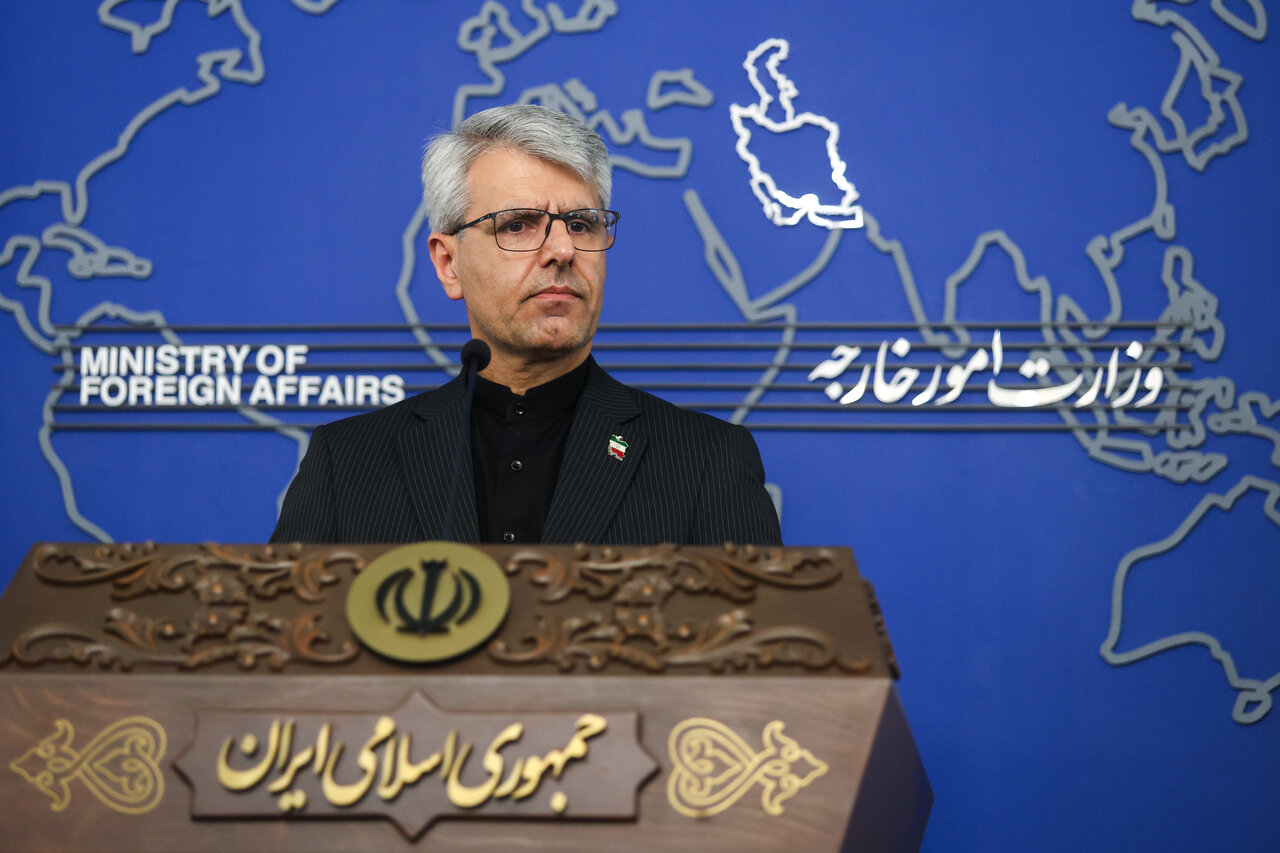
Speaking at his weekly press briefing in Tehran on Tuesday, Foreign Ministry spokesman Esmaeil Baqaei said experience proves that submitting to US policies only encourages Washington to escalate its demands. He urged European leaders to learn from these historical lessons.
Turning to the “snapback” mechanism, Baqaei noted that European alignment with the United States has failed to yield satisfactory results for the bloc. Instead, he argued, it has resulted in Washington excluding Europe from direct negotiations with Tehran. He further asserted that by supporting US sanctions, the European Union has distanced itself from the rule of law and abandoned its own regulatory frameworks, specifically citing the EU’s “Blocking Statute.”
Baqaei also criticized the conduct of US diplomats during indirect talks with Iranian representatives, accusing Washington of mistaking negotiation for “dictation.”
“The main problem with the United States is that it confuses negotiation with imposing terms,” Baqaei stated. “It assumes it can dictate demands to others—an approach that will not work with the Islamic Republic of Iran.”
While acknowledging that American officials appear “confused” in their approaches, Baqaei emphasized that Iran would not overlook its own capabilities. “We will utilize diplomatic means wherever necessary to articulate our positions and uphold the rights of the Iranian nation,” he added, noting that all decisions are made based on national interests and the guidance of relevant authorities.
The Iranian diplomat noted that Tehran is closely monitoring regional developments, stressing that Iran’s armed forces will not leave any act of aggression unanswered. Regarding US hostility, Baqaei remarked that such behavior is nothing new, noting that Washington has repeatedly employed hostile measures under various pretexts, only to receive the necessary responses.
Baqaei also highlighted recent diplomatic visits from high-ranking officials from Oman, Qatar, and Pakistan, suggesting that Iran’s approach to negotiations with the US is strictly determined by the prevailing circumstances and the need to safeguard national sovereignty.
Commenting on Washington’s contradictory stance on war and diplomacy, Baqaei said the US is struggling to manage the consequences of its own actions. He suggested that the US is facing “political erosion” resulting from unlawful military actions and escalating regional tensions.
He pointed to opposition within the US military structure and growing public fatigue as evidence of this decline, adding that “misinformation” has become a central component of Washington’s public diplomacy efforts to manage its deteriorating situation.
Addressing legal efforts to pursue US strikes against Iranian territory, Baqaei stated that Tehran does not require Western media reports to establish that these actions constitute war crimes and crimes against humanity.
He specifically cited attacks in Minab, Lamerd, and Qeshm Island. While the attack on the Shajareh Tayyebeh School in Minab—which resulted in high civilian casualties, including children—and the Lamerd incident involving prohibited weapons have received significant attention, Baqaei stressed that all such incidents are being documented for future proceedings in both domestic and international courts.
Baqaei also addressed US efforts to persuade other nations to join its economic pressure campaign. He said Washington lacks the legal or moral justification to convince the international community to support its measures.
“Only countries vulnerable to coercion may align themselves with the United States,” Baqaei concluded. “No country committed to international law, the UN Charter, and humanitarian principles will support Washington’s unlawful actions.” He emphasized that these US measures are not merely targeted at Iran, but represent an attack on the fundamental principles of national sovereignty and independence.
Leave a Comment