Turning weddings into funerals: the specialty of America's terrorist army
TEHRAN - In war, people do not always die in uniform. Sometimes, they die wearing wedding clothes. Sometimes, while putting henna on their daughter’s hands. Sometimes, sitting beside a pot of rice and meat. And sometimes, they have no idea what the aircraft circling several kilometers above them has mistaken them for.
That is why the story of American attacks on weddings in Afghanistan, Iraq, Yemen, and Iran is not simply a story about airstrikes. It is the story of the moment when a family gathering, within a matter of seconds, becomes a scene where survivors are left searching through the wreckage for pieces of the people they love.
This report begins in Kuhestak, in southern Iran, at a house that was hosting a wedding on the day American attacks on Iran resumed.
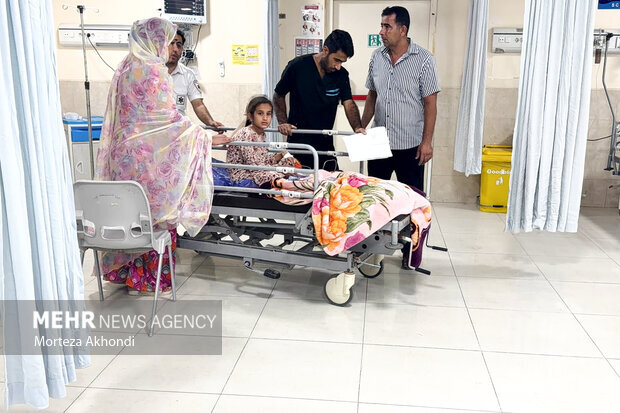
The details of the incident are still emerging. According to the Iranian Red Crescent, shrapnel from an American missile struck a residential home where a wedding ceremony was taking place. Initial reports said four people, including a child, were killed and more than 60 were wounded.
Among the early accounts was the testimony of an eyewitness who was himself injured and hospitalized after the attack.
He said he had heard fighter jets before reaching the area. Then, just as he arrived, an explosion occurred. He described it as extremely powerful, saying that bricks, stones, and concrete struck his face and head. Other people were injured as well. And when he described those who had been there, he said simply: “They were all ordinary civilians.”
The bride’s father, Mr. Malahi, gave another account of the attack. He said that three missiles struck their home and another building in the courtyard, destroying both structures and killing four wedding guests.
One of the palm trees in Mr. Malahi’s yard also became another casualty of the American attack.
Another person who described the previous night’s attack was a friend of the groom. He said that no one at the wedding was a member of the military and that everyone present was a civilian.
Christiaan Triebert, an investigative journalist with The New York Times’ Visual Investigations team, later posted about the incident, saying that fragments reportedly recovered from the attack on the wedding in Kuhestak had been identified as components of an SLAM-ER missile. Boeing, the manufacturer of the cruise missile, describes the SLAM-ER as one of the most precise weapons in the US Navy’s arsenal.
That highly precise weapon turned an Iranian wedding in Sirik into a funeral and took the life of four-year-old Amirali.
But Kuhestak was not the first wedding to come under an American attack.
To understand how a wedding ceremony can become a deadly scene within minutes, we have to travel to southern Afghanistan, to the village of Kakarak.
Shahbibi was at a wedding that night. It was past two in the morning, and the celebration was still going. Women had gathered in one of the houses, clapping and dancing, while drums could be heard from another. Outside, as was customary at Afghan rural weddings, men were firing their rifles into the air.
The wedding was alive with noise. But above the village, American aircraft were flying overhead.
Shahbibi later told The Washington Post that the celebration was so loud that they did not hear the aircraft. Then, suddenly, the bombs came. People began running, and the dust became so thick that they could no longer see around them. Shahbibi broke her leg as she tried to escape in the chaos.
The attack took place in Kakarak, in Uruzgan Province, and surrounding villages. At the time, American and other coalition forces were searching the area for remnants of the Taliban and al-Qaeda, and US military officials said the region was believed to have a possible militant presence.
The American military account differed sharply from that of the survivors.
US officials said coalition forces had come under fire in the area and that a ground team had reported anti-aircraft fire. American aircraft then returned fire toward the location from which the shooting was believed to have come.
But the villagers told a different story.
They said no one had fired at the American aircraft. The gunfire heard from the ground, they said, was simply part of the wedding celebration, men firing rifles into the air as part of a local tradition.
Several survivors who spoke to reporters at a hospital in Kandahar said they had been attending a wedding attended by hundreds of people. They said the men had fired into the air to celebrate the marriage.
Shamana, an 18-year-old woman hospitalized after the attack, said she saw people running, screaming, and falling to the ground when the shooting and bombing began. She had been attending the same wedding, her hands still decorated with wedding henna.
Abdul Qayyum, another survivor, described what happened after the attack, when American forces entered the area. He said American soldiers asked him who had fired at the helicopters. He told them he did not know. One soldier attempted to restrain him, but another stopped him because of his age.
Nurses at the Kandahar hospital spoke of children who had been wounded and had lost their parents. One of them, six-year-old Ghulam, was badly injured and lost both of his parents in the attack. One of the villagers also said that numerous members of his family had been killed.
Several days later, journalists reached Kakarak itself.
What remained at the site showed traces of a celebration interrupted in the middle of the night. Shoes belonging to women and children, cooking pots, and other signs of the wedding were scattered among the debris and fragments of the attack. The Washington Post reported that the mud walls of the compound where the ceremony had taken place were marked by bullet impacts, while craters and fragments from the attack could also be seen.
A few days later, an Afghan government report put the death toll at 48, saying that all but three of those killed were women or children.
Meanwhile, the American account also evolved.
In the early hours after the attack, officials said that one of the bombs might have strayed from its intended path and struck civilians. Later, Pentagon officials placed greater emphasis on the claim that American forces had responded to anti-aircraft fire and that the resulting engagement may have caused the casualties.
Even within the official American account, then, there was uncertainty about exactly what had caused the deaths.
But subsequent investigations and visits to the site raised a more fundamental question.
If anti-aircraft fire had really come from the area, why was there no evidence of an anti-aircraft weapon at the site?
The Washington Post reported that American forces and investigators found no anti-aircraft weapon there, while villagers insisted that the only weapons fired had been the rifles men used to celebrate the wedding.
In the days that followed, accounts also emerged suggesting that American soldiers who arrived at the scene encountered women and children among the dead and realized that something had gone seriously wrong. A Los Angeles Times investigation quoted a villager named Sahib Jan,
who said that after seeing the dead women and children, American soldiers acknowledged that a mistake had been made.
The details of the attack remained disputed, however, with significant differences between the villagers’ account and the US military version.
For Shahbibi, those competing accounts could not erase what had happened to her.
She had been attending a wedding that was supposed to be a celebration of marriage. Women and children had gathered inside the house, while men fired their rifles outside. Then the bombs came. People ran in panic, she broke her leg, and many of those around her were killed or wounded. Some children lost both of their parents.
Three years later, in Iraq, another wedding was taking place, one that was supposed to be among the biggest celebrations of the year in a small village.
In the remote Iraqi village of Mukaradeeb, families had gathered for a wedding. The village had only around 25 houses, and the ceremony had begun on Tuesday morning.
For the Rakat family, this was more than an ordinary celebration. Their son, Ashad, was to marry Rutba Sabah, while another member of the family was also to be married during the same gathering.
A large tent had been erected in the garden, and a local band was playing. Singer Hussein al-Ali and several other musicians performed while guests spent the day celebrating.
Ma’athi Nawaf, one of the neighbors, later remembered the atmosphere. People were happy because of the wedding. They danced and gave speeches. The celebration continued until late in the evening and finally ended around 10:30 p.m.
The guests gradually returned to their homes. The village became quiet.
But a few hours later, the village was awakened again, this time by aircraft and explosions.
Nawaf said that before the attack began, people had heard jets and seen lights in the distance that looked like a military convoy. But the bombing did not begin until around three in the morning.
When it did, Nawaf said, the first thing hit was the tent where the wedding ceremony had taken place.
Haleema Shihab, a member of the groom’s family, was one of the few people from the Rakat family compound to survive. She later told reporters that the bombing began at around 3 a.m. Houses and the area where the ceremony had been held came under attack, and members of her family were killed one after another.
Her account, like Nawaf’s, described the attack not as part of a battle taking place in the village, but as something that came suddenly after the wedding celebration had already ended.
Another eyewitness, Bassem Hameed Dulaimi, was a musician who had performed at the wedding. Shortly before the attack, he had left the tent to wash his hands.
While he was away, the explosion came.
Dulaimi later said that he first saw a bright flash and then more explosions. He said he counted more than 40 rockets being fired toward the area. Several members of the musical group who had performed at the wedding were killed.
The next morning, traces of the celebration could still be seen among the destruction.
Journalists who visited the village found musical instruments, cooking utensils, and other wedding belongings among the ruins. An Iraqi cameraman named Yasir Shawkat Abdullah had filmed the ceremony before the attack. His footage showed the bride arriving at the large wedding tent while children danced to traditional songs.
The cameraman himself was later killed in the attack.
But the US military account was very different.
General James Mattis, then commander of US Marines in the region, rejected the claim that a wedding had taken place. He said those killed were military-age males and described them as enemy forces. American officials refused to accept that the attack had struck a wedding ceremony and did not issue an apology.
Four years later, in another part of Afghanistan, the wedding was not taking place inside a house. This time, it was moving along a road.
On the morning of July 6, 2008, a group of people was traveling through the mountainous Deh Bala district of Nangarhar Province. They were on their way to the groom’s home.
This was not a military convoy. It was a group of family members and relatives accompanying the bride from her village to the groom’s village, following a local tradition.
Their route passed through a remote mountainous area, and the group stopped briefly in a narrow location to rest.
Haji Amishah Gul, a senior local official in Deh Bala, described what had been reported to him that day. He said the group had stopped to rest when an aircraft arrived and bombed the area. He estimated that between 80 and 90 people had been traveling together. At the time, several
wounded people had already been taken to the hospital, but the exact number of casualties was still unknown.
The incident quickly developed into a serious dispute between Afghan officials and the US military.
That same day, the American military said the airstrike had targeted militants. Coalition spokesman First Lieutenant Perry said US forces did not believe anyone other than combatants had been harmed and maintained that the missile had struck the armed men who were the intended target.
In the initial military account, there was no wedding convoy. The target was described as an armed group.
But the people who came from the scene told a different story.
They said the group had left the bride’s village and was accompanying her to the groom’s home. The destination was the groom’s village, and the journey itself was part of the wedding ceremony.
The story did not remain only a local claim. Several days later, the Afghan government formed an investigative commission, sending members of parliament and government officials to the area. They spoke with witnesses and relatives of the victims and tried to establish who had actually been present when the strike occurred.
The findings deepened the divide between the two accounts.
According to the Afghan investigation, 47 members of the wedding party were killed and nine others were wounded. The commission said the victims were civilians and had no connection to the Taliban or al-Qaeda. Thirty-nine of those killed were women and children, and the bride herself was among the victims.
Human Rights Watch also investigated the incident. Its report recorded that on the morning of July 6, a wedding party traveling toward a ceremony near the village of Kacu in Deh Bala was struck by an airstrike carried out by US led coalition forces.
The United Nations later documented the incident as well.
According to UNAMA’s annual report, the attack took place at around 6:30 a.m. in the mountainous Kamala area of Deh Bala, where the wedding party had stopped to rest while traveling from the bride’s village to the groom’s village.
The United Nations recorded 47 civilian deaths and 11 wounded, including 35 children, nine women, and three men among those killed.
The group that had set out that morning was supposed to bring the bride safely to the groom’s home.
Instead, within hours, families were counting the dead and transporting the wounded.
The attack became one of the most extensively documented examples of civilian casualties resulting from US led air operations in Afghanistan.
Only a few months later, another wedding appeared in reports about US airstrikes.
This time, it was Wech Baghtu.
Abdul Jalil, a 37-year-old grape farmer, lived in Wech Baghtu, in Shah Wali Kot district of Kandahar Province. That day, his home was supposed to be the site of his niece’s wedding. Families had gathered for the ceremony, with women and children among those present in the residential compound.
But that same day, fighting broke out nearby between Taliban fighters and a joint Afghan and coalition patrol.
According to a later UN report, the Afghan and coalition forces came under attack in the afternoon of November 3, 2008. A firefight followed, and the insurgents withdrew. The patrol then moved toward Wech Baghtu and called for close air support.
Airstrikes followed.
According to the United Nations, the strikes hit a residential compound where a wedding ceremony was taking place.
Abdul Jalil said the main fighting had taken place about half a mile from his home. He had seen the fighting between American forces and the Taliban. Then, some time later, fighter aircraft attacked the area.
According to his account, the airstrikes hit the residential compound where women and children had gathered for the wedding.
Abdul Jalil later told reporters that 23 children, 10 women, and four men had been killed.
What he saw after the bombing was a destroyed home, a place that only hours earlier had been prepared for a wedding.
Reports from the scene described bodies and fragments among the ruins, while families searched for relatives and tried to determine who had survived.
Abdul Jalil also described his encounter with American forces after the attack. According to him, the soldiers accused the villagers of sheltering Taliban fighters. Jalil challenged them to enter the house and see for themselves who had been there.
He said the people killed in the attack were the women and children attending the wedding.
The official investigation later found that 37 civilians had been killed, and that the people killed and wounded in the residential compound had been attending a wedding.
Among the 37 civilians killed were 23 children, 10 women, and four men.
Once again, the military and civilian accounts differed over whether insurgents had been using the houses in the area.
The US and Afghan forces maintained that insurgents had used civilian homes during the fighting. Witnesses interviewed by the United Nations strongly disputed the claim that insurgents had been present inside the wedding compound.
The disagreement over what the military had believed it was targeting remained.
But the consequences did not.
Thirty-seven civilians were dead.
We now move farther south, to Yemen.
In Yemen, the circumstances were different. This time, the wedding was neither inside a house nor gathered in a residential compound.
It was on the road.
The bride was traveling toward the groom’s home. Family members and relatives were riding together in a convoy of vehicles through Yemen’s al-Bayda Province. The convoy consisted of around eleven cars and pickups, carrying dozens of people.
Their destination was Rada’a, and the journey was part of the wedding celebration.
But on December 12, 2013, while the convoy was traveling along the road, everything changed.
Mousid al-Taysi, one of the survivors, later remembered hearing an aircraft before the attack. Then came the explosion.
When he got out of the vehicle, he was confronted with a scene that no longer resembled a wedding convoy. People had been killed, the wounded were crying out, and vehicles had been torn apart.
He later described seeing burned bodies and injured people struggling for help.
Another survivor, Mohammed Abdullah al-Taysi, provided a more detailed account.
He was sitting in the front vehicle when he heard a huge explosion. He got out to see what had happened, but before he could understand what was going on, two more missiles struck the area.
The vehicle behind them was destroyed and its occupants were killed.
The attack took place at around 4:30 in the afternoon.
According to a later Human Rights Watch investigation, the first missile struck the fourth vehicle in the convoy, a Toyota Hilux. Several people got out of the vehicle after the sound of the drone became louder. Three more missiles then struck nearby, sending shrapnel into four surrounding vehicles.
At least 12 men were killed and at least 15 people were wounded.
The bride was also injured, although her wounds were superficial.
In the hours and days that followed, the central question was what kind of convoy had actually been targeted.
US officials never formally acknowledged responsibility for the strike.
According to Human Rights Watch, the US government never officially confirmed its role in the attack. Investigators, however, concluded that the strike had been carried out using Hellfire missiles fired from an American drone.
Human Rights Watch interviewed survivors and relatives of the victims and reconstructed the convoy’s route, the people traveling in the vehicles, and the sequence of the attack.
Its investigation concluded that the convoy was indeed a wedding procession — a group carrying the bride and members of her family toward the groom’s town.
After the attack, the families of the victims held another kind of ceremony.
This time, it was not a wedding.
It was a funeral.
No official American apology followed, because Washington had never formally accepted responsibility for the strike.
For the families, however, the dispute over who had been in the convoy or who might have been the intended target could not change the outcome.
Twelve people were dead. At least fifteen were wounded. And a journey that was supposed to end with a bride arriving at the groom’s home had ended on the road.
The cases examined in this report took place in different countries, under different circumstances, and amid different military operations. But they share one disturbing feature: in each of them, war crossed into spaces that were never supposed to be battlefields, a house prepared for a wedding, a group traveling with a bride, or families gathered for a traditional celebration.
What separates these incidents from an ordinary list of wartime casualties is the nature of the places and moments in which they occurred. Weddings often bring several generations of a family together at once: children, women, elderly relatives, neighbors, and friends.
So when such a gathering is attacked, the consequences go beyond the deaths of individuals. Entire families and communities are damaged in a matter of seconds.
These cases also raise a fundamental question about modern warfare: How does a civilian gathering become a “target” from thousands of feet above the ground?
And when the information is wrong, who is responsible for the consequences?
Ultimately, perhaps the most important thing these stories leave behind is not a particular casualty figure, but the distance between two different languages.
The military language speaks of targets, operations, intelligence, and mistakes.
The language of survivors speaks of mothers, children, sisters, brothers, brides, grooms, and guests.
For a commander, a strike may be one event in a larger military operation. For a family that loses someone, those same few seconds can divide an entire life into a before and an after.
That is why documenting these stories is more than an exercise in remembering the past. They are a reminder that in war, the line between a military target and civilian life cannot be allowed to disappear into uncertainty.
Behind every house, every vehicle, and every gathering that may appear from a distance as nothing more than a point on a screen, there are people with families, memories, and futures.
And when that point is mistaken for a target, the consequences are not abstract.
They have names.
They have families.
And they have funerals.
Leave a Comment