‘BRICS can reduce Iran’s trade costs’
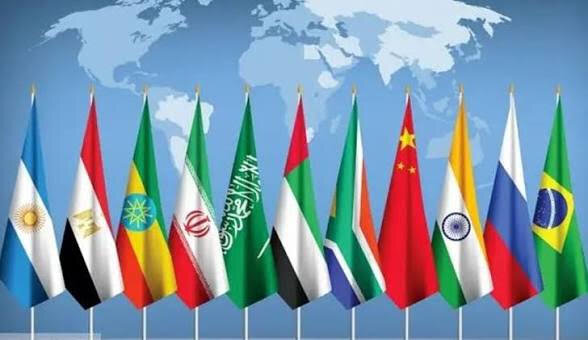
TEHRAN- The Vice Chairman of the Iran-Russia Joint Chamber of Commerce, stating that using BRICS financial mechanisms and settling exchanges with national currencies can reduce Iran’s trade costs, said: Placing the rial in the calculation basket of this group requires stabilizing the value of the national currency and reforming foreign currency exchange regulations.
The foundations of the global economy are experiencing a historic transition from traditional and centralized financial structures under Western hegemony toward multilateral and decentralized mechanisms. In the meantime, emerging pacts such as “BRICS,” with initiatives in dedicated payment systems and settlement with national currencies, have created a platform for breaking the financial monopoly and reducing the vulnerability of developing economies; an opportunity whose real utilization inside the country, more than external technical obstacles, depends on reforming structures, monetary policymaking, and removing self-created internal barriers.
Kambiz Mirkarimi, Vice Chairman of the Iran-Russia Joint Chamber, in an interview with IRNA’s economic reporter, regarding strengthening financing mechanisms and using the capacities of the BRICS Development Bank, believes that one of the main obstacles in the path of Iranian businesses is the lack of connection to the SWIFT system, because it has not only made financial transfers high-risk but also increased costs. Therefore, any method that reforms or facilitates this path will be a step toward improving trade relations.
Referring to the sanctions on Iran and Russia and the financial constraints of both countries in accessing SWIFT, he stated: “No one benefits from the financial mechanisms designed by BRICS as much as Iran and Russia, although other member countries will also benefit from this mechanism because they want to enhance their bargaining power against the West and have more financial tools at their disposal.”
Karimi stated: “One part of this mechanism is the discussion of the ‘BRICS Pay’ system, through which they want to implement independent payment systems separate from SWIFT based on settlement with national currencies. This is one step; of course, the idea of creating a single currency is a long-term vision and still has a lot of work to do, and one cannot talk about a single currency from now, but for the time being, national currencies can be used for settlements.”
Stating that currently Iran’s transactions and settlements with some trading partners such as China and Russia are carried out with national currencies, he added: “If within the BRICS framework they can multilaterally create a centralized ‘clearing and settlement house,’ then the problem of bilateral trade surpluses and deficits will be resolved. For example, at present we import more from Russia than we export to it; this imbalance shows that enough rubles may not be available to the Iranian importer. But when central banks coordinate within a multilateral pact to settle among themselves, these surpluses are settled and transferred very easily and directly between central banks, which itself will be a very big move and step in utilizing national currencies.”
Can Iran place the rial in the BRICS basket?
In response to this question, Karimi explained one of the important axes raised in BRICS: reducing the dependence of Iran’s economy on the Western financial system. Given the developments, is this goal achievable? And if achievable, what mechanism would need to be implemented? He explained: “This is achievable; another part of the work is to do the accounting with national currencies and obtain the necessary credits. The counterpart country is also ready to allocate these credits; just as Russia has given credits of which, for example, 50 percent were governmental, or China has considered finance credits for numerous projects. Many projects implemented in Iran have been completed with the support of this mechanism.”
He continued: “Therefore, investment projects can be implemented in the country in this way, and BRICS member countries also have the necessary tools and capacities to implement it. But the fundamental issue is which of these currencies should be the basis for settlement and how their stability should be. These countries are willing to trade with national currencies; now if Iran also wants to place its national currency as a calculation basis in this basket, its realization requires observing a set of requirements and the existence of monetary stability.”
The Vice Chairman of the Iran-Russia Joint Chamber of Commerce noted: “The Russian ruble has proven to have relative stability, and member countries and companies have no problem trading with the ruble or Chinese yuan. If we also want the Iranian rial to be defined in the calculation basket of these currencies, Iran must also provide requirements for stabilizing the value of its national currency so that the rial can enter this joint BRICS basket; by moving in this direction, costs will definitely decrease.”
The member of the Iran Chamber of Commerce, stating that today a major part of these capacities is available, but part of the challenges goes back to our own country’s domestic regulations, stated: “Issues such as multiple exchange rates and existing foreign exchange rules, along with some administrative regulations, have caused that despite the existence of infrastructure and technical facilities for foreign exchange settlement, including the availability of bilateral financial messengers and the possibility of settlement with national currencies, still due to the difficulty of these regulations, both from Iran and the other side, there remains a tendency to use intermediary currencies such as the dollar and euro and to seek help from third countries. Therefore, although sanctions have an undeniable role, a large part of the issue depends on reforming our own foreign exchange regulations and domestic rules.”
Karimi stated: “For years, in Iran-Russia bilateral interactions, the technical structure, banking lines, correspondent relations, and settlement platform in ruble and rial have been established. Currently, an Iranian exporting company can conclude a contract with the Russian side and officially include its rial account number inside Iran in the contract text, without needing to open an account abroad. The Russian buyer deposits rubles into the Russian bank account, and the Iranian exporter receives the equivalent in rials. But the main issue is the settlement rate; since rates in Iran are somehow manipulated and multiple, and there is always a gap between the free market rate and the official rate, the Central Bank directly or by decree tells the Iranian bank at what rate to perform the conversion. The existence of this type of intervention and price being dictated creates a kind of uncertainty, and it is this uncertainty that causes economic actors to still be cautious and considerate in using the national currency.”
Iran’s trade with BRICS is $60 billion per year
Deputy Head of Iran’s Trade Promotion Organization (TPO) for Trade Services Affairs announced Iran’s exchange with the BRICS group at $60 billion per year and said: It is necessary that the view toward Iran’s membership in pacts such as BRICS, the Shanghai Cooperation Organization, and the Organization of Islamic Cooperation go beyond the level of political presence and turn into tangible economic cooperation.
Mohammad Sadegh Ghanadzadeh, in an interview with IRNA, referring to the achievements of the Iranian President’s presence at the BRICS summit, said: “In this summit, issues such as the development of international corridors, payment mechanisms, trade, and financial cooperation were examined, and Iran also emphasized its readiness to participate in these areas.”
He continued: “Bilateral consultations were also part of these interactions, and in them the issue of developing trade and transit routes and creating suitable solutions for financial exchanges among countries was considered.”
Ghanadzadeh added: “Despite limitations caused by sanctions, war conditions, and problems created in the field of transportation and flights, Iran has maintained its presence in BRICS economic events, and this presence must be used to develop trade relations.”
Ghanadzadeh noted: “Iran must use this opportunity to increase economic interactions with BRICS members and take cooperation from the level of political consultations to specific projects in the fields of trade, transportation, payment, and investment.”
He announced the volume of Iran’s exchanges with the members of this group at about 23 billion of Iran’s exports are allocated to BRICS member countries, and in return, $37 billion worth of goods are imported from these countries.”
He added: “A significant part of the world’s population lives in the member countries of this group, and the share of these countries in the global economy has also increased in recent years; for this reason, BRICS has today become an influential collection in international economic equations.”
The TPO official continued: “Cooperation of BRICS members with Iran in transit routes, trade facilitation, customs and standards coordination, and payment mechanisms has been placed on the agenda.”
He specified: “The use of national currencies in trade exchanges is also among the issues that have been raised in recent years, but now the discussion is about creating executive and practical mechanisms for it.”
Ghanadzadeh said: “In bilateral relations among members, the use of local currencies can be expanded, and subsequently, this experience can lead to the formation of broader financial instruments among member countries.”
Stating that BRICS has allocated a significant share of Iran’s foreign trade to itself, he stated: “Despite the high volume of exchanges, the capacities of this membership have not yet been fully utilized in the country’s economy.”
He added: “It is necessary that the view toward Iran’s membership in pacts such as BRICS, the Shanghai Cooperation Organization, and the Organization of Islamic Cooperation go beyond the level of political presence and turn into tangible economic cooperation.”
The TPO official emphasized: “Expanding trade relations with major economies can create new paths for Iran, which faces limitations caused by sanctions, for the continuation of foreign trade and reduce part of the pressures caused by international restrictions.”
MA
Leave a Comment