15 destinations to discover the soul of Iran
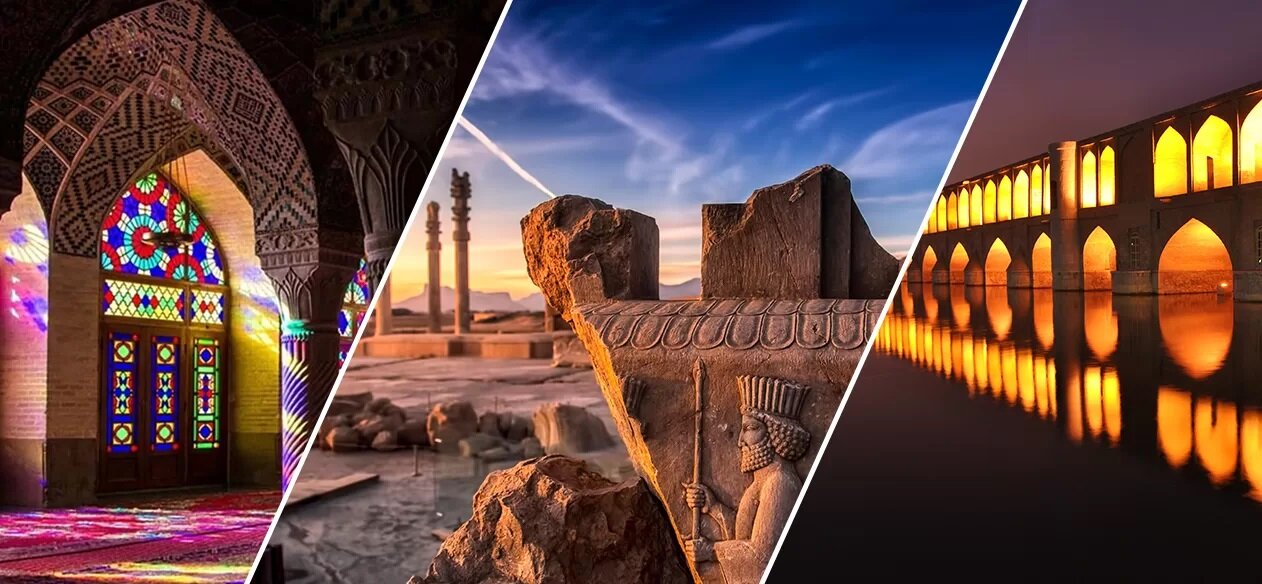
TEHRAN - Iran is a country of striking contrasts. In one journey, travelers can move from bustling historic bazaars to quiet desert towns, from ancient archaeological sites to misty Caspian forests and from the mountains of the Zagros to the warm waters of the Persian Gulf.
Its landscapes are as varied as its history. Mud-brick houses and windcatchers define many towns on the central plateau, while lush rice fields and forests dominate the north. In the south, islands with colorful cliffs and unusual geological formations offer a very different side of the country.
For travelers interested in history and culture, Iran also offers an exceptional concentration of heritage. The country has currently 30 properties on UNESCO's World Heritage List, ranging from archaeological sites and historic cities to cultural landscapes, gardens and natural areas.
The following 15 destinations offer a journey through some of Iran's most distinctive landscapes, historical periods and living traditions. They are not presented as a formal ranking, but as a selection of places that together provide a broad picture of the country.
Tehran
Many travelers arrive in Tehran and immediately continue to another destination. Yet Iran's sprawling capital is worth exploring in its own right.
Set against the southern slopes of the Alborz Mountains, Tehran brings together the energy of a modern metropolis with reminders of Iran's royal and cultural past. Museums, palaces, traditional bazaars, galleries and old neighborhoods give the city a character that changes from one district to another.
At the heart of the city's historic heritage is Golestan Palace. With origins reaching back to the Safavid period, the complex became an important royal residence and the seat of Qajar power in the 19th century. Its buildings and decorative arts reflect an encounter between Persian traditions and European influences, and the palace is now a UNESCO World Heritage site.
The National Museum of Iran, Sa'dabad and Niavaran palace complexes and the Grand Bazaar add further layers to the city's history. For a change of scenery, Darband at the foot of the Alborz offers mountain air, walking trails and restaurants beside the stream.
Isfahan
Few Iranian cities capture the elegance of Persian architecture as vividly as Isfahan.
The city flourished as the capital of the Safavid Empire under Shah Abbas I in the 17th century, when it developed into a major center of architecture, art and commerce. Its grandest expression is Naqsh-e Jahan Square, also known as Meidan Imam.
The enormous square is framed by the Imam Mosque, Sheikh Lotfollah Mosque and Ali Qapu Palace, with the historic bazaar extending from one side. The ensemble has been a UNESCO World Heritage site since 1979.
But Isfahan is not simply a city of monumental buildings. The Jameh Mosque, Chehel Sotoun Palace and Vank Cathedral reveal different chapters of its history, while the Si-o-se-pol and Khaju bridges offer some of the city's most memorable views.
A walk through Isfahan often feels like moving through a living architectural museum, but one where people still shop, meet, pray and gather as they have for generations.
Shiraz
Shiraz is a city of gardens, poetry and old-world charm. It is closely associated with two of Iran's best-known poets, Hafez and Saadi, whose tombs remain popular places for visitors and residents alike.
The city itself offers plenty to explore. The Nasir al-Mulk Mosque, Eram Garden, Vakil Bazaar, Vakil Mosque and Vakil Bathhouse provide a glimpse into the architectural and cultural history of Shiraz.
Yet the city's greatest appeal for many travelers lies in what surrounds it. About 60 kilometers northeast stands Persepolis, founded by Darius I in 518 BC as the ceremonial center of the Achaemenid Empire. Its monumental stairways, reliefs, columns and palace remains offer an extraordinary encounter with ancient Persian civilization. UNESCO inscribed Persepolis as a World Heritage site in 1979.
Pasargadae, the first dynastic capital of the Achaemenids, and the royal tombs and reliefs of Naqsh-e Rostam can also be visited from Shiraz, making the city an ideal base for exploring the ancient heartland of Persia.
Yazd
Yazd rises from the dry landscape of central Iran as a remarkable example of how people learned to live with the desert.
Its old neighborhoods are a maze of mud-brick walls, narrow lanes, courtyards and traditional houses. Above the rooftops, windcatchers rise into the sky, while beneath the ground an ancient network of qanats once carried water from underground sources into the city.
This relationship between architecture, water and climate is central to Yazd's identity. UNESCO describes the historic city as an outstanding example of adaptation to a harsh environment, and the Historic City of Yazd was added to the World Heritage List in 2017.
Visitors can explore the Jameh Mosque, Amir Chakhmaq complex and Dowlat Abad Garden, as well as sites associated with Iran's Zoroastrian heritage.
Yazd is perhaps best experienced on foot, when the quiet lanes and earthen walls reveal the ingenuity behind this desert city.
Kashan
Kashan offers travelers an intimate look at traditional Persian life and architecture.
The city is particularly known for its historic houses. The Tabatabaei, Borujerdi and Ameri houses feature courtyards, elaborate plasterwork, stained glass and carefully planned spaces designed to cope with the changing seasons.
The Fin Garden, one of Iran's celebrated Persian gardens, provides another expression of this architectural tradition. Nearby, the archaeological site of Sialk takes the story much further back into antiquity, while the desert landscapes around Abu Zeydabad offer a different experience altogether.
Spring gives Kashan another attraction. The annual rose harvest and golabgiri, the traditional production of rosewater, fill the surrounding villages with the fragrance of freshly gathered roses.
Tabriz
For centuries, Tabriz has stood at the meeting point of different worlds. Its location in northwestern Iran helped make it an important crossroads connecting Iran with Anatolia and the Caucasus.
That history is particularly visible in the Tabriz Historic Bazaar Complex. Its interconnected brick corridors once accommodated commerce, religious activity, education and social life. UNESCO inscribed the bazaar as a World Heritage site in 2010 and describes it as one of the historic Silk Road's important commercial centers.
The Blue Mosque, Constitutional House, Azerbaijan Museum and El Goli park provide further reasons to spend time in the city.
Tabriz is also a gateway to East Azerbaijan province. Among the region's most unusual destinations is Kandovan, a village where homes have been carved into volcanic rock.
Mashhad
Mashhad is the spiritual heart of Iran for millions of pilgrims. At the center of the city stands the shrine complex of Imam Reza (AS), dedicated to the eighth Shi'a Imam.
The shrine is an immense architectural ensemble of courtyards, mosques, arcades, museums and richly decorated spaces. For visitors, it provides an opportunity to experience an important dimension of Iranian religious and cultural life.
Mashhad can also serve as a starting point for exploring Khorasan. Nearby Tus is associated with Ferdowsi, the great Persian epic poet, while the wider region contains historic settlements and landscapes that extend well beyond the city itself.
Kerman
Kerman is where history and desert scenery come together.
The city developed along routes linking central Iran with the southeast and retains important examples of traditional architecture. The Ganjali Khan complex, with its bathhouse, caravanserai, mosque and bazaar, offers a glimpse of urban life during the Safavid era.
Kerman is also a gateway to one of Iran's most extraordinary natural landscapes: the Kaluts of the Lut Desert. Wind and erosion have sculpted the desert into vast formations that can appear almost otherworldly.
The Lut Desert was inscribed on the UNESCO World Heritage List in 2016. The nearby Bam archaeological area, including the monumental Arg-e Bam citadel, adds another major heritage destination to the region.
Qeshm Island
Qeshm introduces travelers to a completely different Iran.
Situated in the Persian Gulf, Qeshm is the country's largest island and is known for dramatic geological formations, coastal landscapes and distinctive local communities.
The Qeshm Island UNESCO Global Geopark includes such remarkable features as Chahkuh Canyon and Namakdan Salt Cave. The island's traditional boatbuilding heritage, mangrove ecosystems and nearby Hengam Island add further dimensions to the experience.
For travelers interested in geology, marine environments, traditional architecture and island culture, Qeshm offers experiences rarely associated with Iran's better-known inland destinations.
Hormuz Island
Near Qeshm, the small island of Hormuz is famous for a landscape painted in striking shades of red, yellow and ochre.
Its unusual geology is one of its defining attractions. Travelers can explore colorful valleys, beaches, cliffs and coastal landscapes, often within a relatively short journey around the island.
The Portuguese Castle recalls another chapter in the history of the Persian Gulf, when Portugal established a presence in the region.
Hormuz is particularly attractive to photographers and artists, but its fragile environment also calls for careful and responsible travel. The island's appeal lies partly in its relatively intimate scale and the opportunity to experience its landscape at a slower pace.
Rasht and the Caspian region
Rasht offers a very different picture of Iran. Here, the dry landscapes of the central plateau give way to humid air, rice fields, orchards and lush vegetation.
As the capital of Gilan province, Rasht is a natural place to experience the region's food and culture. Local markets, traditional dishes and rural agricultural life are central to the character of southern Caspian Iran.
Beyond the city, the Hyrcanian forests stretch along the southern Caspian region. These ancient broad-leaved forests are home to rich biodiversity and extend through parts of Gilan, Mazandaran and Golestan provinces. They were inscribed on the UNESCO World Heritage List in 2019.
For travelers accustomed to Iran's deserts and historic cities, the green landscapes of the Caspian region can come as a pleasant surprise.
Ramsar
Ramsar brings together the Caspian Sea, the Alborz Mountains and the forests of northern Iran.
The town is known for its setting between the sea and mountains, while the surrounding area offers beaches, forested slopes, waterfalls and opportunities for mountain excursions.
The former Pahlavi-era Ramsar Palace and its gardens provide a glimpse into the region's more recent history. But much of Ramsar's appeal lies outdoors, where the landscape changes dramatically within a short distance.
For travelers seeking a greener side of Iran, Ramsar offers a striking contrast with the country's desert cities.
Kermanshah and Bisotun
In western Iran, Kermanshah provides a gateway to the mountains and heritage of the Zagros.
One of its best-known attractions is Taq-e Bostan, where Sasanian royal scenes and reliefs were carved into the mountainside.
East of the city lies Bisotun, an archaeological site positioned along an ancient route between the Iranian plateau and Mesopotamia. Its most famous monument is the enormous inscription and relief commissioned by Darius I in the 6th century BC.
The inscription, written in Old Persian, Elamite and Babylonian, played an important role in the study and understanding of ancient cuneiform texts. UNESCO inscribed Bisotun as a World Heritage site in 2006.
Hamadan
At the foot of Mount Alvand, Hamadan offers another journey deep into Iran's ancient past.
The modern city is associated with ancient Ecbatana, known in Iranian sources as Hegmataneh. Archaeological remains at Hegmataneh reflect successive periods of settlement, including the Median, Achaemenid, Seleucid, Parthian and Sasanian eras.
UNESCO added Hegmataneh to the World Heritage List in 2024.
Hamadan also has strong literary and intellectual associations. The tombs of Avicenna, the celebrated Persian polymath, and the poet Baba Taher are among the city's notable landmarks. Nearby Ganjnameh combines ancient inscriptions with a mountain setting.
Masuleh
Masuleh is one of the most recognizable mountain villages in Iran.
Built into a steep, forested slope in Gilan province, the village is known for its distinctive stepped architecture. Houses are arranged so that the roof of one building can serve as a path or open space for the building above it.
The result is a settlement that seems to rise naturally from the mountainside. Its architecture reflects the terrain and climate of the region and differs markedly from the enclosed courtyard houses common in central Iran.
Masuleh is currently on Iran's UNESCO Tentative List rather than the World Heritage List. It can be combined with a wider journey through Gilan's forests, villages and food traditions.
AM
Leave a Comment