Another catch in Hormuz
IRGC captures second US spy sub in Hormuz, exposing the limits of Washington’s undersea warfare
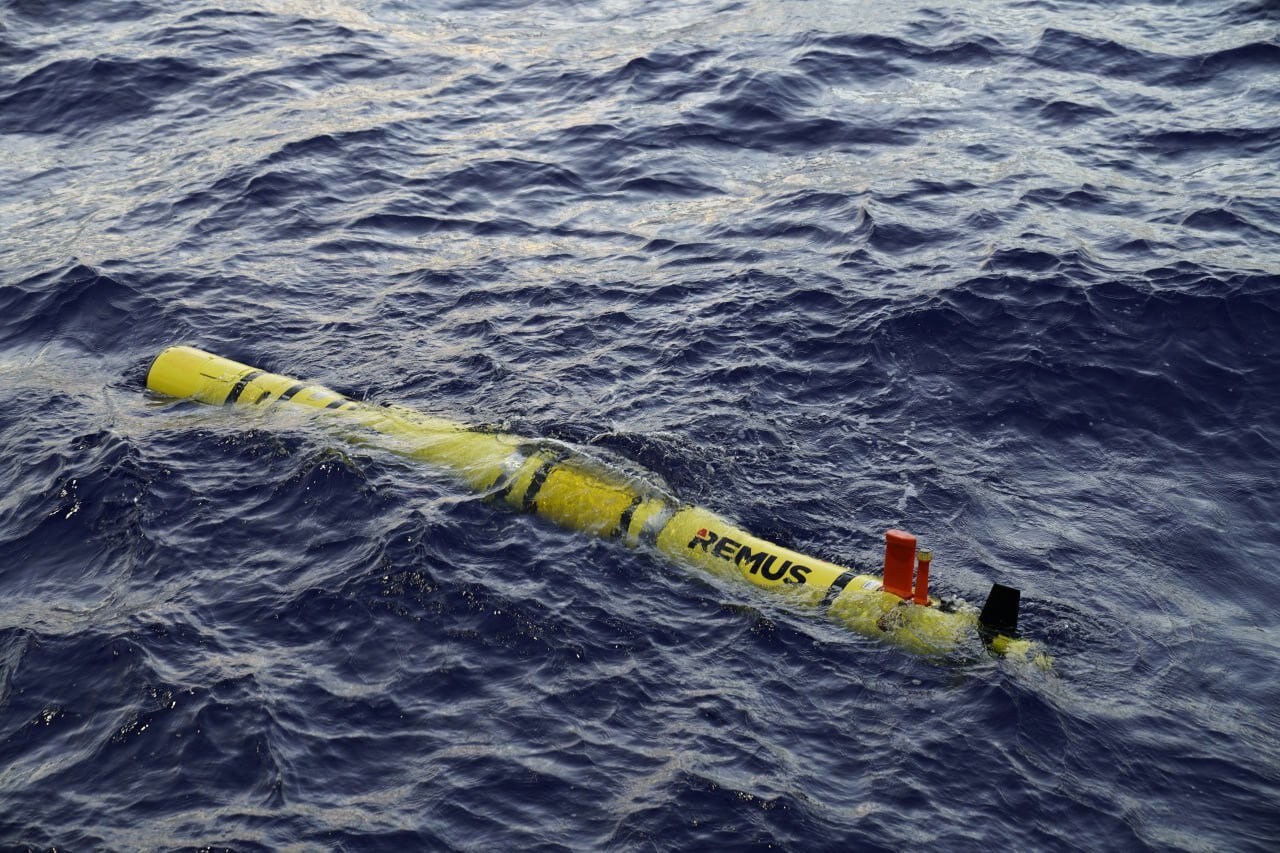
TEHRAN — In another humiliating blow to the US automated naval warfare doctrine, the Islamic Revolution Guards Corps (IRGC) Navy has intercepted and captured a state-of-the-art American autonomous underwater vehicle in the Strait of Hormuz, further cementing Iran’s control over the world’s most vital energy chokepoint.
The Sunday operation marks the second time in less than a month that an advanced Pentagon spy submersible has fallen intact into the hands of Iranian naval and intelligence units. Crucially, the vessel was neither neutralized nor destroyed; it was methodically tracked, electronically commandeered, and seized as operational war booty—delivering an invaluable intelligence bonanza straight to Iranian military labs.
In an official statement, the IRGC Navy confirmed the captured asset as a REMUS 600, a premier autonomous unmanned submersible manufactured for sensitive expeditionary warfare. The platform is currently in the custody of IRGC technical specialists to decode its onboard encrypted mission computers and extract critical mission logs.
“IRGC Navy forces intercepted an advanced underwater drone belonging to the terrorist US military, which was conducting clandestine espionage operations in the Strait of Hormuz, through a synchronized, multi-layered operation combining tactical intelligence and advanced electronic warfare,” the IRGC said in a statement.
Underscoring Iran’s uncompromising posture, the statement firmly warned: “The IRGC Navy declares that the Strait of Hormuz is closed to hostile entities, and we will take decisive, relentless action against any unauthorized passage or hostile regional movements.”
Developed by American defense contractors, the REMUS 600 is a modular, high-endurance autonomous system tailored for deep-water intelligence, surveillance, and reconnaissance (ISR), seabed mapping, naval mine detection and classification, and clandestine environmental data collection.
Engineered to operate at depths reaching 600 meters (roughly 2,000 feet), the vessel relies on sophisticated inertial navigation systems (INS), Doppler Velocity Logs (DVL), acoustic transponders, and GPS fixes upon surfacing. These systems allow the platform to execute complex, long-range missions fully autonomously, devoid of real-time tethering or manual operator intervention. Armed with cutting-edge side-scan imaging sonars, environmental sensors, and multi-channel data-logging architectures, the platform represents the backbone of US clandestine littoral reconnaissance.
The strategic windfall goes far beyond the captured physical hull. The recovery of intact mission hard drives, pre-programmed transit corridors, high-resolution acoustic seabed imaging, search patterns, and firmware configurations provides Iranian specialists with an unfiltered, forensic blueprint of how the US Navy conducts undersea reconnaissance within Iranian territorial and adjacent waters. The treasure trove of data will allow Iranian countermeasures to systematically anticipate and neutralize future hostile uncrewed deployments.
From Dive-LD to REMUS 600
Sunday’s operation directly parallels the IRGC’s historic seizure on September 8 of another flagship American autonomous system: the Dive-LD. Manufactured by California-based defense tech firm Anduril Industries and delivered to the US Navy’s Unmanned Undersea Vehicle Group 1 in 2025, the 2.7-tonne, 5.8-meter Dive-LD was heralded by Washington as the pinnacle of deep-sea endurance, capable of reaching depths of 6,000 meters.
That capture—achieved through an audacious electronic warfare strike that pierced the vehicle’s encrypted command links and brought it safely ashore—unraveled the Pentagon’s narrative of invisible undersea superiority. When US Central Command scrambled an MQ-9 Reaper drone in a desperate bid to locate the stranded asset, Iranian air defense batteries promptly blasted the multi-million-dollar surveillance aircraft out of the sky.
Washington’s frantic attempts to downplay the September 8 capture by alleging mechanical failure or framing the platform as “attritable” were thoroughly ridiculed by regional observers.
The subsequent capture of the REMUS 600 confirms a definitive pattern: far from experiencing accidental drift, the US military’s most secretive autonomous systems are being methodically hunted down and netted by Iranian forces.
The latest capture comes amid the US-Israeli war against Iran launched on February 28, underscoring Tehran’s continued ability to counter advanced US surveillance systems.
Facing formidable Iranian Anti-Access/Area-Denial (A2/AD) envelopes that preclude manned US capital ships from operating safely in the Persian Gulf without catastrophic risk, the Pentagon wagered its strategic deterrence on an uncrewed, three-tiered hybrid architecture spanning aerial drones (UAVs), robotic surface vessels (USVs), and subsurface craft (UUVs). With the consecutive, intact seizures of the Dive-LD and the REMUS 600, alongside the regular downing of high-altitude spy aircraft, Iran has systematically shredded all three layers of Washington’s unmanned warfare concept.
An unbreakable maritime bastion
The capture of the REMUS 600 offers resounding proof that the Islamic Republic’s electronic and asymmetric warfare capabilities have outpaced the Pentagon’s technological hubris. By pulling the veil off Washington’s most secretive undersea assets twice in four weeks, the IRGC Navy has sent an unmistakable signal across the Persian Gulf and beyond: the strategic waters of the Strait of Hormuz belong entirely to regional nations, and every covert imperialist footprint beneath the surface will be severed and seized.
As Washington grapples with the fallout of its failed regional adventurism and dwindling asymmetric options, Iran’s indigenous defense apparatus continues to turn the enemy’s prized hardware into its own intellectual property. The Strait of Hormuz is no longer a permissive playground for American covert aggression, but a fortified bastion where imperial arrogance sinks and Iranian technological mastery reigns supreme.
Leave a Comment