India’s new ambassador pledges to unlock ‘huge potential’ in Iran trade ties
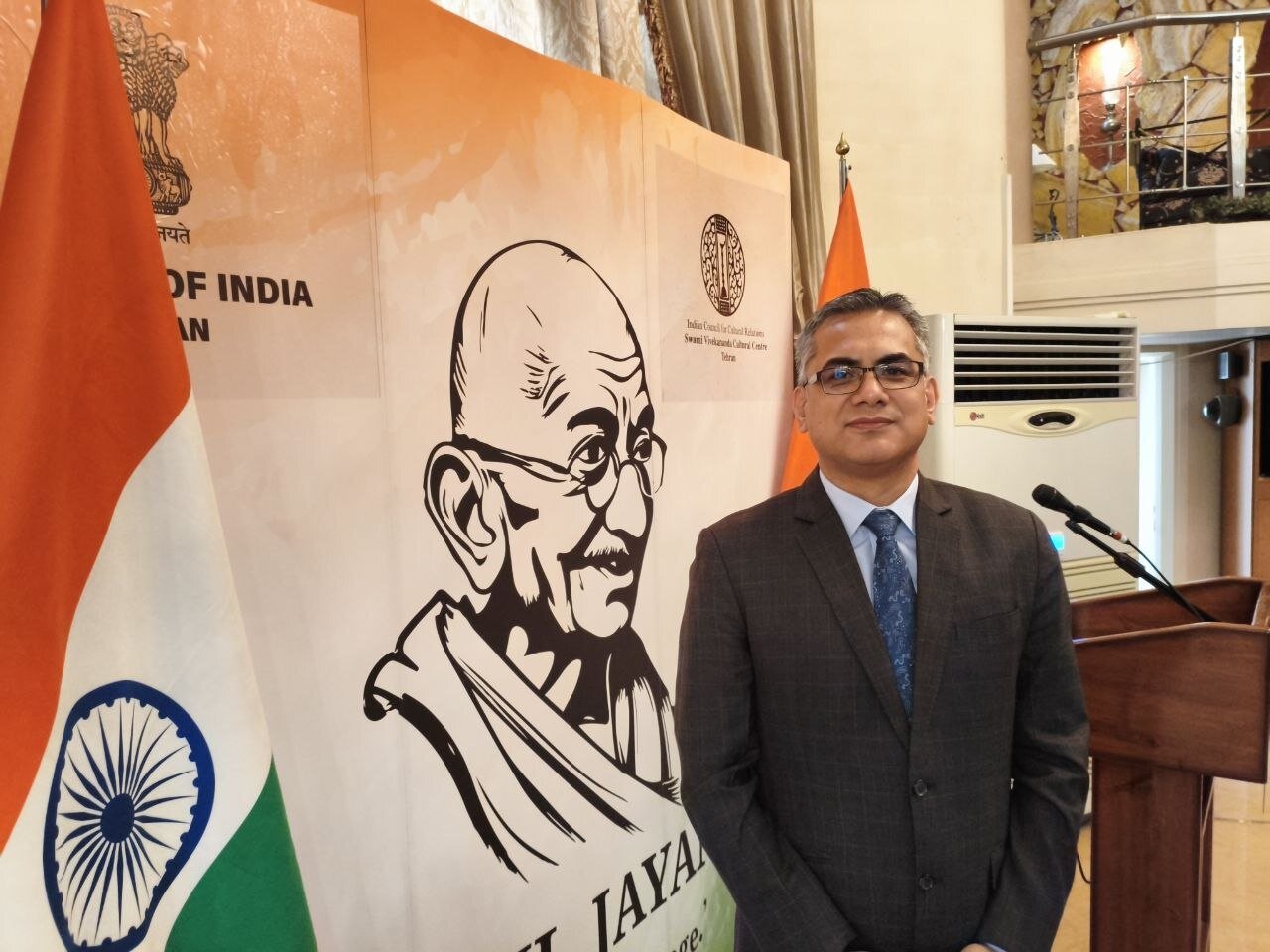
TEHRAN — India’s new ambassador to Iran has emphasized the scope for expanding bilateral trade as one of his core missions, pledging to facilitate business matchmaking and explore mechanisms to overcome logistics and banking hurdles, particularly for humanitarian and essential goods.
“I think one of my important missions, which I have already spoken about earlier, is that there lies huge potential for economic trade and for trade to flourish between the two countries,” Vishwesh Negi said in remarks to the Tehran Times on Friday on the sidelines of a commemorative ceremony hosted by the Indian Embassy in Tehran to mark the 157th birth anniversary of Mahatma Gandhi.
Addressing the current regional and international headwinds, he added: “And despite the geopolitical situation, my effort has been to connect with each and every stakeholder in India-Iran trade relations and find out possibilities for how we can sort of do the necessary matchmaking for them to find out and further trade between the two countries.”
While pointing to practical challenges facing merchants, the ambassador stressed his commitment to keeping trade corridors open for essential supplies.
“There are certain limitations at this point in time in terms of transport, logistics and financial transactions, but it will be my endeavor to look at mechanisms for how goods can be traded between the two countries, which are essentially humanitarian goods, pharmaceuticals and food products.” he explained. “My focus would be on these aspects of trade relations and furthering trade relations.”
The Indian ambassador’s comments come amid the current geopolitical developments in West Asia triggered by the US-Israeli war on Iran, which have complicated efforts to maintain commercial links.
The US has recently intensified its economic pressure on Iran, with President Donald Trump threatening countries that continue doing business with Tehran with severe economic consequences. In August, Trump warned that countries providing Iran with an economic or financial “lifeline” would face such consequences, while US Treasury Secretary Scott Bessent announced new sanctions aimed at further isolating Iran from the global economy.
Against this backdrop, Indian Prime Minister Narendra Modi and Iranian President Masoud Pezeshkian held talks on the sidelines of both the SCO Summit in Bishkek on August 31 and the BRICS Summit in New Delhi on September 11, underscoring the continuation of high-level India-Iran engagement amid mounting geopolitical and economic pressure.
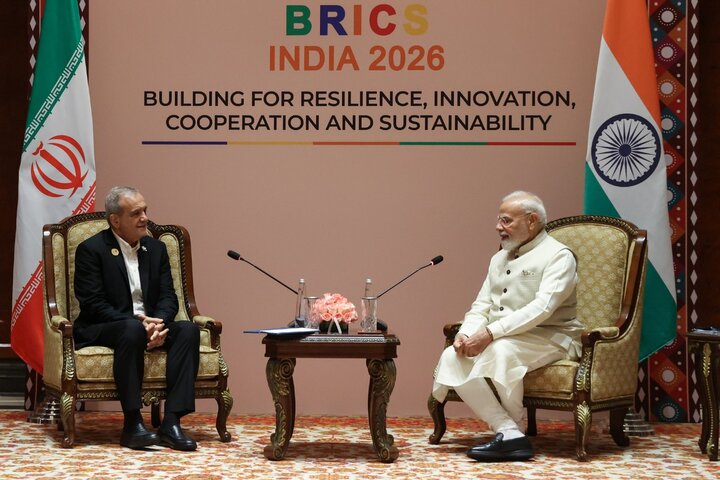
Commenting on these high-level diplomatic engagements, the ambassador noted: “As you know, the Honorable Prime Minister of India and the Honorable President of Iran have met twice: once at the SCO Summit and recently at the BRICS Summit in New Delhi. I think that was a very good bilateral engagement between our two leaders. A host of issues were discussed, including bilateral relations and the geopolitical situation.”
Emphasizing New Delhi’s diplomatic stance, he added, “As the Honorable Prime Minister has said, this is not the era for war, and I think we all should—including stakeholder countries—give dialogue and diplomacy a further chance to settle the issue and look for a peaceful resolution so that there is peace and stability in the region.”
Chabahar: A test for India-Iran economic ties
Asked whether India intended to continue promoting economic ties with Iran, particularly through the Chabahar port, despite mounting US pressure, the ambassador pointed to the long-term nature of the bilateral relationship.
“India and Iran have historical relations, and I believe that the relationship is a long-term partnership between the two countries,” Negi said. “Of course, at this point in time, this is not the ideal situation in terms of how we can further trade and economic cooperation between the two countries.”
He described Chabahar as a concrete expression of that partnership. “And Chabahar is a manifestation of the partnership India and Iran have had over the past few years. India has contributed to the development of Chabahar port, and hopefully there will be peace and stability in the region, which would enable the completion of the Chabahar project. The project would not only provide India with a gateway to Central Asia and Europe but also contribute to the economic development of the Chabahar region and Iran itself. So, I am very optimistic about, I would say, the possibilities for further economic engagement between the two countries when the situation is right.”
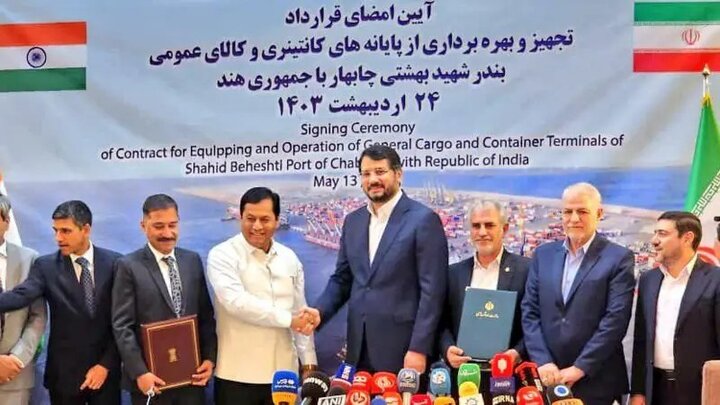
The Indian ambassador’s remarks come at a sensitive juncture for the Chabahar project. India signed a 10-year agreement with Iran in May 2024 to operate the Shahid Beheshti terminal at Chabahar, which New Delhi views as an important connectivity link to Afghanistan and Central Asia. The project also offers India a route to the region that bypasses Pakistan.
However, a US sanctions waiver that had allowed India to pursue its Chabahar activities expired on April 26, 2026. India subsequently said the status of the project was under discussion with both Washington and Tehran, while Foreign Secretary Vikram Misri said in September that New Delhi was seeking a “sustainable way forward” to remain involved in the port.
The issue has gained renewed attention in recent weeks. During his September visit to India for the BRICS Summit, Pezeshkian invited New Delhi to increase its investment in Chabahar and said Iran was ready to deepen its economic partnership with India. His comments came as India continued to explore ways to preserve its interests in the port following the expiration of the US waiver.
The Chabahar issue has become even more complicated by Washington’s latest economic pressure campaign against Iran. For New Delhi, the challenge is to preserve a project it regards as strategically important for regional connectivity while navigating an increasingly restrictive US sanctions environment. The ambassador’s emphasis on the long-term nature of India-Iran relations and his outlook about Chabahar therefore point to New Delhi’s continued interest in the project, even as its future operational framework remains subject to the wider geopolitical situation.
Leave a Comment