The hollowed arsenal of a fading empire
The campaign of aggression against Iran has left the American military-industrial complex in a state of kinetic bankruptcy
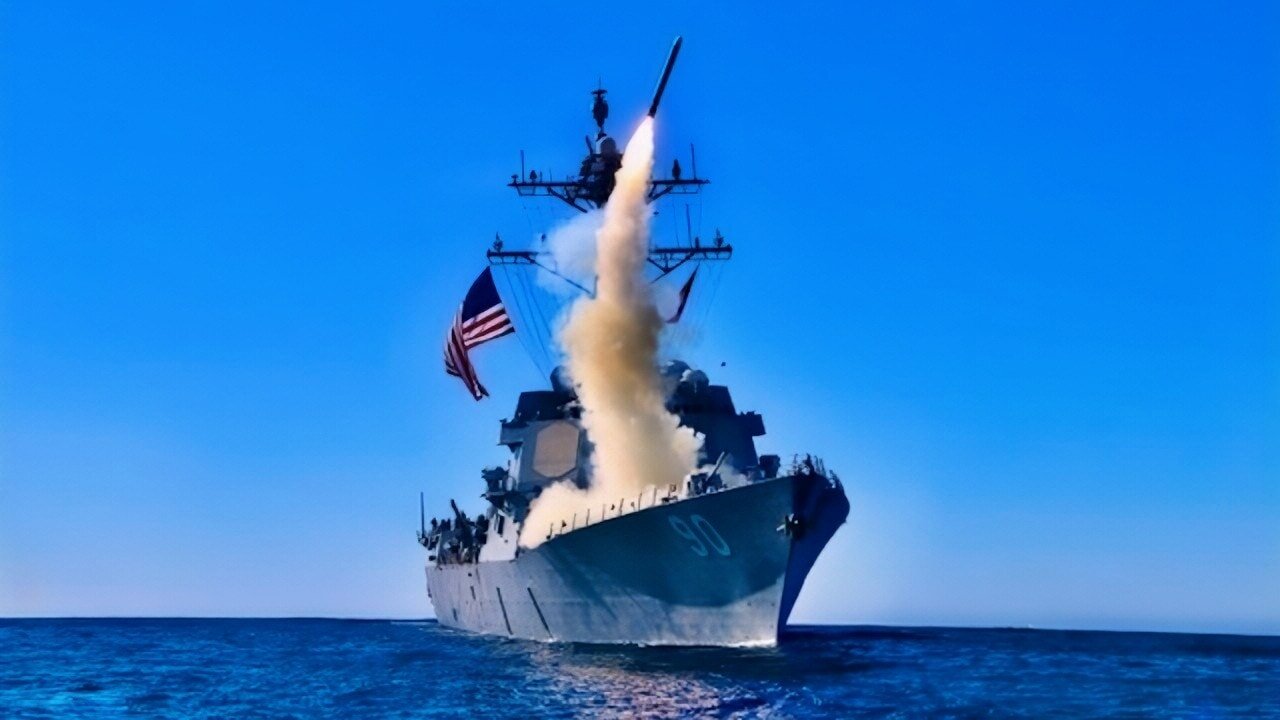
TEHRAN — The leak is worse than the official denial because it reveals something the White House cannot spin away: the United States has been fighting Iran with a magazine that is visibly thinning. After weeks of air and missile combat, the Trump administration is now confronting the oldest rule of warfare it spent years pretending technology had abolished: if you shoot faster than you can build, you eventually run dry.
The revelation’s sting is not simply that the U.S. used a lot of missiles. It is that it used the wrong missiles in the wrong quantities.
The U.S. squandered high-end missiles in a desperate, mismatched show of force for a war that was militarily effortless to ignite but remains an embarrassing political failure they can never truly justify.
The Center for Strategic and International Studies (CSIS) says the United States fired more than 1,000 Tomahawks, about 1,100 JASSM-ERs, and large shares of its Patriot, THAAD, SM-3, SM-6, and PrSM inventories during the 2026 campaign of aggression against Iran, with rebuilding to prewar levels likely taking one to four years or more.
CNN reported a “near-term risk” that the U.S. could run low in another war, and internal Pentagon assessments reportedly showed especially severe strain in air-defense stocks.
The depletion of these particular stocks is significant due to their unique roles in the U.S. arsenal. Tomahawks and JASSMs are the tools Washington reserves for standoff strike against hardened targets; Patriot, THAAD, SM-3, and SM-6 are the expensive shield that keeps bases, ships, and allies alive under missile fire.
When those stocks drop sharply in a short war, the challenge extends beyond immediate logistics into the realm of long-term strategy. A so-called superpower that cannot keep its magazine full must think twice before opening the next fight.
The cost trap
Iran understood the math better than Washington did. Tehran’s drones and missiles are comparatively cheap, localized, and easier to replace, while the U.S. answer is a cascade of million-dollar interceptors and high-end cruise missiles built through slow, fragile supply chains.
The economic imbalance has become almost obscene. One side can launch a swarm for the price of a single air-defense round on the other side. That is one of the reasons the war does not resemble a display of American strength but a live demonstration of American vulnerability.
The production ceiling
CSIS argues that replenishment is not a matter of simply approving more money.
The industrial base itself is the bottleneck, with lead times for critical components such as solid rocket motors and seeker electronics stretching into the 24-to-36-month range and total replacement cycles taking years.
The American military-industrial complex has operated similarly to a fragile boutique, even as its own relentless aggression creates a battlefield that demands the output of a factory.
In comparison, Iran’s missile and drone ecosystem is more localized and improvisational, while the U.S. depends on large contractors, nested suppliers, and just-in-time assumptions that break down under pressure.
Strategic cannibalization
The leaks are also about damage control abroad. Reports say the Pentagon has delayed or deferred deliveries to Ukraine, Japan, and parts of NATO’s eastern flank to prioritize war on Iran.
Japan’s Tomahawk order has reportedly been pushed back, even though those missiles are central to Tokyo’s new counterstrike doctrine against China. European allies have likewise seen delays.
If Taiwan needs anti-ship missiles, if Poland needs air defense, if Ukraine needs Patriots, every diverted round becomes a political message.
The issue is not merely that the U.S. is walking away from its so-called allies. It’s far worse: Washington is still clinging to the illusion of full-spectrum dominance even as its security guarantees have degenerated into worthless promises; bad checks written on an industrial base so eroded it cannot even pretend to cover them.
The logic of the leaks
The source of the leaks is probably mixed. Some insiders may be trying to force realism on a White House that prefers maximalist slogans to hard logistics. Others may be worried about the China file, where a Pacific contingency would require far more long-range strike and missile defense than the campaign of aggression against Iran has already burned away.
There is also bureaucratic self-protection: if the stockpiles are depleted, leaking the numbers is one way to make sure blame lands on political leaders, not the bureaucrats and planners.
There is a more cynical interpretation: the possibility of strategic deception. In the tradition of maskirovka or the “empty fort” strategy, Washington might be intentionally projecting an image of kinetic exhaustion to bait its adversaries. If the reported shortages are exaggerated, the leak serves as a sophisticated trap, inviting a strike that would be met with a far more robust response than the current narrative suggests. In this light, these are not confessions of weakness, but carefully curated lures designed to smoke out the intentions of rival powers.
It is also worth noting the pedigree of the institutions sounding these alarms. The CSIS is a central node in the American national security architecture, heavily funded by the very entities that benefit from a bloated military budget.
With financial ties to the Department of War, major defense contractors like Lockheed Martin, Northrop Grumman, and Boeing, as well as allied partner governments, its reports serve a dual purpose.
While providing data on stockpile depletion, these assessments also function as a sophisticated lobbying effort for the next generation of multi-billion-dollar contracts. Their closeness to the Pentagon suggests that when CSIS speaks of an empty magazine, it is often a precursor to a demand for a much larger and more expensive one.
But the larger reason may be simpler. Leaks like these appear when an institution knows it’s being pushed past its limits and wants the world to see it before the next crisis hits.
They read as a warning shot from a system being ordered to fight tomorrow’s battles with yesterday’s ammunition; a desperate cry from a structure that knows it’s running on fumes and borrowed time.
Leave a Comment