Amal Khalil wrote the final report with her own blood
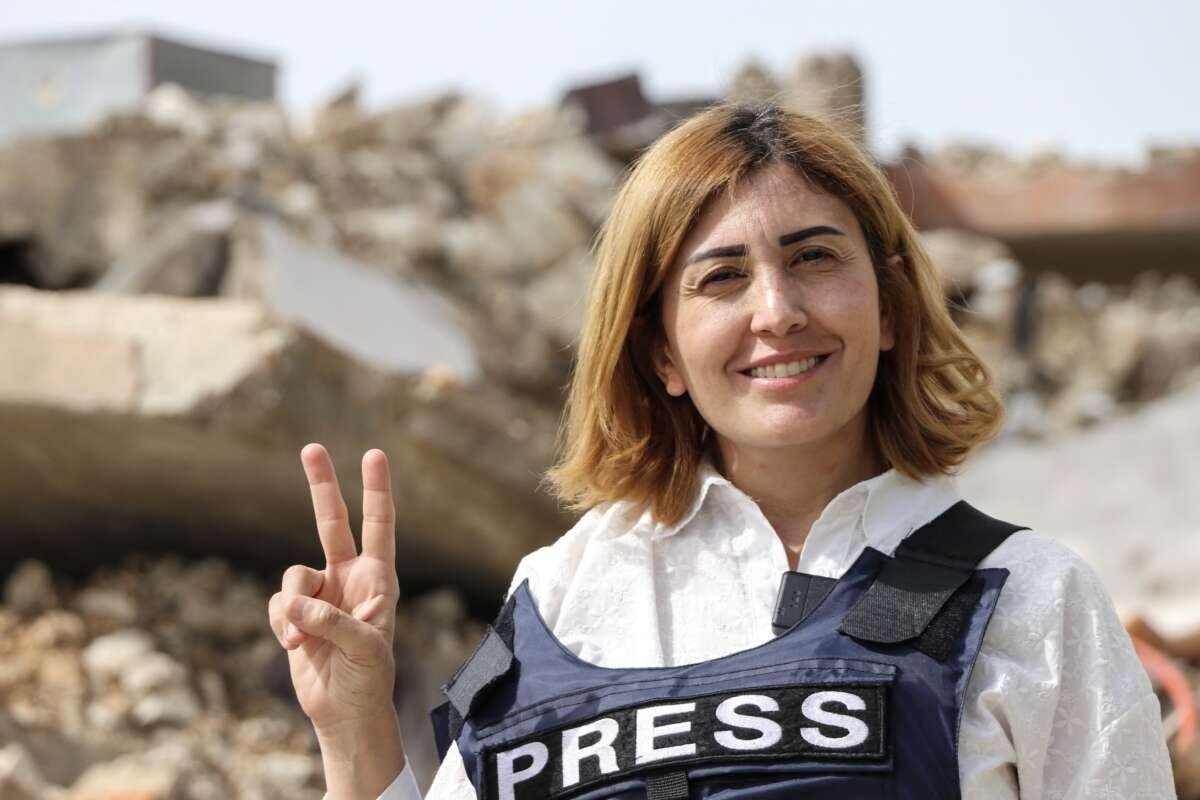
TEHRAN – The martyrdom of Amal Khalil once again draws the attention of regional and global public opinion to one of the most significant dimensions of the recent wars in Lebanon and the occupied Palestinian territories: the systematic targeting of journalists on the battlefield.
We view this incident not as an isolated case, but as part of an ongoing and analyzable pattern in which journalists standing on the front lines of truth-telling have themselves become targets in the war conducted by Israel. In this context, the martyrdom of Amal Khalil must be understood within a broader reality: an effort to restrict, control, or eliminate narratives emerging directly from the field of conflict.
Under established rules of international law, particularly the Geneva Conventions and their Additional Protocols, journalists and media workers present in conflict zones are considered civilians and are entitled to full legal protection. This principle is one of the most fundamental pillars of media freedom and the right to access information in wartime conditions.
From the perspective of many media observers in the region, what is taking place in southern Lebanon and Gaza cannot be understood merely as a conventional military confrontation. This war is simultaneously a war of narratives. In this arena, the journalist is not only a transmitter of news but also a carrier of truth.
It is on this basis that many regional analysts believe the targeting of journalists in these areas—particularly in southern Lebanon and the Gaza Strip—does not occur in a vacuum. Rather, it happens within a framework in which the expansion of independent, on-the-ground reporting is seen as costly by the party seeking to control global public opinion.
Within this critical perspective, which is also reflected in a significant portion of independent regional media, Israel is seen as attempting to limit access to the real image of the war, thereby preventing the full exposure of its human and legal dimensions. In other words, concern over the internationalization of war crimes and violations of international law is viewed as one of the factors intensifying pressure on journalists in the field.
The killing of Amal Khalil cannot be separated from this framework. She was not only a field reporter, but also part of a network of southern Lebanon correspondents who for years sought to present a direct and unmediated account of reality. Such presence in a complex war environment has always involved high risk, one that, unfortunately, in multiple cases, has cost journalists their lives.
In recent years, numerous cases of journalists being targeted in Lebanon and Palestine by Israeli forces have been documented. Among them are Ali Shaib, Fatima Fotuni, and other journalists who were struck while covering events in border areas or conflict zones. In Gaza, as well, dozens of journalists have been killed in recent wars, an issue that international human rights and media organizations have repeatedly expressed concern about.
In addition to the loss of life, media infrastructure has also been damaged in these conflicts. Media offices, broadcasting centers, and even press-related emergency teams have, in some cases, come under direct fire from Israeli forces. This situation raises serious questions regarding Israel’s compliance with the fundamental principles of international humanitarian law, particularly the protection of civilians and media workers.
The martyrdom of Amal Khalil represents for her colleagues at Al-Akhbar and other active media outlets in southern Lebanon not merely a personal loss, but a sign of increasing professional risks in this domain. She embodied a generation of journalists who blurred the line between observer and witness.
Media analyses in the region have repeatedly emphasized that in modern warfare, control over narrative is as important as control over territory. In such a context, journalists operating in the field are directly involved in this battle of narratives, even if their primary intention is merely to document reality.
In this framework, the removal of the narrator can be interpreted as an attempt to narrow the world’s visibility of what is happening on the ground.
At the same time, the role of local media structures cannot be overlooked. In southern Lebanon, journalists like Amal Khalil did not operate in isolated media environments, but within communities directly affected by the consequences of war. This proximity gave their reporting depth and credibility, while also exposing them to direct danger.
It must also be emphasized that the collective memory of the region will preserve the martyrdom of these journalists as part of its contemporary history. Every name, every report, and every image becomes part of this memory, one that cannot be erased by the physical elimination of individuals.
Amal Khalil, in this sense, remains not only a journalist but part of this collective memory. Alongside other martyred journalists, she represents a generation that chose to witness the truth up close, even at a great cost.
In conclusion, we at Tehran Times, while expressing full solidarity with the newspaper Al-Akhbar and all journalists active in Lebanon, firmly believe that the responsibility of the regional media community today is more than ever the precise documentation of these realities and the prevention of their erasure.
The killing of Amal Khalil is a reminder of the painful fact that in certain war zones, even truth itself becomes a target. Nevertheless, as long as narration continues, efforts to silence the voice of truth will ultimately fail.
Leave a Comment