Study examines four ancient metal smelting sites in central Iran
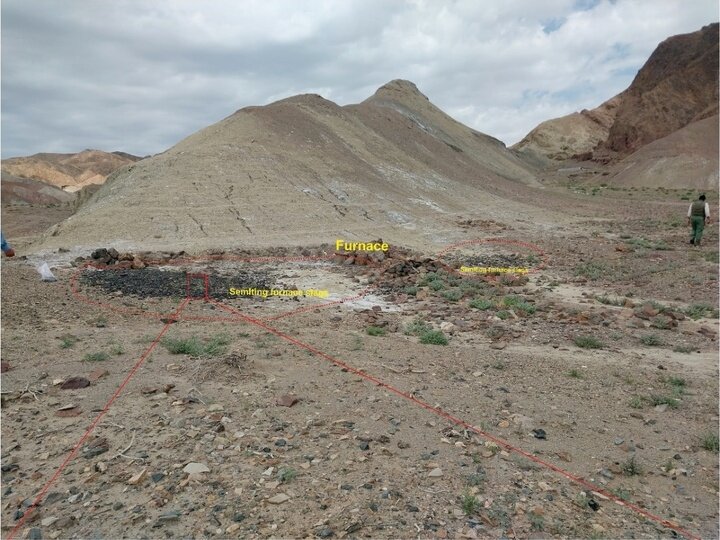
TEHRAN – A new research project has examined four ancient metal smelting sites in Yazd province, central Iran, shedding light on early metallurgical practices and identifying the types of metals extracted and processed at the locations, researchers said.
The study, conducted by Aminollah Kamali, Hamid Fadaei, Seyyed Iraj Beheshti and Ali Arab at the Research Institute of Cultural Heritage and Tourism, focused on sites in Zoveh Nadooshan, Chah Jamal, Dahaneh Lashkar and Bahabad, according to a report by Miras Aria.
The project aimed to expand the national database on mining and metallurgy by analyzing slag remains, identifying extracted metals and determining the historical periods of activity at the sites.
Findings showed that three of the sites, Zoveh Nadooshan, Chah Jamal and Dahaneh Lashkar, were primarily used for copper extraction. Slag samples from these locations contained impurities such as lead, zinc and silver, indicating the use of polymetallic ore deposits.
In contrast, the Bahabad site appeared to be specialized in zinc extraction. Researchers said slag analysis was carried out using field surveys, petrographic studies and chemical testing through ICP-OES methods.
Results indicated that copper content at the three main sites ranged from 0.4% to 4%, suggesting relatively low furnace efficiency. High levels of silica and calcium in the slag pointed to the use of siliceous and carbonate fluxes in the smelting process.
Petrographic analysis identified minerals including pyroxene, fayalite, wustite and copper sulfides such as covellite and bornite, along with native copper.
At Bahabad, slag samples contained fayalite, melilite, pyroxene and wustite. Ceramic nails with porphyritic textures indicated high-temperature smelting under reducing conditions. Chemical analysis showed average zinc oxide levels of 1.21% in the ceramic nails and 3.74% in slag, suggesting incomplete zinc extraction and the use of oxidized ores.
Researchers said the zinc production technique at Bahabad involved two-tier furnaces with upward distillation, reflecting a local technological innovation.
Thermoluminescence dating and pottery analysis attributed activity at all four sites to the Islamic period, the report said.
Thermoluminescence (TL) is a form of luminescence where crystalline materials or minerals emit light upon heating, following previous exposure to ionizing radiation.
AM
Leave a Comment