Iran eyes UNESCO status for ancient circular city of Darabgerd
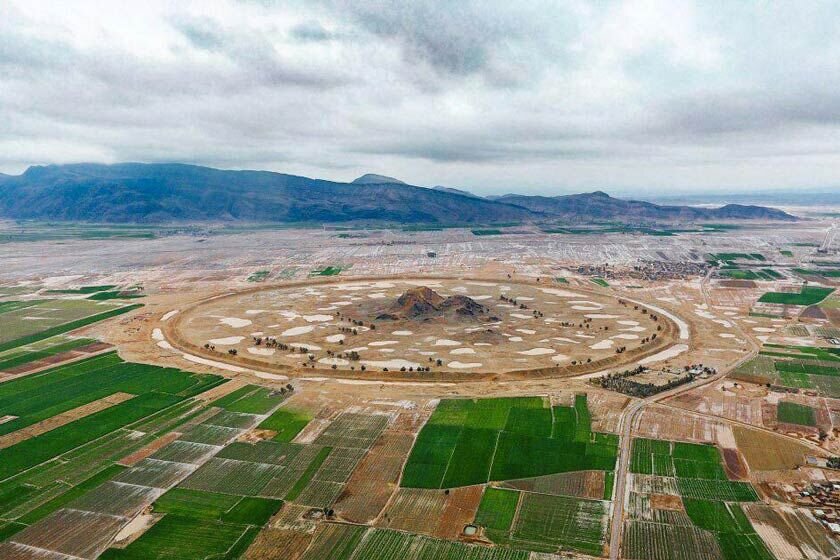
TEHRAN – Authorities in Iran’s Fars province have announced a comprehensive plan to pursue UNESCO World Heritage status for the ancient city of Darabgerd, citing its unique historical significance and archaeological potential.
Behzad Moridi, director general of cultural heritage, tourism and handicrafts for Fars province, said the site represents a key to understanding major transformations in Iranian history, spanning from the late Achaemenid period to the height of the Sasanian Empire. He made the remarks on Tuesday during a ceremony marking the appointment of a new head for the Darabgerd national base, attended by local officials.
“Darabgerd is not merely a historical site, but a gateway to understanding critical phases of Iran’s past,” Moridi said, adding that efforts are underway to address research gaps that have so far hindered its inclusion on UNESCO’s World Heritage list.
He noted that the management change and the appointment of an academic figure signal a renewed determination to strengthen research foundations and prepare a robust nomination dossier. Moridi also stressed the importance of reassessing Darabgerd’s historical links with surrounding regions, including Lar, Lamerd, and trade routes leading to the Persian Gulf.
Officials say the initiative is part of a broader strategy to promote sustainable development in eastern Fars province. Moridi highlighted ongoing cooperation with Shiraz University to draft a tourism development roadmap for Darab, aimed at preserving cultural assets while improving the livelihoods of local communities.
During the ceremony, newly appointed site director Alireza Askari-Chavardi outlined a five-year strategic plan focused on redefining Darabgerd’s historical identity through systematic archaeological research. He said the site had been excluded from a previous UNESCO nomination for Sasanian landscapes in 2018 due to insufficient studies.
“The primary goal now is to bridge these scientific gaps through specialized excavations and the publication of findings in international journals,” Askari-Chavardi said.
He added that a major research project has been launched to investigate the city’s historical mint and ancient routes connecting Darabgerd to the port of Siraf, once a major hub in regional trade networks.
Darabgerd, known for its distinctive circular layout, was one of the prominent urban centers during the Sasanian era. Archaeological evidence suggests the city had a highly organized and hierarchical settlement structure. However, following the Arab-Muslim conquest of Iran, the city underwent significant functional and spatial changes.
Studies indicate that during the early Islamic centuries, inhabitants increasingly concentrated in the northern sections of the city, while the southern areas became sparsely populated. Some residents also settled outside the western gate, reflecting shifts in urban patterns and social organization.
Officials said the precise delineation of the site’s boundaries and buffer zones is expected to be completed in the coming months, a key step toward securing national and parliamentary support for the UNESCO bid.
At the end of the ceremony, Askari Chavardi was formally appointed as the new director of the Darabgerd national base.
AM
Leave a Comment