How Hezbollah redefines the concept of asymmetric warfare
TEHRAN – Hezbollah has reshaped asymmetric warfare in several ways, through new tools and capabilities, and with supporting factors that are required to sustain intense battle.
Hezbollah fought its battle against the Israeli regime using many principles of asymmetric warfare, both before the withdrawal from South Lebanon in 2000 and during the July 2006 war. It relied on its qualitative military capabilities, the high combat doctrine of its fighters, the fragility of the Israeli home front, and the scarcity of its intelligence.
Many Israeli research centers discussing the July 2006 war admitted that it exposed deep flaws in the core of the regime’s security doctrine. It showed that the immunity of its settler society was very fragile, the infrastructure was substandard, the executive capability of Israeli Occupation Forces (IOF) branches, especially the ground forces, was weak, and that political and military leadership lost command and control during long, critical stretches of the battle.
According to much intelligence information published in Hebrew newspapers and websites after the pager terror attack, the assassination of Hezbollah’s top-tier leaders, especially Secretary General Sayyed Hassan Nasrallah, the Zionist regime worked during the eighteen years between the end of the July 2006 war and the start of Hezbollah’s support front for Gaza to formulate a new strategy to confront the Lebanese resistance.
This strategy relied heavily on gathering detailed, accurate intelligence, depriving Hezbollah of key strengths like its command-and-control chain and land communication system, and preventing it from using its long-range rocket arsenal, which represented the most significant challenge.
After the Gaza support front turned into a direct war, the IOF succeeded in inflicting losses on the Lebanese resistance front, impacting its military power and the cohesion of its units. This noticeably affected the effectiveness of Hezbollah’s offensive operations. Although it maintained a moderate pace of operations until the first ceasefire agreement came into effect in November 2024, the momentum lost some of its expected pre-war intensity.
Hezbollah remained committed to the ceasefire for over 15 months, exercising maximum restraint while overlooking thousands of IOF violations. These violations led to the deaths of hundreds of its leaders and fighters and destroyed much of its military infrastructure, especially in the villages and towns of South Lebanon, where the Zionist regime deepened its occupation of many areas during the truce.
During that period, doubt crept into the hearts of many Hezbollah supporters. This doubt even reached a portion of its popular base, which had always paid the heaviest price for supporting the resistance movement and its approach to confronting the IOF.
This continued until Hezbollah launched its latest battle on March 2, responding to ongoing IOF violations that intensified after the Zionist-American aggression against the Islamic Republic of Iran. This battle is still ongoing, despite a U.S.-sponsored ceasefire agreement last April, which the Israeli regime, as usual, brazenly violated. However, this time, the IOF found someone confronting it and inflicting heavy losses in lives and equipment.
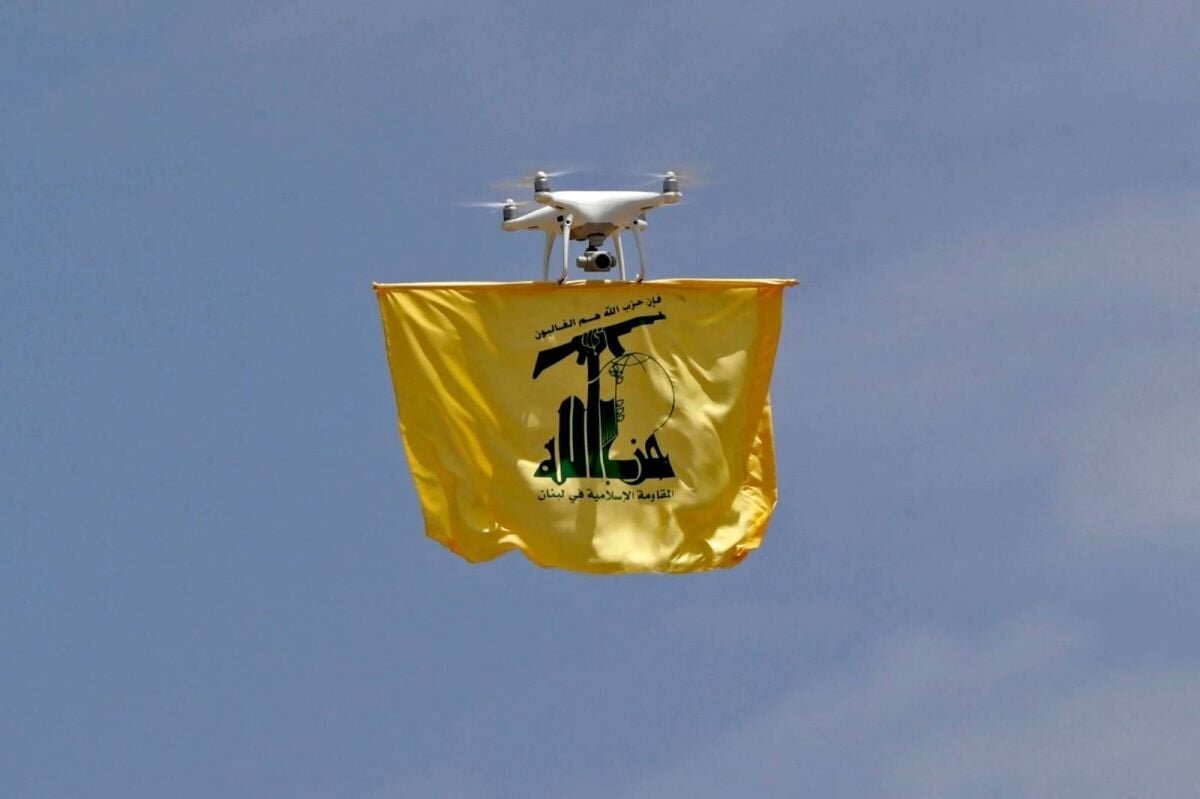
In the current ongoing battle, Hezbollah has introduced many new combat tactics and used additional tools that appear to have been acquired during the truce. These tools, such as small kamikaze drones, have proven to be a shocking surprise for the IOF, which has so far failed to find adequate ways to counter them.
Some details of these tactics go beyond the principles of asymmetric warfare that the Israeli regime previously managed to partially counter. This necessitated updating and developing those principles to prevent the IOF from achieving absolute control or a decisive, significant victory that its prime minister and military and political leaders have long promised.
The evolution Hezbollah has brought to the concept of asymmetric warfare can be observed in several ways. Some relate to tools and capabilities, others to the supporting factors needed in an intense battle, which could have long-term repercussions, particularly on Lebanese geography.
In the current battle, Hezbollah has redefined asymmetric warfare in its confrontations with the IOF, transforming it from something akin to guerrilla warfare into a strategy of intelligent attrition and exhaustion-based deterrence. It has exploited the IOF’s weaknesses in its current forward positions, after having exhausted it in frontline villages and towns. This has made way for its new weapon, kamikaze drones, and its anti-tank missiles to inflict maximum casualties on the regime’s soldiers.
After several weeks of fierce, difficult fighting in the border villages, Hezbollah fighters deliberately and systematically withdrew further back, especially as IOF airstrikes had razed entire villages to the ground. This somewhat limited the fighters' ability to hide and take cover. This calculated, methodical retreat converted a strategy of defending a specific area into a long-term attrition strategy against the IOF, based on modern asymmetric warfare principles.
These principles highlight that tactical withdrawal does not mean losing the battle or even losing the initiative. Instead, it gives the defending forces more space and more opportunities to achieve further successes and inflict greater losses on the attacking forces.
In Hezbollah’s new approach, it replaced short-range rockets and mortars, blind offensive weapons with low success rates that rely on spotting, tracking, and plotting virtual coordinates of enemy positions, with a new weapon: kamikaze drones. Although these drones don’t have the same destructive power as rockets and mortars, they can hit targets with extreme precision after direct, real-time observation. This makes their failure to hit targets practically impossible unless shot down before reaching the target, which doesn’t seem feasible yet.
Hezbollah has turned the villages and towns south of the Litani River, into which the IOF advanced, into death traps. There’s a clear inclination toward flexible, irregular defense, avoiding relatively long-duration engagements. This prevents the enemy from locating resistance fighters and then targeting them with air power.
Through this method, the enemy has been deprived of its air superiority, especially regarding surveillance and attack drones, as well as its modern technological capabilities. These capabilities had previously enabled the enemy to target a significant number of Hezbollah fighters and parts of its combat system, particularly those with a high thermal signature.
In this new version of asymmetric warfare currently used by Hezbollah, the role of central operations rooms has been minimized as much as possible. The old method, which relied on distributing tasks through these rooms based on information from surveillance teams, made them vulnerable targets, especially after the IOF began using thermal-imaging surveillance drones with U.S. support.
This enabled the Zionist regime to spot and track communication signals from Hezbollah’s landline network, just as it did during its genocidal war on the Gaza Strip. In both cases, this led to many operations rooms being targeted and put out of service.
This flaw was overcome by returning to communication via human messengers without the need for electronic equipment and by relying on small combat teams that know their missions in advance without needing main operations rooms except when necessary.
All of the above, along with other factors not mentioned here, have caused the IOF to suffer severely as it sinks into the quagmire of South Lebanon. Uri Misgav, a writer for Haaretz, expressed this by saying, “This is unbearable,” a sentiment echoed by the daily casualty rates among the IOF operating there.
In any case, without needing further indicators that Hezbollah has successfully updated and developed the theory of asymmetric warfare in its confrontation with the Zionist enemy, and given the uncertainty about when the current battle will end, whether in Lebanon or if the illegal war with Iran resumes, the region stands on the brink of potentially decisive changes.
These changes could mark the beginning of the collapse and disintegration of the “Axis of Evil”, the U.S.-Zionist regime coalition. This axis has exhausted most of its tactical options and military capabilities and has yet to achieve the majority of its strategic goals.
These changes may take some time and require great effort, hardship, and sacrifices, but in the end, they will inevitably see the light. This is the light shining from the hands of the heroes in Lebanon, Palestine, Yemen, Iran, and Iraq.
Leave a Comment