Same bloody cloth, different vampiric cuts
Israel's electoral circus and its sick logic of permanent warmongering
TEHRAN — The Israeli political landscape leading into the scheduled fall elections is less a "democratic" contest than a high-stakes audition for regional aggression.
Regardless of the faces on the campaign posters, the underlying logic of the regime remains a rigid constant: a revolving door of coalitions that all eventually converge on the same violent ends.
In Tel Aviv, the musical chairs of leadership are never about offering an alternative to the war regime but about proving who can manage its machinery with the most efficiency.
The illusion of choice
The central fraud of the 2026 race is the idea that the "opposition," led by figures such as Benny Gantz, Yair Lapid, and Gadi Eisenkot, represents a meaningful departure from the status quo.
In reality, this is a false binary where voters choose between different shades of the same militaristic doctrine.
Gantz and Eisenkot are former military chiefs of staff who frame their critique of Netanyahu not around the morality of strikes on Lebanon, Gaza, or Iran, but around tactical competence.
This consensus is anchored in the Begin Doctrine, a mandate for pre-emptive strikes that remains a sacred cow across different parties.
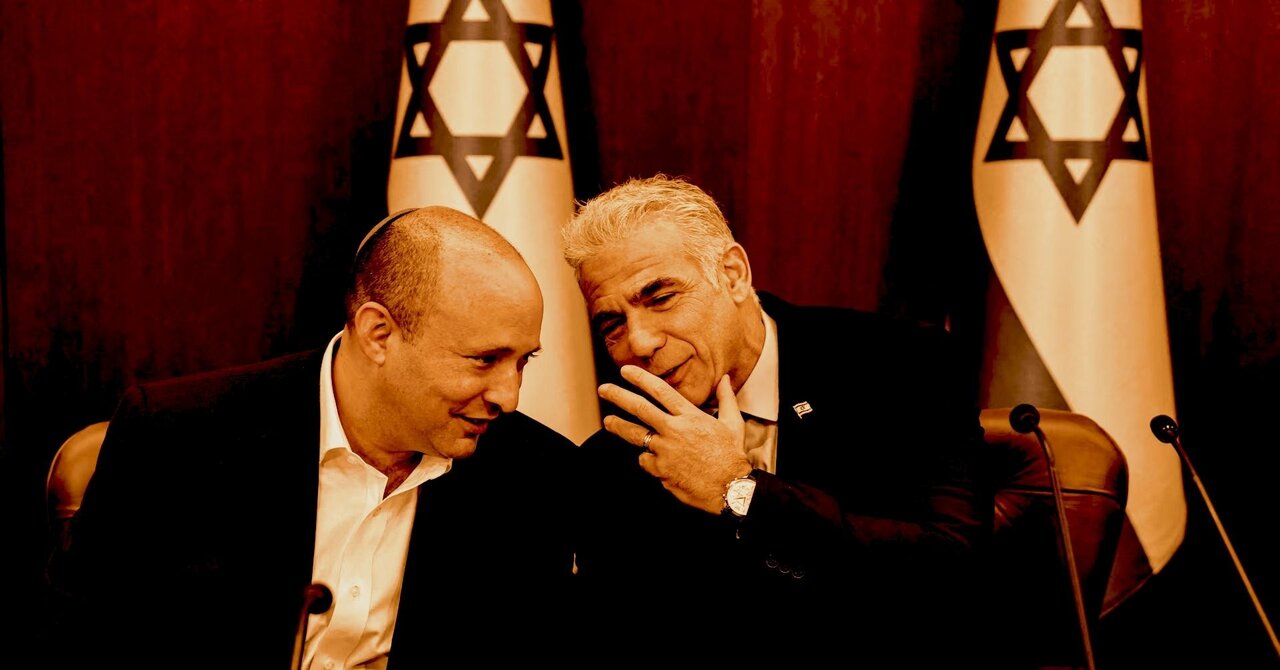
The April merger between former PMs Naftali Bennett and Yair Lapid was marketed as a "secular" alternative, yet their platform remains strictly anchored in the same deranged war doctrine that has defined the last three years.
Whether the leadership is "center-right" or far-right, the commitment to continue the campaign of aggression against Iran and Lebanon in different arenas, as well as what they call "mowing the grass" and maintaining permanent security control over Palestinian territories is absolute.
Blood as campaign capital
In the cynical arithmetic of Israeli politics, military escalation often serves as a primary tool for domestic legitimation.
We have seen this rhythm before: from Operation "Pillar of Defense" in November 2012, launched just two months before the January 2013 elections, which killed 174 Palestinians, including 33 children and 13 women, to Operation "Breaking Dawn" in August 2022.
The latter occurred less than three months before the November vote and claimed at least 49 Palestinian lives, including 17 children and 4 women, while wounding over 360 others.
These strikes are frequently timed to boost "security credentials" and manufacture a rally-around-the-flag effect among a radicalized electorate, transforming the slaughter of civilians into a campaign advertisement for toughness.
The current cycle is no different. The campaign of aggression on Iran is viewed by analysts partly as electoral props designed to show that the current leadership can act where others merely talk, especially considering the court cases of Netanyahu and people close to him.
For the Israeli political class, Palestinian, Lebanese, and Iranian lives are the raw material of campaign messaging, used to rally a frightened public and distract from internal crises.
Given that the regime has already pushed the region to the brink through its ongoing strikes, the approaching election guarantees even more escalation against Lebanon.
Candidates are currently engaged in a lethal competition to prove who can execute a more destructive offensive to "restore the north," essentially using the prospect of total war as a central pillar of their campaign strategy.
This makes Iran's red line of including Lebanon in a possible deal with the U.S. to end the war even more crucial.
A sick society structured for siege
This war regime rests on a deeply militarized culture that views its armed forces as its only legitimate representative.
While trust in the government has plummeted to under 25%, trust in the military remains above 80%. This explains why the political discourse has shifted to "decisive victory (Hachra'a)."
The numbers speak for themselves:
- 59% of Israelis believe that ending the current war on Iran without further escalation would fail to achieve security goals.
- 62% believe a return to wide-scale war with Iran is "highly likely."
- 82% of Jewish Israelis in a 2025 poll supported the mass expulsion of Palestinians from Gaza.
This is not deviation; it is the system becoming visible. A 2026 UN report highlighted that the line between the military and armed settlers in the West Bank has effectively vanished, with over 1,732 incidents of settler violence recorded in 2025 alone, often with direct military participation.
Permanent warmongering
As Israel’s 2026 electoral circus intensifies, three scenarios stand out. A generals’ coalition led by Bennett, Lapid, and figures such as Gantz or Eisenkot might adopt a slicker approach, attempting to harm regional de-escalation efforts while escalating what has been deceptively marketed as “surgical” strikes against the Resistance, all backed by unwavering American support. They may also use the Netanyahu era as the punching bag for Israel’s weakened position and structural problems.
Netanyahu’s persistence, on the other hand, would likely double down on current aggressive projects and accelerate formal annexation of the West Bank to appease Ben-Gvir and Smotrich, dressed up as "political and security necessities."
Additionally, pre-election panic could ignite a major escalation, whether renewed heavy strikes on Iran or a full push into Lebanon, timed to clear the board before the September vote.
In every outcome, the U.S.-Israeli axis operates in practiced coordination.
Ultimately, the election may change the lunatic spokesman, but not the vampiric logic of this settler-colonial regime addicted to the blood of innocents.
Leave a Comment