Lawmaker: Strait of Hormuz will remain under Iran’s control forever
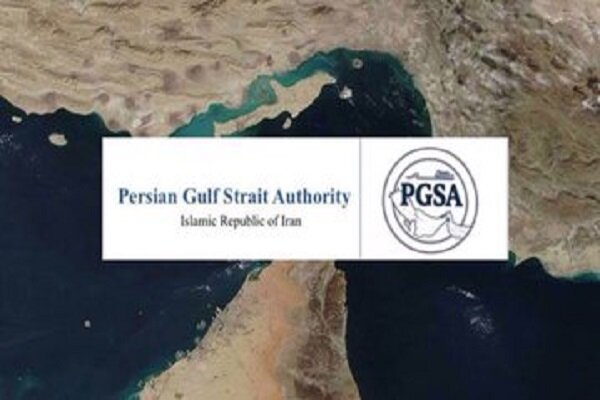
TEHRAN - A senior Iranian lawmaker has announced that Iran will continue to assert control over the Strait of Hormuz as a strategic lever.
“This strait is a comprehensive economic, political, and military lever that will forever remain under the authority and management of the resilient and powerful Iranian nation,” Ebrahim Azizi, chairman of the Iranian Parliament’s National Security and Foreign Policy Committee, told ISNA news agency on Tuesday.
He said the Strait of Hormuz is not merely a maritime passage but a “strategic achievement” for Iran.
The lawmaker added that the control and management of this vital waterway is part of Iran’s legitimate rights, and that no foreign power can deprive the Iranian nation of this right.
On Monday, Iran’s Supreme National Security Council announced the formation of a new body to oversee and manage issues related to the Strait of Hormuz.
Separately, the Foreign Ministry spokesperson said Iran is engaged in consultations with Oman to design a new mechanism governing transit through the strait.
Esmaeil Baghaei described the Strait of Hormuz as a “vital” maritime passage whose importance extends far beyond Iran, Oman, and regional states to the global economy.
“The Islamic Republic of Iran has always made tremendous efforts to safeguard safe and secure transit through this route and continues to insist that passage through the Strait of Hormuz must take place in the best possible manner with complete safety,” he added.
He emphasized that both Iran and Oman consider themselves duty-bound to ensure secure transit through the strait, as it lies within the territorial waters of the two coastal states.
Under international maritime law, coastal states are recognized as having sovereign jurisdiction over their territorial waters and security arrangements, a principle that Iran applies to the Strait of Hormuz.
The strait is widely regarded as one of the world’s most important energy transit routes, and its stability is seen as essential to global trade and energy security. From this standpoint, the governance of the passage is viewed as a matter of regional sovereignty, with an emphasis on ensuring safe navigation through cooperation between coastal states rather than external military involvement.
Leave a Comment