Gabbard's resignation exposes deep split over Iran policy in Trump administration
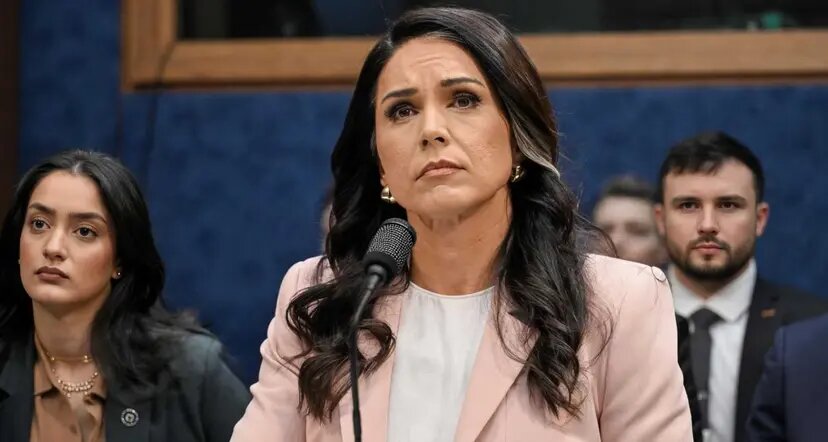
TEHRAN – The resignation of the US director of national intelligence has intensified scrutiny of divisions within President Donald Trump’s administration, particularly over Washington’s approach toward Iran and the use of military force abroad.
Tulsi Gabbard announced on Friday that she is stepping down, citing her husband’s battle with a rare form of bone cancer. However, her long-standing opposition to foreign military interventions, contrasted with Trump’s more assertive use of military force abroad, has fueled speculation about deeper policy disagreements.
There had been growing speculation that Gabbard might break with Trump following the joint US-Israel war against Iran on February 28.
Even before the Iran conflict, Gabbard had maintained a relatively low public profile amid broader US military activity in the region, including operations involving Venezuela.
During a congressional hearing in March, her carefully worded remarks drew attention for what was seen as a cautious approach to the Iran war. She avoided taking a clear position on questions about whether the White House had been warned of potential consequences of escalation, including risks to the Strait of Hormuz, a key global oil shipping route.
In written testimony to the US Senate Intelligence Committee, Gabbard stated that the intelligence community assessed that Iran was not building nuclear weapons. She also said there was no evidence Iran had rebuilt its nuclear enrichment capabilities following US strikes against Iran’s nuclear facilities in June last year.
Her remarks appeared to contradict President Trump’s repeated claims that Iran posed an imminent nuclear threat requiring military action.
The testimony led to tense exchanges with lawmakers, who questioned her assessment of Iran’s threat level and the administration’s justification for the war. Gabbard emphasized that decisions on military action were made by the president, not the intelligence community.
Although both Trump and Gabbard have cited personal reasons for her departure, their differing views on foreign military intervention have continued to fuel speculation about political tensions within the administration.
Gabbard is the fourth member of Trump’s cabinet to leave his second administration.
A key question raised by her departure is why Gabbard accepted a high-profile position in the Trump administration despite their differing approaches to military intervention.
Her political career provides some context. She was first elected to the Hawaii state legislature in 2002 at the age of 21, becoming one of the youngest people ever to serve in the state House. She later left after her National Guard unit was deployed to Iraq.
Gabbard went on to serve in the US House of Representatives from 2013 to 2021 as a member of the Democratic Party, becoming the first Hindu elected to Congress.
She ran for president in 2020 on an anti-interventionist platform, arguing that US wars in the Middle East had destabilized the region and weakened American security. She later ended her campaign and endorsed Joe Biden.
In 2022, she left the Democratic Party and became an independent, accusing party leadership of elitism and supporting interventionist foreign policy.
She later became a political commentator and aligned more closely with conservative media, frequently appearing on Fox News. She endorsed Trump during the 2024 campaign and supported his “forever wars” rhetoric.
Trump later nominated her as the director of national intelligence after his election victory. However, differences over foreign military engagement, particularly regarding Iran, continued to expose tensions within the administration, with Trump making a clear U-turn on his earlier “forever wars” stance—putting him at odds with Gabbard.
Leave a Comment