Iran war fractures US administration: Driscoll quits amid Pentagon chaos
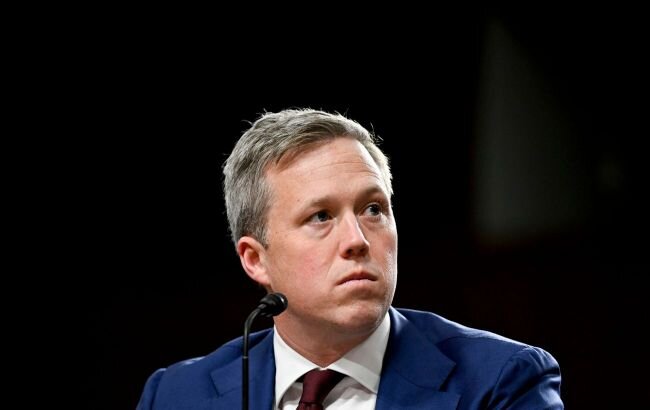
TEHRAN — The resignation of Army Secretary Dan Driscoll has further exposed deep divisions within the US administration in the wake of a failed war Washington launched jointly with Israel on Iran some six months ago.
What began on February 28 as an aggressive, coordinated assault designed to impose regional hegemony and force Tehran into submission has instead deteriorated into an operational quagmire, fueling administrative paralysis and fierce internal warfare inside the Pentagon. As the joint aggression falters on the battlefield and regional realities defy Washington’s calculations, the high-profile departure of one of the Army’s top civilian leaders serves as undeniable proof that the American war machine is fracturing under the weight of its own strategic failure.
Driscoll’s decision to tender his resignation to President Donald Trump directly reflects a deep, unbridgeable rift with Secretary of War Pete Hegseth. According to accounts from officials familiar with the matter, the departure was entirely predictable given months of escalating friction between the two figures. While Driscoll attempted to oversee the technical readiness and modernization programs necessary to sustain high-intensity conflict, Hegseth pursued an aggressive, politically driven purge across the military establishment. The clash between Driscoll and Hegseth demonstrates how the joint American-Israeli campaign against Iran has accelerated the unraveling of coherence within the highest echelons of the United States defense apparatus.
The timing of this departure is catastrophic for the White House. Exactly six months into the war initiated on February 28, the joint US-Israeli campaign has yielded none of its promised strategic breakthroughs. Instead, the conflict has stretched American logistics thin, exposed serious vulnerabilities in allied posture across the region, and triggered an intense wave of bipartisan backlash on Capitol Hill. Lawmakers in Congress have voiced surging alarm over the war’s lack of a viable path forward, openly questioning the administration’s blind alignment with Israeli objectives and demanding accountability for an escalation that has drained American resources while achieving zero strategic leverage over a resilient Iran.
Central to Driscoll’s grievances was Hegseth’s systematic dismantling of senior Army leadership during an active, high-stakes conflict. In his communications regarding the resignation, Driscoll explicitly cited severe concerns regarding Army transformation and combat readiness, calling out Hegseth for blocking critical modernization programs by abruptly dismissing the very flag officers entrusted with carrying them out. Rather than focusing on the severe operational demands of the ongoing Middle Eastern theater, Hegseth has prioritized purging decorated commanders and civilian officials suspected of disloyalty or deemed out of step with his domestic cultural agenda.
The scope of this institutional decapitation is unprecedented during wartime. Hegseth forced out Army Chief of Staff General Randy George, along with Vice Chief of Staff General James Mingus, Army Transformation and Training Command head General David Hodne, Chief of Chaplains Major General William Green Jr., and Director of the Joint Staff Lieutenant General Douglas Sims. Just days before Driscoll’s exit, General Christopher Donahue, the veteran commander of US Army Europe and Africa, was pushed into retirement after being denied a nomination to a new post due to bureaucratic friction.
This chaotic purge of the officer corps has collided violently with the battlefield reality of the war launched on February 28. Driscoll, widely regarded inside the administration as the primary architect of modern drone and autonomous systems integration, recognized that warfare against sophisticated Iranian defensive networks required technological evolution, logistical stamina, and deep operational discipline. Yet while the joint assault with Israel encountered formidable Iranian resistance and defensive deterrence, the Pentagon’s civilian leadership remained obsessed with domestic ideological warfare and internal loyalty tests. The refusal to heed professional warnings regarding equipment readiness and modern drone capabilities has left the American ground forces vulnerable, disorganized, and ill-equipped for the demands of the campaign.
The resulting collapse of operational cohesion has intensified congressional fury. Lawmakers from both parties have openly confronted Hegseth over the abrupt dismissals of key generals, warning that the administration has compromised the armed forces at the worst possible moment. The discontent across Washington reflects a growing consensus that the joint war against Iran was poorly conceived, disastrously planned, and executed without regard for long-term strategic viability. Rather than demonstrating strength, the continuous stream of resignations and dismissals has exposed to the world an administration hopelessly divided over how to extricate itself from the quagmire of war with Iran.
The internal power struggle has also poisoned the civilian command structure. Hegseth’s profound suspicion of those around him fostered a toxic environment, particularly regarding Driscoll’s close personal ties to Vice President JD Vance, his former classmate at Yale Law School. Hegseth viewed Driscoll’s direct communication lines with the White House—including Trump’s prior reliance on Driscoll for diplomatic missions—as an intolerable attempt to bypass his authority. In the midst of an active war, the Department of War has devolved into a factional battlefield characterized by paranoia, bureaucratic backstabbing, and competing centers of influence.
With Under Secretary Mike Obadal stepping in as acting secretary, the Army faces deep operational uncertainty at a pivotal juncture. The claims by White House spokespersons that Driscoll helped advance readiness and lethality cannot conceal the underlying truth: the administration’s military leadership is collapsing from within. The joint war launched alongside Israel on February 28 was intended to display overwhelming force, but six months later, it has achieved the exact opposite. It has exposed the limits of Western intervention, triggered a profound crisis of confidence across the US armed forces, and left Washington trapped in a self-inflicted strategic defeat from which it has no clear escape.
Leave a Comment