All the Pentagon’s men
The Iran war and a crisis of command in the US: what do 12 departures mean?
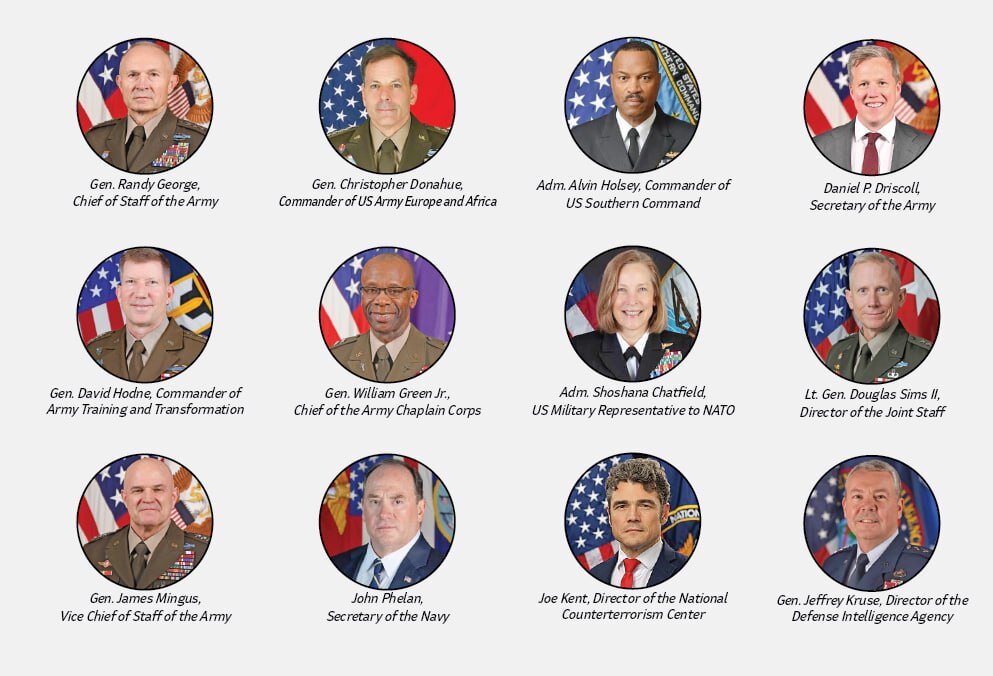
TEHRAN — Since the beginning of the war against Iran, Donald Trump and his Secretary of War, Pete Hegseth, have repeatedly described the performance of US forces and the results of American military operations in glowing terms, using phrases such as “victory,” “historic success,” and “major military achievements.”
According to the administration’s narrative, US operations have been carried out with overwhelming force, their intended targets have been hit, and American forces have demonstrated their superiority on the battlefield. The picture presented by the White House and the Pentagon is that of a highly capable, disciplined, and tightly controlled military machine operating in full coordination with the administration.
But alongside that narrative, another important reality has emerged, one that receives far less attention in the political messaging: sweeping changes at the highest levels of the US military and national security establishment.
Under Pete Hegseth, a significant number of generals, admirals, and senior civilian officials at the Pentagon have been fired, pushed into early retirement, resigned, or otherwise removed from their positions under unexpected circumstances. These changes have not been limited to mid-level commanders. They have reached some of the most senior positions in the US military, including the chairman of the Joint Chiefs of Staff, the chief of naval operations, senior Army commanders, Air Force leaders, the head of US Special Operations Command, the head of Cyber Command, and the director of the Defense Intelligence Agency.
The significance of this development lies not only in the number of people who have left their positions. The timing of these departures is equally important. Some of the changes took place before the war with Iran. Others came amid the escalating tensions with Tehran and in the period immediately preceding military operations. Still others occurred while the United States was already engaged in a full-scale war and extensive military operations in the Middle East.
Some of these dismissals came without any clear official explanation. In several cases, the Pentagon simply cited a “loss of confidence.” In others, the officials were removed without any public explanation at all. Reports in the US media have also pointed to disagreements over military strategy, force management, the war in Ukraine, Middle East operations, the future structure of the Army, weapons production, and even how the United States should deal with Iran. One of the most significant examples was the removal of Defense Intelligence Agency Director Gen. Jeffrey Kruse, who was dismissed shortly after a controversial intelligence assessment questioned the extent of the damage inflicted on Iran’s nuclear program.
The departures of senior commanders during the war have raised even more questions. Gen. Randy George, the Army’s top officer, was forced into retirement in April 2026 while the United States was actively fighting Iran. At the same time, Gen. David Hodne and Gen. William Green were also removed.
During the same period, Navy Secretary John Phelan left his post. Several months later, Army Secretary Daniel P. Driscoll resigned amid reports of deep disagreements with Hegseth over the future of the Army, its structural transformation, and the repeated removal of senior commanders.
When a large number of senior military and national security officials are replaced within a relatively short period, the pattern itself becomes an important sign of instability, internal disagreements, and profound changes inside the Pentagon.
Of course, these departures do not all tell the same story. Some officials were directly fired, others were pressured into early retirement, and some resigned. In certain cases, no clear official reason was ever provided. In others, disagreements over the future of the military, modernization plans, Hegseth’s policies, or intelligence assessments concerning Iran appear to have played a role.
The following list is intended to provide a broader picture of what has been happening inside the US military and national security establishment during the Trump-Hegseth era. It helps distinguish between the administration’s official narrative of “victory and success” and the more complicated reality inside the Pentagon, marked by leadership changes, strategic disagreements, personnel turmoil, concerns over ammunition supplies, and political pressure.
1. Gen. Randy George, Chief of Staff of the Army
Gen. Randy George was one of the most experienced senior officers in the US Army. A career infantry officer, he served in the Persian Gulf War as well as in Iraq and Afghanistan. Before becoming Army chief, he held a number of senior command positions and also served as the senior military assistant to Defense Secretary Lloyd Austin. He ultimately rose to become the Army’s highest-ranking officer.
But on April 2, 2026, roughly five weeks after the war with Iran began, Hegseth asked George to step down and take immediate retirement. The decision came as the United States was actively engaged in the war with Iran and the Army was carrying out extensive military operations in the region. A US official told CBS that Hegseth wanted someone who would implement his and Trump’s vision for the future of the Army. After his departure, George told Army personnel that American soldiers deserved leaders who were courageous and had character.
2. Gen. Christopher Donahue, Commander of US Army Europe and Africa
Gen. Christopher Donahue was one of the most prominent commanders of his generation. A Special Forces officer and West Point graduate, he commanded the 1st Special Forces Operational Detachment-Delta and the 82nd Airborne Division. He became widely known as the last American soldier to board a C-17 during the US withdrawal from Afghanistan in 2021. He later became commander of US Army Europe and Africa and commander of NATO land forces.
Donahue left his command in July 2026, while the war with Iran was still underway, after only about 18 months in the position. Reports indicated that Hegseth had become dissatisfied with him and that efforts to extend his tenure did not succeed. Donahue had also been involved in efforts to apply lessons from Ukraine’s drone warfare to the modernization of the US Army, a subject that later became part of broader disagreements over the Army’s transformation. His departure, only months after Randy George was removed and while the Iran war was still ongoing, became another major sign of the sweeping changes at the top of the Army.
3. Gen. David Hodne, Commander of Army Training and Transformation
Gen. David Hodne was a senior Army commander responsible for a structure that played a major role in training, preparing, and transforming US ground forces for future wars. His position was particularly important at a time when the Army was reconsidering its force structure and moving toward greater reliance on drones, unmanned systems, and emerging technologies.
Hodne was removed in April 2026, at the same time Randy George was pushed out and while the United States was fighting Iran. No specific official reason was given for his removal. But the timing was significant: three senior Army leaders were removed at roughly the same time, as the United States was engaged in war and as Hegseth was pushing major changes to the Army’s future structure and leadership.
4. Gen. William Green Jr., Chief of the Army Chaplain Corps
Gen. William Green Jr. headed the US Army Chaplain Corps, the organization responsible for providing religious services and spiritual support to soldiers and military families. His position may have been less visible than that of the Army chief, but his removal from office was significant because it demonstrated how broadly Hegseth’s changes extended across the military establishment.
Green was also removed in April 2026, during the war with Iran, and the Pentagon did not provide a specific explanation for the decision. Hegseth had previously criticized the Chaplain Corps, accusing it of being influenced by “political correctness” and “secular humanism.” Green’s removal on the same day as the departures of George and Hodne reinforced the perception that Hegseth’s reshaping of the military was not limited to operational commanders at the very top, but extended across different parts of the Army’s institutional structure.
5. Gen. James Mingus, Vice Chief of Staff of the Army
Gen. James Mingus was a senior Army officer with extensive experience in military operations and command. He served for roughly two years as the Army’s vice chief of staff, making him one of the most senior figures in the Army’s internal leadership structure.
Mingus eventually left the position and formally retired on February 6, 2026. Reports during the Hegseth era indicated that he had been pressured toward early retirement as Hegseth sought to reshape the Army’s senior leadership. Unlike Randy George, however, Mingus left before the war with Iran began. His successor, Lt. Gen. Christopher LaNeve, was confirmed for the position in January 2026 and was viewed as more closely aligned with Hegseth’s approach.
6. John Phelan, Secretary of the Navy
John Phelan was a civilian official appointed by the Trump administration to serve as Secretary of the Navy. He was responsible for overseeing the Navy’s civilian leadership, including major issues involving shipbuilding and fleet expansion. His position became particularly important as the Trump administration promised to increase US naval power and dramatically expand the production of warships.
Phelan left his position in April 2026, while the war with Iran was underway. Trump later said Phelan had struggled to work effectively with others and that disagreements had emerged over the Navy’s shipbuilding program. Hegseth personally informed him that he was being removed. His departure, alongside the removal of several senior Army commanders during the war, showed that the shake-up at the Pentagon was not limited to uniformed officers but also extended into the civilian leadership of the Defense Department.
7. Daniel P. Driscoll, Secretary of the Army
Daniel P. Driscoll was one of the senior civilian officials overseeing the Army and was closely involved in efforts to reshape the service for future warfare. His modernization agenda, developed alongside Randy George, included greater use of drones and unmanned systems, changes to Army formations, and the retirement of some older equipment. The goal was to prepare the Army for a fundamentally different kind of battlefield.
Driscoll resigned on August 31, 2026, while the war with Iran was still underway. His resignation came after months of tension with Hegseth. People familiar with the matter said Driscoll had raised concerns with the Trump administration about the direction of Army transformation and the removal of senior commanders involved in shaping those reforms. By the time he resigned, Randy George and Christopher Donahue had already left the Army’s senior command structure. Driscoll’s departure therefore became one of the latest episodes in a broader leadership crisis unfolding during the Iran war.
8. Adm. Alvin Holsey, Commander of US Southern Command
Adm. Alvin Holsey was a senior Navy officer who commanded US Southern Command, or SOUTHCOM. The command is responsible for US military operations and security interests across Central and South America and the Caribbean. Holsey took command of SOUTHCOM in 2024 after more than 37 years of service in the Navy and was expected to remain in the position for several years.
But in October 2025, Hegseth announced that Holsey would retire at the end of that year, well ahead of the expected end of his command. Officially, the retirement was presented as a decision by Holsey, but Reuters, citing US officials, reported that he had effectively been pushed out by Hegseth. Disagreements over the way SOUTHCOM was conducting operations in the region were also reportedly part of the dispute.
9. Lt. Gen. Douglas Sims II, Director of the Joint Staff
Lt. Gen. Douglas Sims II was a senior Army officer who served as director of the Joint Staff, a highly influential position at the center of military planning and coordination among the US armed services. His career unfolded during a period of major changes at the top of the Pentagon, and his future was affected by Hegseth’s reshaping of the senior officer corps.
In Sims’ case, the key issue involved his expected promotion to four-star general. Media reports said Hegseth blocked the promotion and that Sims was investigated over possible links to leaks of classified information, allegations that were not substantiated. Senior military officials, including the chairman of the Joint Chiefs, defended Sims’ record. Hegseth was also reportedly concerned about Sims’ ties to retired Gen. Mark Milley. Sims ultimately retired from the Army in 2025.
10. Adm. Shoshana Chatfield, US Military Representative to NATO
Adm. Shoshana Chatfield was one of the Navy’s senior commanders and served as the US military representative to NATO’s Military Committee. The position is particularly important because it places its holder at the center of military coordination between the United States and its European allies. Chatfield had previously held a number of senior command and leadership positions within the Navy.
In April 2025, Hegseth removed her from the position. The Pentagon officially said it had “lost confidence in her ability to lead,” but provided few additional details. The decision came during the early months of Hegseth’s tenure, when he was simultaneously reshaping senior leadership across the Army, Navy, and broader US national security establishment.
11. Gen. Jeffrey Kruse, Director of the Defense Intelligence Agency
Gen. Jeffrey Kruse headed the Defense Intelligence Agency, or DIA, the organization responsible for collecting and analyzing foreign military intelligence for the Pentagon and US military commanders. Because of that role, DIA assessments of an adversary’s military capabilities can directly influence American military and political decision-making.
Kruse’s case was one of the clearest examples of Pentagon leadership changes becoming intertwined with Iran. Following the US “Midnight Hammer” operation against Iranian nuclear facilities, an initial DIA assessment reportedly concluded that the strikes had set Iran’s nuclear program back by only a matter of months, an assessment that differed sharply from the Trump administration’s much more optimistic public claims about the extent of the damage. Kruse was removed in August 2025, and multiple reports subsequently linked his departure to the controversy surrounding the intelligence assessment.
12. Joe Kent, Director of the National Counterterrorism Center
Joe Kent was a former US Army Special Forces officer who went on to become director of the National Counterterrorism Center, or NCTC, one of the most important US institutions responsible for coordinating counterterrorism efforts. He was associated with the “America First” wing of the Trump movement, and his appointment suggested that he was not simply a political opponent of the administration.
But Kent became one of the most outspoken internal critics of the war with Iran. On March 17, 2026, during the third week of the war, he resigned and said he could not support the continuation of the conflict in good conscience. Kent argued that Iran did not pose an imminent threat to the United States and said he could not support sending another generation of American service members into a war he believed did not serve the interests of the American people. His resignation was one of the clearest examples of a senior Trump administration official leaving specifically because of opposition to the Iran war.
Taken together, these 12 cases paint a picture of sweeping change at the top of the US military and national security establishment. Some of these officials were removed before the war with Iran began. Others became directly associated with disputes over Iran, while still others left their positions while the United States was actively engaged in the conflict.
Joe Kent’s resignation stands out because, unlike many senior officials whose reasons for leaving were never fully explained, he explicitly identified the Iran war as the reason for his departure. Jeffrey Kruse’s case, meanwhile, shows how even an intelligence assessment concerning the effectiveness of US strikes on Iran could become a highly sensitive issue inside the national security establishment.
The issue, therefore, is not simply how many commanders have left the Pentagon during Hegseth’s tenure. The more important question is what these departures reveal about the stability of US military decision-making and the disagreements over the future direction of the American armed forces. When the Army chief, senior commanders, cabinet-level officials, and intelligence leaders are removed or depart within a relatively short period, it becomes difficult to dismiss the pattern as routine personnel turnover.
Taken together, these developments can be seen as a sign of serious tensions, internal divisions, and structural problems within the Trump administration and the Pentagon, particularly because many of the changes have occurred while Washington is simultaneously dealing with a major war, pressure on ammunition and air-defense inventories, the need to rapidly modernize the armed forces, and disagreements over how the conflict should be managed.
The steady departure of experienced officials under such circumstances raises a broader question: Is the restructuring of the Pentagon actually producing a more unified and effective military leadership, or is the repeated removal of experienced commanders creating additional instability at a time when the United States can least afford it?
The scale, speed, and timing of these changes—especially their overlap with the Iran war—make them an important indicator of the internal difficulties facing the Trump administration and the Pentagon. The central question now is whether this sweeping reshuffling will ultimately produce a more disciplined and coherent military structure, or whether the continued departure of experienced leaders will itself become a source of deeper problems and weaker decision-making in Washington.
Leave a Comment