‘Utterly absurd’: Iran rebuffs US attempt to invoke 9/11 to justify reckless war
TEHRAN — Iran has strongly dismissed Washington’s attempts to weaponize the anniversary of the September 11 attacks to rationalize and justify a “reckless and unlawful war” against the Islamic Republic, exposing the glaring historical and moral contradictions underlying decades of aggressive American foreign policy and military interventionism.
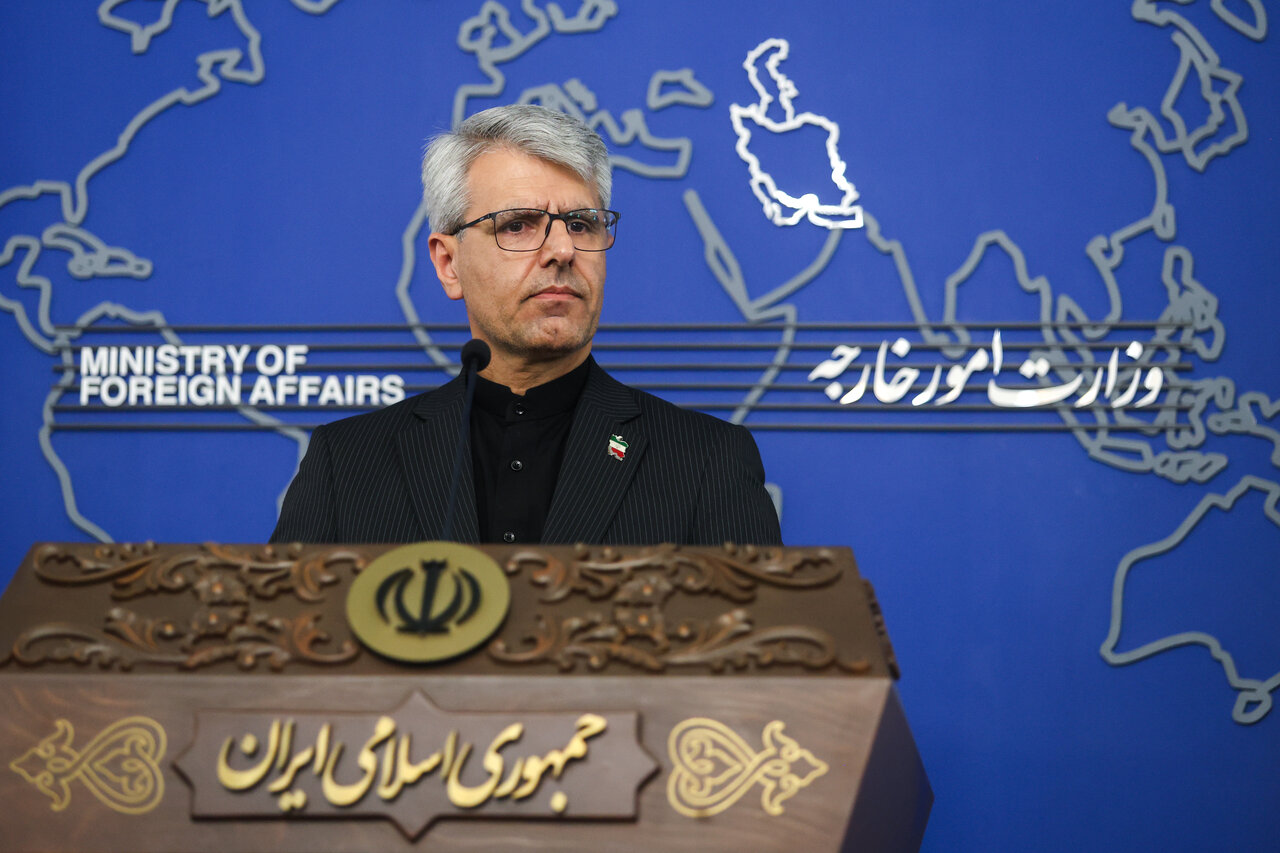
“The narrative advanced by the US Secretary of War on the anniversary of 9/11 is riddled with fundamental contradictions,” Iranian Foreign Ministry spokesman Esmaeil Baghaei wrote in a statement published on X early Saturday. Baghaei’s remarks came as a direct rebuke to provocative and hawkish assertions made by the Pentagon chief, who sought to use the solemn occasion to legitimize ongoing American military aggression across the region by boasting that Washington was continuing to eliminate its perceived adversaries in an unprovoked conflict against Iran.
Baghaei stressed that the United States cannot simultaneously wage unilateral wars of aggression, orchestrate state-sponsored assassinations, and inflict massive civilian casualties while arrogating to itself the exclusive authority to define terrorism and dictate whose violence is legitimate under the guise of international security.
“The perpetrators of 9/11 were not Iranians; they were the very same people whom the US itself had armed, organized, or otherwise cultivated in the preceding decades,” Baghaei underscored, reminding the international community of Washington’s direct, documented role in nurturing, financing, and training extremist networks during the late Cold War proxy battles.
Denouncing the catastrophic and destabilizing legacy of the global “war on terror,” the Iranian diplomat pointed out that the subsequent US-led invasions of Afghanistan and Iraq unleashed decades of military occupation, mass slaughter, institutional collapse, and wholesale regional devastation.
“Against this backdrop, invoking the anniversary of 9/11 to justify a reckless and unlawful war against Iran is utterly absurd,” Baghaei asserted, firmly rejecting Washington’s cynical deployment of counterterrorism slogans to whitewash state-sponsored aggression and geopolitical coercion.
“A criminal war that has involved the assassination of officials of a sovereign state and the targeting of civilians, including women and children, cannot be made morally coherent simply by wrapping it in the language of counterterrorism,” Baghaei emphasized.
The historical pretext for Washington’s boundless militarism was codified in the immediate aftermath of September 11, 2001. Less than a month after the tragic attacks claimed nearly three thousand lives on American soil, the United States launched Operation Enduring Freedom on October 7, 2001, violently invading Afghanistan. Billed deceptively to the global public as an imperative campaign to eradicate extremism and establish democracy, the invasion served as the bloody vanguard for an imperial doctrine masquerading as a global crusade against terror. Washington unleashed an overwhelming military apparatus upon one of the poorest and most vulnerable nations on Earth, setting off an unbroken chain of human suffering, indiscriminate aerial bombardments, abusive night raids, and systemic atrocities.
Yet after two decades of brutal military occupation, the expenditure of trillions of dollars drawn from domestic resources, and the slaughter of tens of thousands of Afghan civilians, the American war machine collapsed in profound humiliation and strategic defeat. Washington failed to fulfill any of its stated objectives; it neither eradicated the forces it pledged to defeat nor established a functional state structure.
Instead, twenty years of occupation left behind a shattered nation littered with unexploded ordnance, deeply institutionalized trauma, and a destitute population, only for US troops to flee in chaotic panic in August 2021, handing back power to the very entities they had initially set out to topple.
The catastrophic debacle in Afghanistan was merely the first chapter in a broader, pre-planned geopolitical agenda orchestrated by the neoconservative establishment in Washington. Exploiting the post-9/11 atmosphere of domestic fear and manufactured hysteria, former US President George W. Bush systematically expanded the scope of imperial aggression. In his infamous January 2002 State of the Union address, Bush coined the belligerent and thoroughly dishonest “Axis of Evil” moniker, intentionally and maliciously lumping the Islamic Republic of Iran alongside Saddam Hussein’s Iraq and North Korea.
Bush’s reckless designation exposed the fundamental fraudulence of the so-called war on terror. In the immediate aftermath of 9/11, Iran had not only officially and publicly condemned the attacks in unambiguous terms, with ordinary citizens holding spontaneous candlelight vigils in Tehran, but had also extended constructive diplomatic and logistical assistance at the Bonn Conference to help stabilize post-Taliban Afghanistan. Instead of acknowledging Tehran’s principled and cooperative posture, the Bush administration weaponized fabricated narratives to villainize the Islamic Republic, illustrating that Washington’s ultimate objective was never counterterrorism, but rather the forceful subjugation of any independent sovereign nation that dared to resist American hegemony in West Asia.
This malicious groundwork was deeply rooted in the wider neoconservative doctrine codified before the 2001 attacks by influential policy groups such as the Project for the New American Century (PNAC). These ideological architects openly advocated for regime change across multiple Middle Eastern capitals to guarantee American primacy. Bush’s aggressive rhetoric and unilateral doctrine of preemptive strikes were specifically designed to bypass the United Nations Charter and international law, establishing a lawless global precedent where the White House claimed the unilateral right to bomb, invade, or sanction any country deemed an obstacle to its geopolitical objectives.
The bellicose rhetoric emanating from the Bush White House directly paved the way for the illegal 2003 invasion of Iraq, built entirely upon fabricated intelligence, blatant lies regarding non-existent weapons of mass destruction, and fictitious links between Baghdad and Al-Qaeda. The unprovoked war tore Iraq’s societal fabric apart, demolished vital civilian infrastructure, fostered unprecedented sectarian strife, and directly created the fertile vacuum in which the most depraved extremist groups, culminating in Daesh, metastasized and wreaked havoc across the Levant. From the systematic torture of detainees in Abu Ghraib, Bagram, and Guantanamo Bay to the widespread use of depleted uranium and white phosphorus munitions in Fallujah, the American enterprise in Iraq stood as a monument to modern barbarism and egregious violations of international humanitarian law.
Throughout the decades that followed, the United States maintained this pattern of deception, using the ubiquitous specter of terrorism to subvert the sovereignty of regional nations. Under successive administrations, the doctrine of preemptive war evolved into an open policy of extrajudicial killings, targeted drone strikes across Yemen, Somalia, and Pakistan, crippling economic warfare, and illegal extraterritorial assassinations. Rather than combating terrorism, Washington repeatedly demonstrated a readiness to weaponize extremist proxies, facilitate their cross-border movements, and provide covert logistical shelter whenever doing so served the broader goal of destabilizing governments independent of Western dictates, as seen during the dirty wars waged against Syria and Libya.
The stark irony embedded in Washington’s current posture toward Tehran is that Iran has stood on the genuine front lines of fighting regional terrorism, offering immense sacrifices to dismantle the very extremist organizations born out of American interventionism. Iranian military advisors and anti-terror commanders played the decisive role in halting the march of Daesh across Iraq and Syria, preventing the collapse of sovereign capitals and safeguarding vulnerable minority populations from genocide. The US assassination of high-ranking Iranian anti-terror commanders and state officials—coupled with the direct targeting of civilian populations, critical infrastructure, and innocent women and children—lays bare the absolute hypocrisy of American moralizing.
Washington’s recurrent invocation of September 11 to justify unprovoked hostilities against Iran represents a desperate attempt to recycle a bankrupt and disproven playbook. Decades of imperial overreach, unpunished war crimes, and ruined nations have completely shattered the credibility of the American security narrative.
Leave a Comment