Palestinian position on developments in Yemen
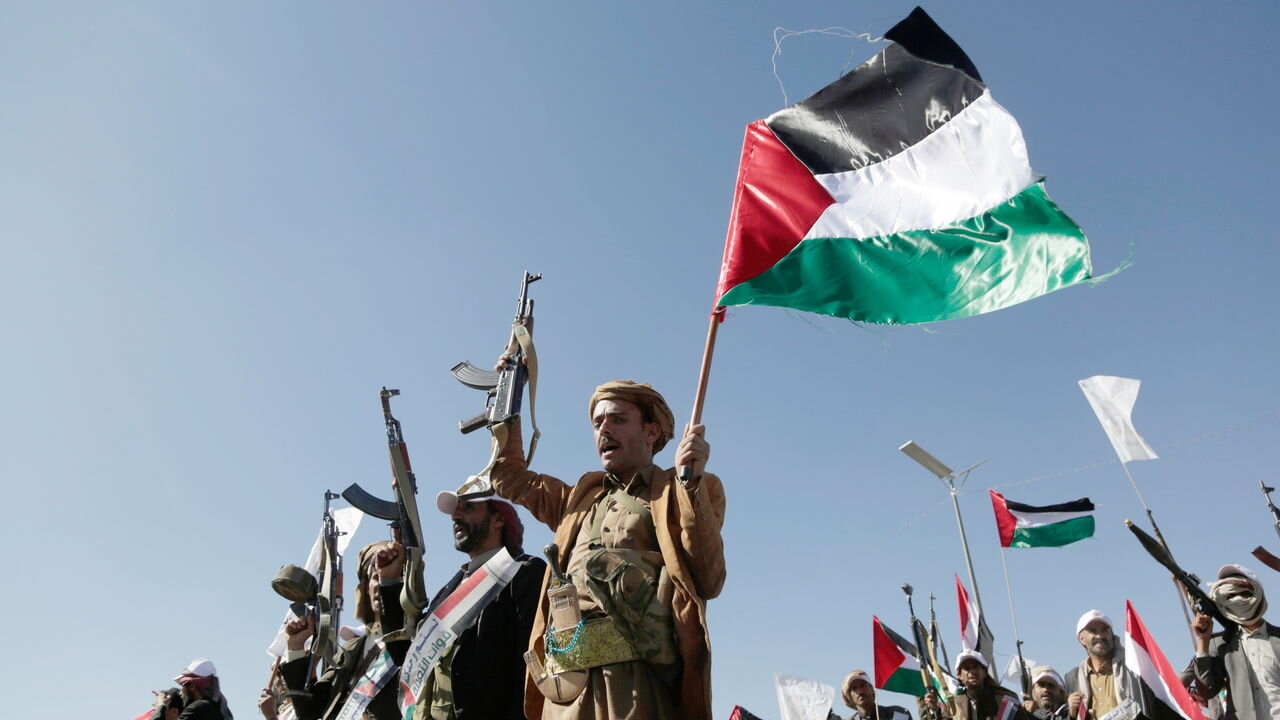
TEHRAN – Palestinian resistance forces, along with the overwhelming majority of the Palestinian people, make no secret of their deep appreciation for Ansarallah.
This stems from the geopolitical, popular, and military positions adopted by the government in Sanaa during the Israeli regime’s genocidal war
on Gaza. The late martyr Abu Ubaida, who served as the Palestinian military spokesman, referred to them as “brothers in sincerity.”
All Palestinian forces have widely praised the military operations carried out by Yemen’s Ansarallah in the Red Sea and the Bab al-Mandab Strait, as well as their ballistic missile strikes against various Israeli sites.
They regarded Yemen’s courageous actions as placing strategic pressure on the regime and its allies, while providing genuine support and sacrifice to the Palestinians in Gaza. The Yemeni people, their government, leaders, and infrastructure were subjected to fierce aggression by the U.S. and the Israeli regime.
The assault was aimed at forcing Ansarallah to abandon its geopolitical and military support for Palestine. The Palestinians expressed their solidarity with the Yemeni people, whose sacrifices had become intertwined with those of the Palestinians.
Palestinian resistance forces regard Yemen and Ansarallah as genuine partners in confronting the region’s real enemy: The Zionist regime.
The massive, million-strong Yemeni popular mobilization that continued throughout the U.S.-backed genocide on Gaza, never stopped, and showed neither frustration nor fatigue, cannot be erased from Palestinian memory or consciousness.
How often did a war-weary, starving and exhausted Palestinian wish that Yemen could have been his neighbor?
Palestinians and the sense of abandonment
The Palestinian sense of abandonment by the vast majority of the Arab and Islamic world is impossible to describe or fully comprehend.
Their anger and resentment are not directed solely at official institutions and governments. The deepest sense of bitterness is toward the peoples themselves, and toward Islamic, nationalist, and pan-Arab movements. Hope had been placed in them.
As for the rulers, their positions were known in advance; Palestinians expected nothing from them beyond the words of condemnation and denunciations they had always issued.
It is therefore surprising to expect Palestinians to take a position against those who supported them in their hour of need, who possess the will and determination to support them in the future, and who did not content themselves with slogans and speeches about fighting the occupying regime, but translated words into action.
Conversely, it is astonishing to expect Palestinians to sympathize with those who abandoned them, including some who stabbed them in the back and even sought, in one way or another, to harm them.
The truth that should surprise or upset no one is that the majority of the Palestinian people, regardless of their political affiliations, support and stand behind Yemen and the leadership of Ansarallah. This is a principled position, not politicized or directed by anyone. It is spontaneous, sincere, and natural.
Whoever expects otherwise fails to understand the depth of the suffering inflicted on the Palestinian people in the Gaza Strip by every movement, ruler, and institution that abandoned them at the moment when they needed support most.
Moreover, after the genocidal war, Palestinians are no longer capable of indulging anyone with empty courtesies. They have come to understand that maintaining their bonds with the people of sincerity in Yemen, Lebanon, Iran, and Iraq, and with sincere people, figures, and movements around the world, is better for them than placing their hopes in people of slogans.
Those who are lions on the battlefields of sectarian and internal conflicts but ducks when confronting the Israeli regime.
The sectarianism of the Israeli agenda
The Palestinian people look with pride and honor upon everyone who confronts the enemies of the Arab/Islamic world and humanity. A regime that has openly declared its objective is to seize Arab lands from the Nile to the Euphrates.
They see most leadership as little more than reflections of, and submissions to, Israeli and colonial schemes.
A considerable number of those labeled as scholars, intellectuals, and political commentators have also, knowingly or unknowingly, enlisted themselves in the service of the agendas of the Zionist regime and its allies.
Instead of playing a role in bringing West Asia and its peoples together against a common enemy whose hostility is beyond dispute, they do the opposite: they contribute to dividing the region along sectarian and denominational lines.
Their role becomes visible only in internal conflicts. They disappear when the Israeli regime is fought. And when they do appear, it is to cast doubt, stab, level accusations, and undermine the anti-Israeli resistance and its supporters, leaving this heroic resistance only more abandoned.
What further reinforces the Palestinian orientation toward Yemen is the profound Israeli concern over the rapidly unfolding developments there and the advances being made by Ansarallah.
These developments have caused growing anxiety within the regime’s security establishment, particularly over the consequences of Ansarallah’s control of the strategic Bab al-Mandab Strait and the ability to influence maritime traffic through it. In some sections, the strait is no more than 18 kilometers wide, making it easier to disrupt shipping there than in wider maritime passages.
The occupying regime has experienced a Red Sea blockade against its vessels by Ansarallah. Amid the Gaza genocide, Ansarallah forced the regime’s southern port of Eilat to go bankrupt.
The Israeli security establishment believes that developments in the Red Sea could represent a strategic shift whose repercussions extend beyond the region, particularly amid the U.S. crisis in the Strait of Hormuz and the illegal war against Iran.
The regime relies on the sea for approximately 98% of its imports, making any threat to maritime routes a strategic challenge for it. This comes as the U.S. administration is unwilling to participate directly in a confrontation with Yemen and Ansarallah, prompting the Saudi leadership to request regional support.
It is natural and logical for the Palestinian people to judge what they see with their own eyes. They are known for possessing a high level of political awareness, shaped by the experiences and political and military battles they have fought against the occupying regime, its supporters, collaborators, and those who have normalized relations with it.
The Palestinians see their position on what is happening in Yemen as stemming, on the one hand, from loyalty to those who stood by them, and on the other, from a conscious understanding of the conflict, its parties, and the forces that stand to benefit or suffer from it.
Leave a Comment