In Urmia, the grape is more than a fruit
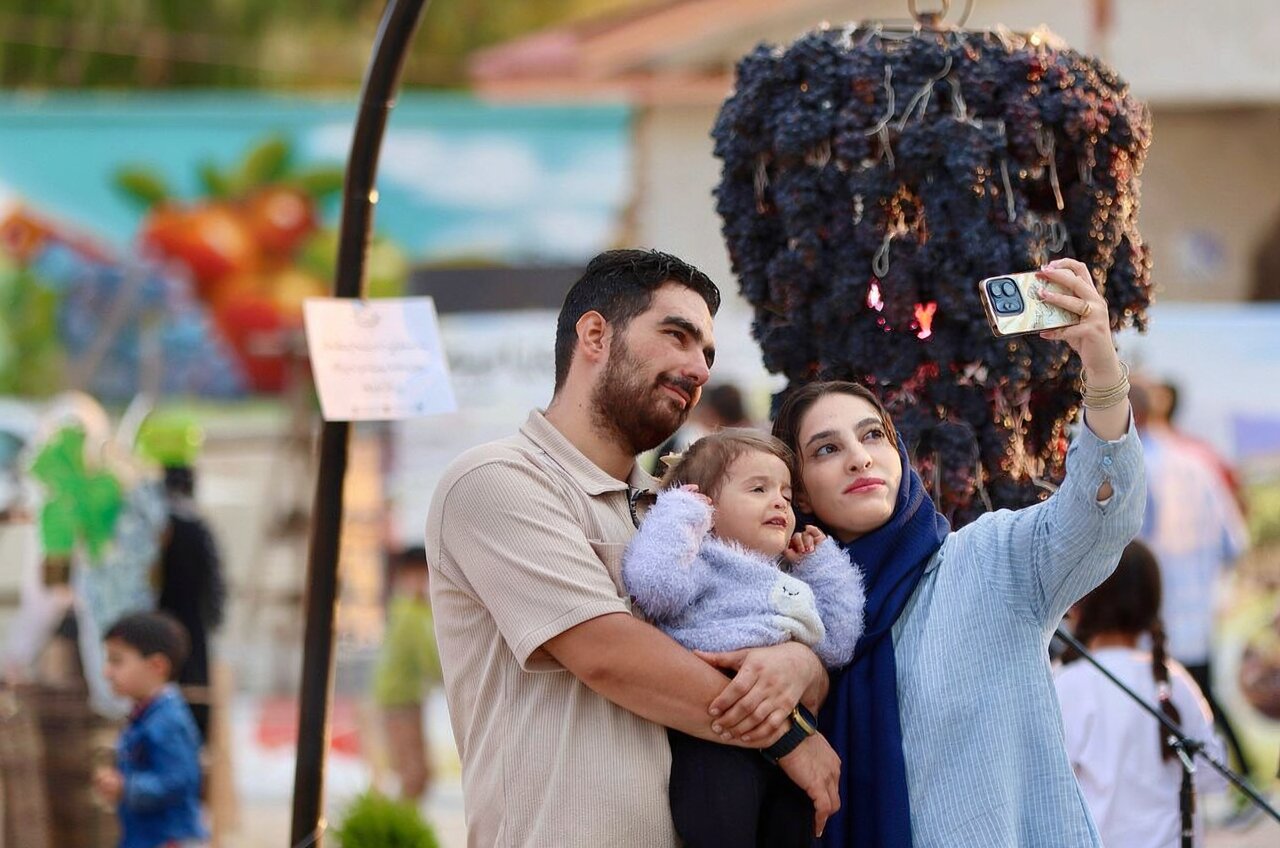
URMIA, West Azarbaijan Province - By late afternoon, the road out of Urmia was beginning to clog. Our flight had landed around 5 p.m., and after a quick check-in at the hotel, we set off for Chi Chest Coastal Village, near Lake Urmia, where the 9th Urmia Grape Festival was underway from Sep.10 to 20.
For much of the way, traffic moved slowly.
I asked our guide why there were so many cars on the road.
“The festival,” he said.
That explained the traffic. It also gave me my first sense of how much the event mattered to people in the city.
As we drove, I asked him about grapes and their place in Urmia’s culture. He told me that celebrations connected with the grape harvest were an old tradition in the area, with local accounts tracing them back thousands of years. He also spoke about harvest traditions among the region’s different religious communities.
One of the local traditions he mentioned was known as Shanadar, or Shanidar.
What we were heading toward, of course, was a modern version of that old connection.
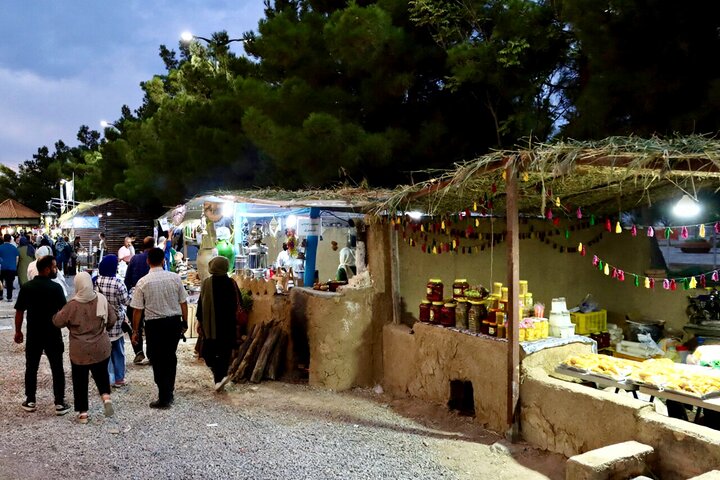
When we arrived, the parking areas were already crowded.
People walked toward the entrance, stopping to take photographs beside large grape sculptures, statues and colorful figures.
I guessed there were perhaps 2,000 to 3,000 people there at the time.
At several stalls, different varieties grown around Urmia were laid out for visitors.
Some were new to me.
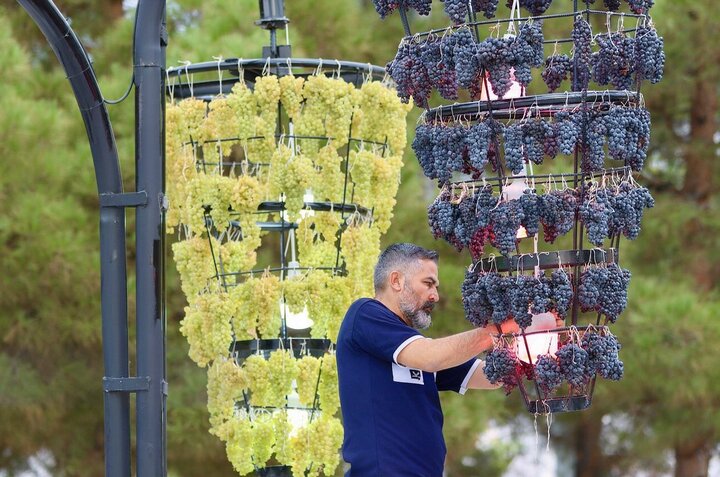
A few were long and unusually large, almost like dates. Others were round and heavy. They came in different shades of green, red and black.
Then I tasted them.
One variety, with Japanese origins, caught me by surprise. Its flavor seemed to change as I ate it. For a moment it reminded me of one fruit, then another.
That is the problem with describing taste. You can tell a reader what a grape looks like. You can give its name, size and color. But taste is something else. You have to be there.
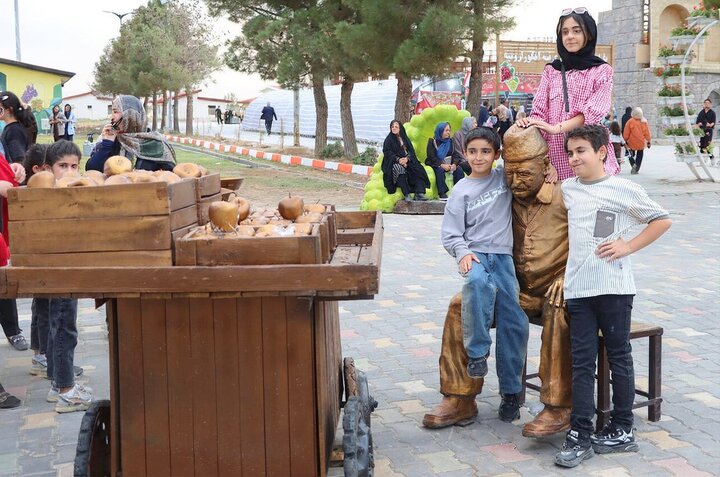
At one stall, a middle-aged man was offering visitors grapes from several baskets.
“Which one should I try?” I asked.
He pointed to a dark variety.
“This one,” he said. “Don’t judge it by the color. Just taste it.”
I did.
He watched my reaction and smiled.
“You like it?”
“I do. Very much.”
“Then take some home,” he said. “You won’t find this taste easily in your city.”
He turned out to be right about at least one thing.
I bought a seven-kilogram box to take back to Tehran.
Only later did I think about the practical problem.
I still had to get through the airport, carry my luggage and board a flight.
But by then, it was too late.
The grapes had won.
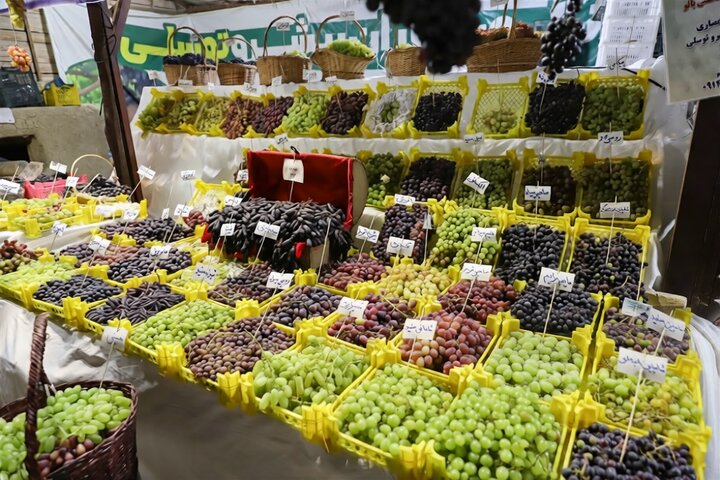
At another stall, a woman was arranging bunches of green grapes in neat rows.
I asked whether they were all from Urmia.
“Mostly from around here,” she said. “People know grapes from Urmia. They come in different varieties, and each has its own use.”
A younger woman standing beside her added, “Some are better for eating. Some are better for raisins. Some people want them for making Doushab.”
The conversation lasted less than a minute, but it explained something the displays could not.
The grape was not simply one product. It was a whole category of local food, work and knowledge.
At other stalls, I saw what happened to the fruit after it left the vine.
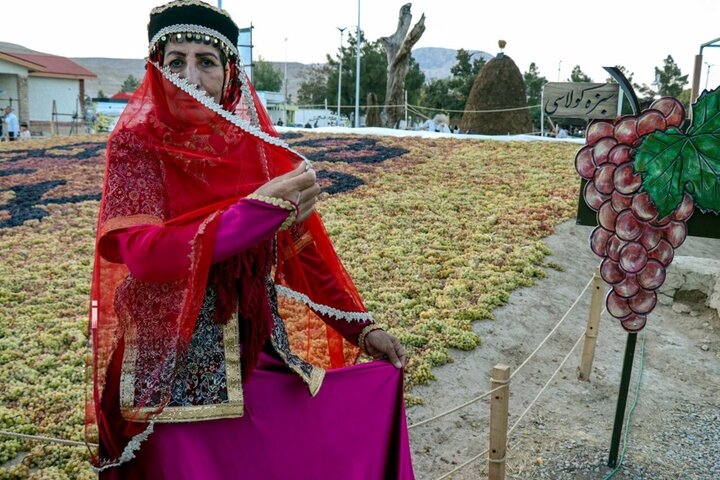
There were different methods of drying grapes. In one display, more than two tons of green and black grapes had been spread over a sloping surface to dry into raisins.
At some stalls, enormous bunches hung in clusters, left to dry over several weeks. Each was about one to 1.5 meters long, made up of tightly intertwined bunches of grapes in different colors and shapes.
Local people called this traditional method “Milakh.”
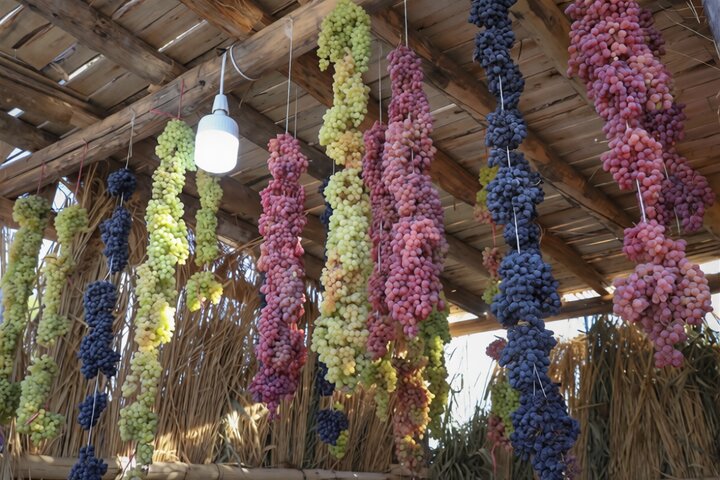
Unlike ordinary raisins, they explained, grapes dried this way retain more moisture, leaving them softer and juicier.
There were also bottles and jars of grape products, including Doushab, the thick syrup made from grape juice.
I bought some, along with several other local agricultural and dairy products.
The displays showed that the grape was much more than something to eat fresh.
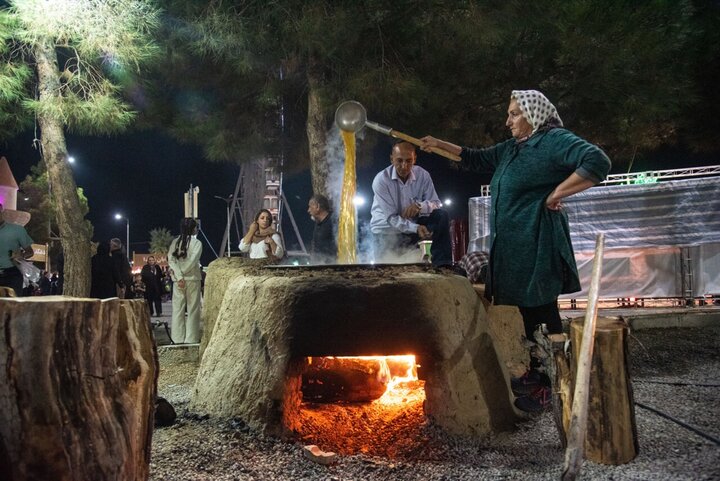
It could be dried, boiled, preserved and turned into food that would carry the harvest into the winter months.
One stallholder handed me a small piece of dried fruit.
“Try this,” he said.
I asked how long it took to prepare.
“It depends on the type of grape and how you dry it,” he said. “But this is how people used to keep the harvest for later.”
He paused, then added, “The fresh grapes are for now. The dried ones are for the months ahead.”
It was a simple explanation, but it brought the harvest cycle into focus.
Beyond the grapes
The most interesting part of the evening was not always inside the stalls.
Around the main festival area, families had set up temporary camps. Many had brought food from home. They sat together for dinner while children moved around the festival grounds.
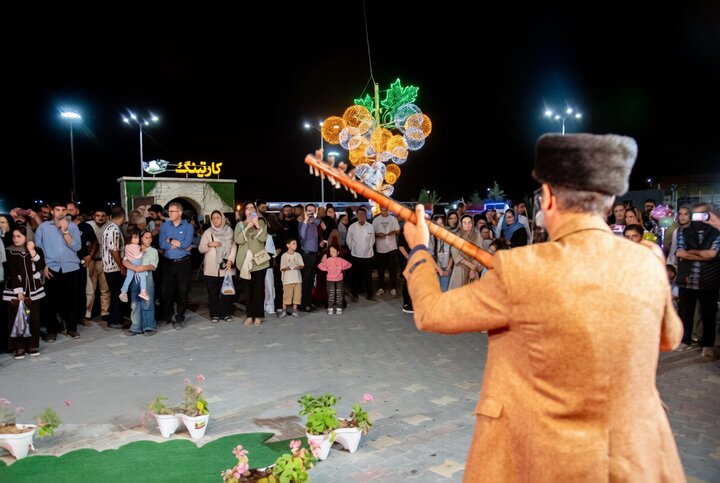
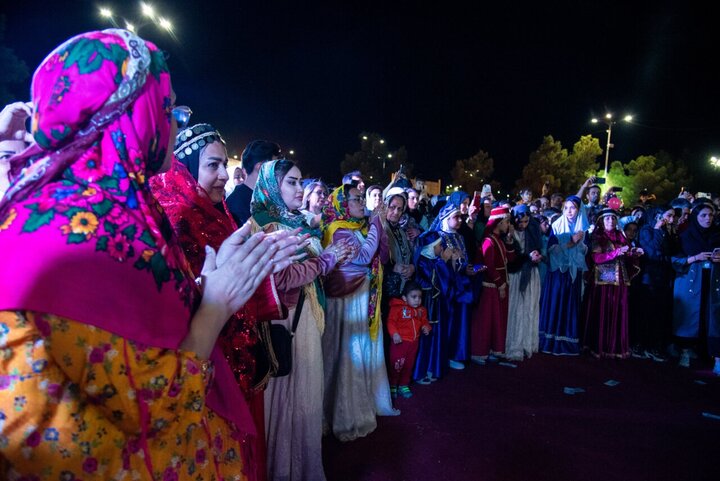
Nearby, Ashiqs, wearing tradigital outfits, sang and played. Drums were beaten. A circle of people performed a traditional dance, holding hands.
I stopped near one family as they were eating.
“Do you come every year?” I asked a woman sitting with several relatives.
“We try to,” she said.
“What brings you here, the grapes or the festival?”
She laughed.
“Both. But mostly the family.”
Her young son, who had been listening, interrupted.
“And the games,” he said.
His mother smiled.
“And the games,” she agreed.
That small exchange gave the event a different feeling.
It was a family outing as much as an agricultural celebration.
For many people, the grapes were only part of the reason to come.
The rest was being together.
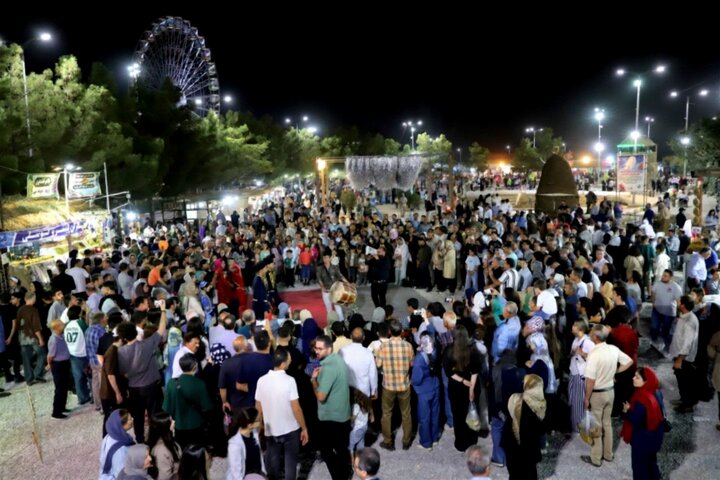
Behind the music, however, food and colorful displays was a sizeable agricultural economy.
I also had a chance to speak with Aidin Rahmani-Rezaeieh, the mayor of Urmia, during his visit to the festival.
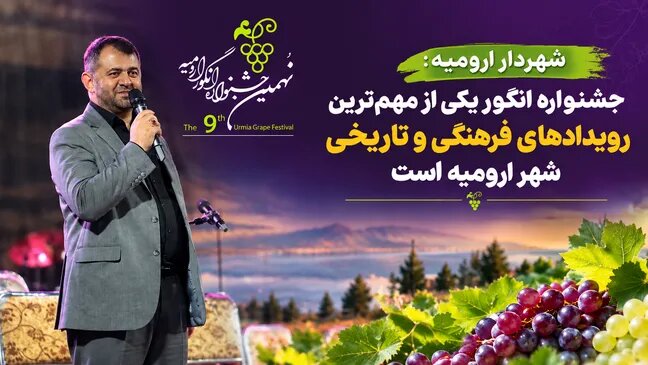
Aidin Rahmani-Rezaeieh, the mayor of Urmia, addresses visitors at the grape festival
He said ambassadors and representatives from 15 foreign countries were expected to visit the festival and attend its closing ceremony.
“The roots of the grape festival go back to an old tradition in Urmia, giving thanks for the grape harvest,” the mayor added. “People used to celebrate it at the end of Shahrivar (mid-September) and thank God for the harvest.”
The municipality has held the festival for nearly a decade, he said.
“This year’s festival was also bigger in scope,” he said, adding that the aim was not only to preserve the tradition but also to introduce it to younger generations.
The municipality had created sections devoted to innovation, industry and investment, history and identity, sports, mothers and children, food and rural products.
In the “innovation section”, visitors could see agricultural technologies and projects connected with grapes, as well as specialist panels.
Another section focused on industry and investment linked to agriculture. The “history and identity section” displayed photographs that organizers said were more than 300 years old.
There was also a market where villagers and farmers sold their products directly to visitors.
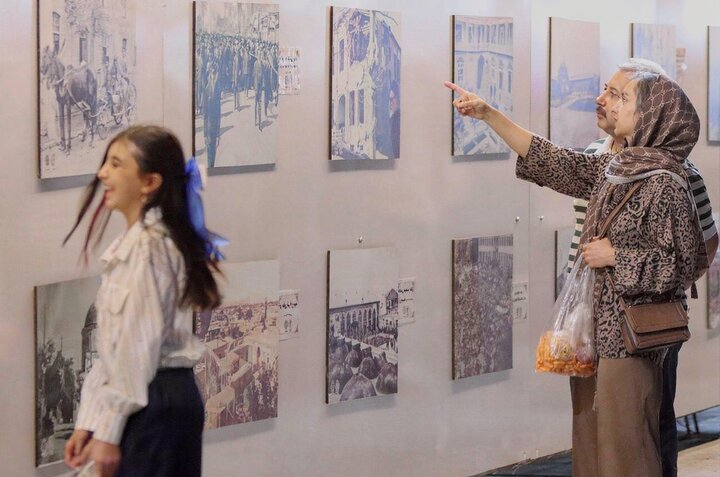
Rahmani-Rezaeieh said this was important because farmers could sell their products directly “from the farm gate.”
He also said the municipality wanted to turn Chi Chest into a permanent venue for festivals and establish a year-round calendar of events based on tourism and local attractions.
Qahreman Ayvazlu, governor of Urmia, who accompanied the mayor, told me that grapes were the city’s second-largest agricultural product after apples.
The governor put annual grape production at about 240,000 tons and said more than 30,000 growers were involved.
He also pointed to the range of products made from grapes, including vinegar and grape syrup.
Vahid Abbasi, deputy mayor of Urmia, described the relationship between the city and its vineyards in more personal terms.
“Grapes are the fragrance of Urmia and the blessing of the city,” he told me.
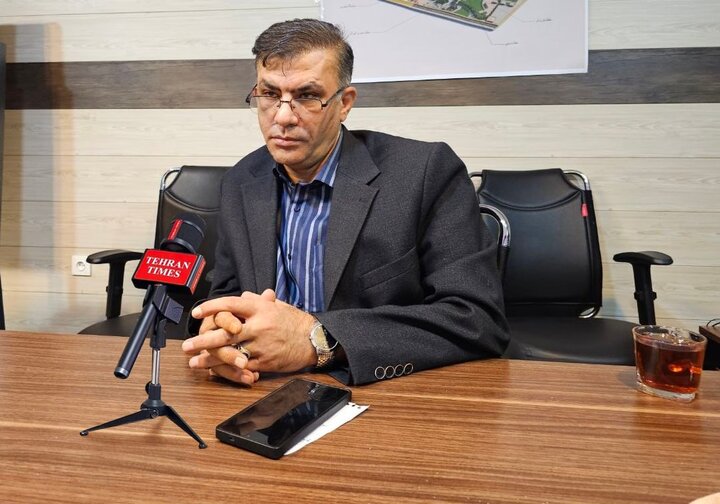
Vahid Abbasi, deputy mayor of Urmia, speaks to the Tehran Times
He said people in Urmia had lived with vineyards for generations and that the city now wanted to turn that old connection into an economic and tourism opportunity.
The benefits, he said, should ultimately reach farmers, producers and others involved in the local economy.
The broader goal was to strengthen Urmia as a tourism destination and make the grape festival an event capable of attracting visitors from outside the region.
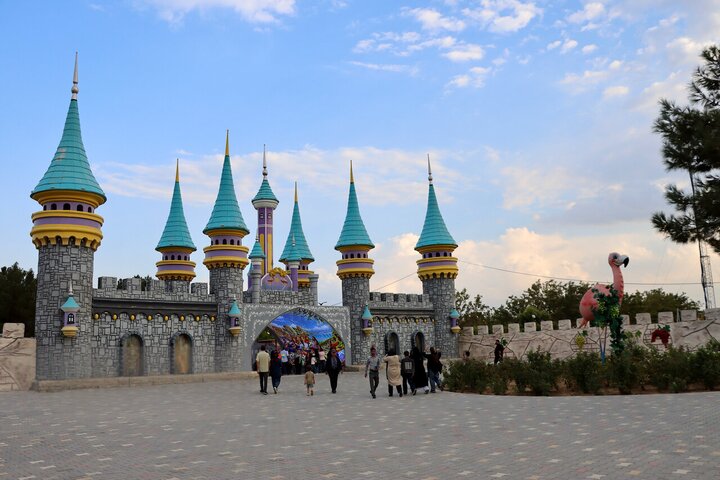
The road beyond the festival
I understood that connection better the next day.
We were driving outside Urmia toward Tamtaman Cave when vineyards began appearing on both sides of the road.
There were far more of them than I had imagined from the festival.
The previous evening, grapes had been displayed under lights, arranged on tables and presented to visitors.
Now they were simply growing in the fields.
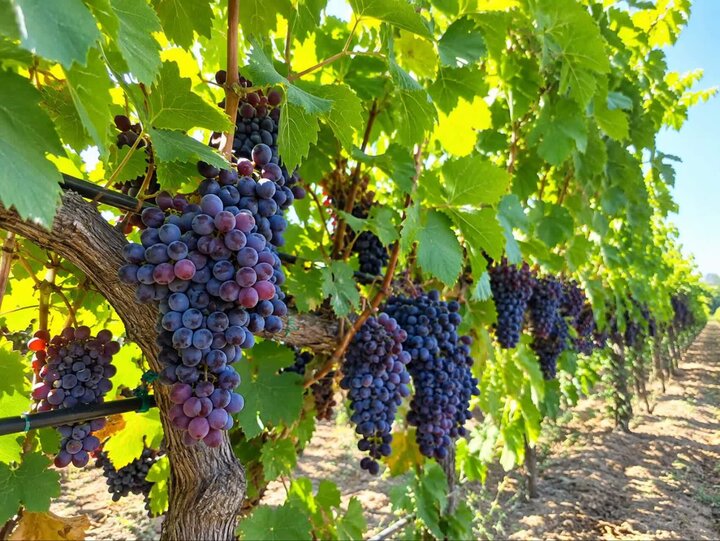
Our driver stopped beside one of the vineyards.
He told me about an old local custom in which a passerby could pick a few grapes and eat them. He mentioned the local name for the custom, but I did not remember it afterward.
I picked some.
There was nothing between the fruit and me.
No stall.
No package.
No sign.
No stage.
Just the vine.
Our driver watched me eat and laughed.
“Now you understand Urmia,” he said.
AM
Leave a Comment