Iran will respond to any aggression with new weapons
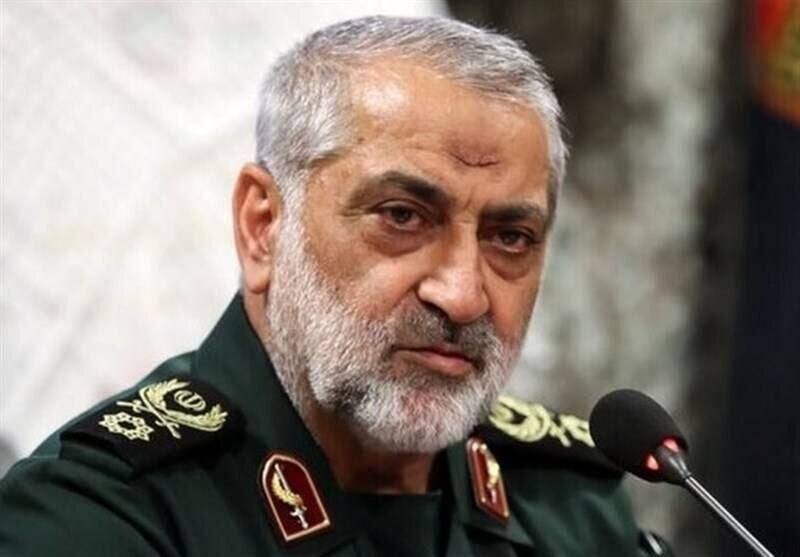
TEHRAN — Iran has warned the United States against any intervention in the Strait of Hormuz, while stressing that its Armed Forces have developed new military technologies and capabilities to respond to any potential aggression.
Brigadier General Abolfazl Shekarchi, spokesman for Iran’s Armed Forces, issued the warning on Saturday night, saying that any U.S. attempt to interfere in the strategic waterway would face an Iranian response.
“If the United States intervenes in the Strait of Hormuz, it will get slapped,” Shekarchi said, using a colloquial expression to underline the consequences Washington would face in the event of direct intervention.
He also said that the United States had “no way out other than leaving West Asia,” arguing that the sooner American forces withdrew from the region, the lower the losses they would suffer.
Shekarchi described the Islamic Republic as a “global power” and said Iran would not allow the United States to return to its former position in a “new world order.”
Iran’s military doctrine and new technologies
The senior military spokesman said Iran’s Armed Forces had sought to strengthen their combat capabilities and incorporate advanced technologies since the Iran-Iraq War in the 1980s, also known as the “imposed war.”
He cited the beginning of Iran’s indigenous missile production during the conflict with the former Ba’athist regime in Iraq as a tangible example of the country’s efforts to develop defense capabilities under wartime conditions.
According to Shekarchi, one of the most significant changes in Iran’s military doctrine following the Islamic Revolution was the shift from conventional warfare toward asymmetric warfare.
He said conventional military methods could be vulnerable when confronting an adversary equipped with costly and technologically sophisticated heavy weapons.
“Asymmetric warfare means standing up to the enemy’s expensive heavy weapons and achieving victory with lower costs and simpler but more effective and practical defense equipment,” Shekarchi said.
’A surprise in store for the enemy’
Shekarchi said Iran’s adversaries had miscalculated the country’s resilience and defensive capabilities.
He argued that if the enemy had properly assessed Iran’s capabilities, it would not have chosen to attack the country.
The general also emphasized information security as a key principle within the Armed Forces, saying that safeguarding military information was essential to preserving the element of surprise.
He said Iran possessed unique elements of national power and pointed to the participation of the Iranian people both on the streets and on the battlefield as a fundamental factor in the country’s ability to withstand attacks.
Referring to recent threats against Iran, Shekarchi said the Armed Forces would employ newly developed military technologies in responding to any future aggression.
“The powerful Iranian Armed Forces are many times stronger than they were at the outset of the second and third imposed wars,” he said, describing the current condition of the Armed Forces as “very good.”
He said Iran’s missile and drone capabilities had become more advanced and powerful and warned that Tehran had capabilities that had not necessarily been publicly disclosed.
“This time we have a surprise in store for the enemy,” Shekarchi said, adding that Iran would respond to any potential aggression with new military technologies.
Hormuz at the center of the dispute
Shekarchi also reiterated Iran’s position on the Strait of Hormuz, saying that the strategic waterway was under Iranian management.
“Management of the Strait of Hormuz is in Iran’s hands,” he said. “Any ship that wants to pass outside the Iranian route will not have security.”
The comments come as control and security arrangements in the Strait of Hormuz have emerged as a major point of contention between Tehran and Washington.
In recent indirect negotiations in New York, Iranian officials presented conditions under which Tehran said it could facilitate the reopening of the waterway and the resumption of nuclear talks. According to Axios, U.S. negotiators told their Iranian counterparts that Iran did not control the strait and therefore could not impose conditions concerning it.
Leave a Comment