Ensuring security of transport corridors benefits all regional countries: Iranian minister
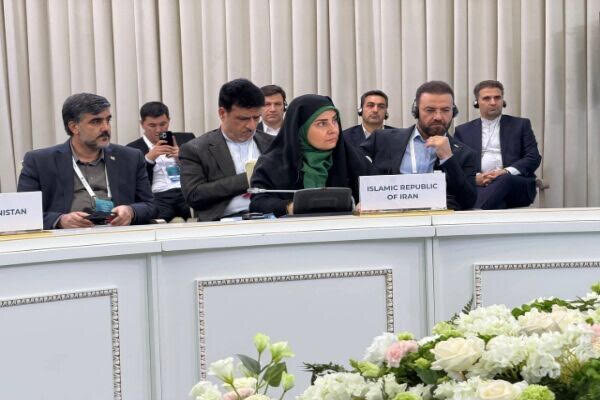
TEHRAN- Iran’s Minister of Transport and Urban Development, emphasizing the necessity of protecting civilian infrastructure and guaranteeing the continuity of transport and transit flows in the region, presented proposals and called for the formulation of operational and time-bound plans to remove border obstacles, develop rail cooperation, and strengthen the resilience of regional corridors.
According to an IRNA report from the Ministry of Transport and Urban Development, Farzaneh Sadegh, at the 14th Meeting of Ministers of Transport of the Economic Cooperation Organization (ECO) member states in Kazakhstan, expressed appreciation for that country’s hosting and stated: Due to its privileged geographical location, the ECO region has the capacity to become an integrated network of road, rail, and sea routes—a network that can strengthen connectivity among Central Asia, West Asia, the Caucasus, and open waters.
Referring to the approvals of the 13th ECO Meeting of Ministers of Transport in Tehran, she emphasized the necessity of assessing the extent of implementation of past agreements, identifying obstacles, and determining operational priorities, and said: This meeting must lead to specific, time-bound, and measurable decisions for developing regional cooperation.
The Minister of Transport and Urban Development, referring to the damage inflicted on Iran’s transport infrastructure during the attacks by the United States and the Israeli regime, said: Disruption in any part of the region’s transport network, regardless of where it occurs, can increase the time and cost of moving goods and also affect the security of supply chains of other countries.
Sadegh emphasized: Protecting civilian infrastructure, ensuring the security of communication routes, and continuing the flow of transport and transit are common interests for all ECO member states.
She asked the organization’s secretariat to examine the effects of security disruptions on regional corridors and present practical solutions for increasing the resilience of the transport network.
Sadegh further considered facilitating the movement of the road fleet and border crossings among the priorities of regional cooperation and emphasized reducing truck dwell time, simplifying customs procedures, harmonizing transport documents, and exchanging information among border authorities.
The Minister of Transport and Urban Development, referring to the revival of the ECO train and its successful operation on the Turkey, Iran, and Turkmenistan route, considered this experience a basis for expanding rail cooperation among member states.
Noting that the damaged bridges on the aforementioned rail route were repaired by Iranian engineers within 72 hours and the route was reopened, she emphasized the importance of technical readiness and maintaining the continuity of regional rail connections.
Sadegh also considered the Almaty–Tehran–Istanbul rail connection an opportunity for developing regional trade and proposed that tariff, customs, technical, and operational obstacles on rail routes be examined and a clear mechanism be created for coordinating train movements and developing regular and competitive services.
The Minister of Transport and Urban Development listed access of landlocked countries to open waters as one of the priorities of cooperation in ECO and said: Achieving this goal requires the integrated linking of ports, rail lines, roads, and logistics services.
Referring to the capacity of Chabahar Port and other southern ports of Iran, she considered the connection of Chabahar to the country’s rail network an effective factor in strengthening the link between land and sea transport, diversifying trade routes, and reducing transport costs.
The Minister of Transport and Urban Development, further emphasizing the necessity of determining the responsibilities of countries and the secretariat in following up on approvals and presenting a progress report at the next meeting, noted: Developing transport and transit in the ECO region, in addition to increasing trade and economic growth, helps strengthen regional ties and enhance the economic resilience of member states.
Sadegh proposed that the ECO secretariat, in cooperation with member states, prepare a comprehensive report on the extent of implementation of previous approvals and remaining obstacles, formulate a time-bound plan for facilitating road transport, border and customs coordination, and developing rail and multimodal services, and place on its agenda solutions for protecting civilian infrastructure and increasing the resilience of corridors.
EF/MA
Leave a Comment