Iranian scholars win COMSTECH award 2025
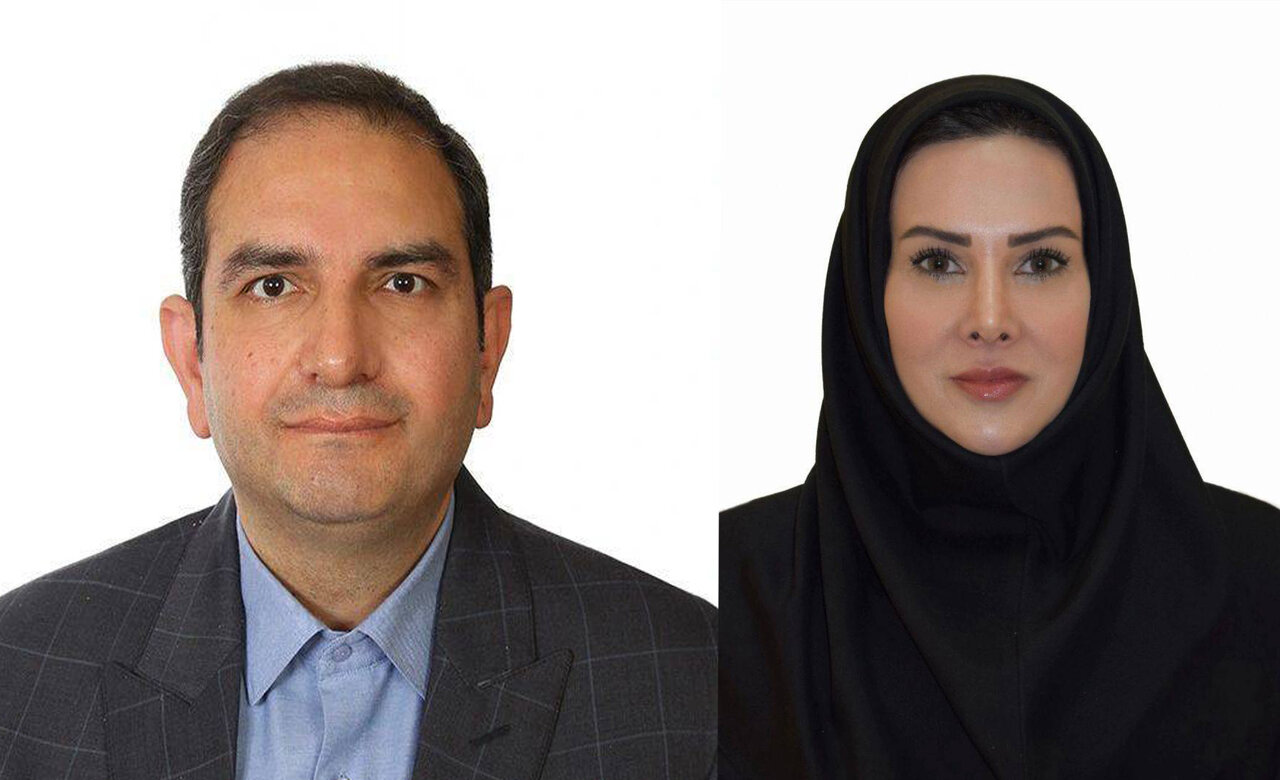
TEHRAN –Two Iranian scholars have won Life-time Contribution Award of the Organization of Islamic Cooperation’s Committee on Scientific and Technological Cooperation (OIC-COMSTECH) in Biology and Chemistry for their outstanding achievements in science and technology.
Lobat Taghavi, a full professor of environmental pollution at the Islamic Azad University, Tehran, has been awarded the OIC-COMSTECH Best Research Paper in Biology 2025 in recognition of her outstanding scientific contribution to sustainable environmental solutions and soil remediation research.
She received the prestigious recognition for her award-winning research paper titled ‘Application of compost assisted by Fe3O4 nanoparticles in di (2-ethylhexyl) phthalate-contaminated soil remediation: Bio stimulation strategy, soil responses, and RSM/CCD optimization’.
The study presents an innovative and biologically driven approach to restoring agricultural soils contaminated by phthalates, addressing an important pollution and public health challenge.
Her research integrates compost-based microbial bio-stimulation with iron-oxide nanoparticles and advanced response surface optimization techniques to achieve enhanced contaminant removal, while preserving soil biological functionality and nutrient balance. The findings offer a scientifically robust and environmentally benign remediation strategy that effectively links environmental biology with applied remediation engineering.
This high-impact work carries significant implications for ecosystem restoration, food safety, and sustainable land management at both regional and global levels, contributing meaningfully to long-term environmental protection and agricultural sustainability.
Also, Professor Abdolreza (Arash) Simchi has been awarded the COMSTECH Lifetime Achievement Award in Chemistry 2025 in recognition of his exceptional and sustained contributions to chemical sciences, advanced materials research, and global scientific innovation.
Simchi is a nationally exemplary professor and distinguished researcher at the Sharif University of Technology, Iran. He is also a Scientist at the Fraunhofer Institute for Manufacturing Technology and Advanced Materials, Germany, and an elected Fellow of the World Academy of Sciences.
Throughout his career, Simchi has received numerous prestigious international honors recognizing his scholarly excellence and innovative contributions. These include the Lifetime Achievement Award from the Humboldt Foundation, the Young Inventor Award from the World Intellectual Property Organization under the United Nations, and the Kharazmi International Award.
Since 2012, he has been consistently ranked among the top one percent of scientists worldwide based on citation metrics indexed by the ISI Web of Science, and among the top 200 scientists in emerging technologies according to a Stanford University citation-based analysis.
His research focuses on the design, synthesis, and characterization of advanced and sustainable materials for biomedical applications, renewable energy generation and storage, and environmental engineering. Through this work, he has made lasting contributions to both fundamental science and applied technologies addressing global sustainability challenges.
The Ministerial Standing Committee on Scientific and Technological Cooperation of the OIC was established by the Third Islamic Summit of the OIC held at Makkah, Saudi Arabia, in January 1981.
The core mandate of COMSTECH is to strengthen cooperation among OIC Member States in science and technology (S&T), enhance their capabilities through training in emerging areas, undertake follow-up-actions and implement the resolutions of the OIC, and draw up programs and submit proposals designed to increase the capability of the Muslim countries in science and technology (S&T).
The ultimate aim is to build and nourish a scientific culture in addition to using S&T as a major contributor to socio-economic development and rapid industrialization.
Over 1,140 Iranians among world’s 1% most-cited researchers
A total of 1,142 Iranian researchers have been recognized among the world’s top one percent most-cited researchers in 2025, compared to 1,056 identified researchers in 2024, according to the Islamic World Science Citation (ISC) Institute.
The Ministry of Health, Treatment, and Medical Education (with 603 entries) accounts for 52.77 percent, and the Ministry of Science, Research and Technology (with 427 researchers) represents 37.43 percent of the most-cited Iranian researchers, isc.ir reported.
Clinical medicine, with 446 entries, Engineering with 219 entries, Pharmacology and Toxicology with 163 entries, Chemistry with 140 entries, Neuroscience and Behavior with 115 entries, Agriculture Sciences with 100 entries, and Social Sciences with 77 entries held the highest shares of the most-cited researchers.
Three Iranian researchers have been among the highly cited award recipients.
Essential Science Indicators (ESI) data covers a 10-year period and includes bimonthly updates to rankings and citation counts.
Clarivate regularly publishes research impact metrics through the ESI, identifying top-performing research indexed in the Web of Science (WoS) Core Collection. Each journal indexed in the WoS Core Collection is assigned to one of the 22 research fields. Author rankings are calculated based on the citations received by an author in a 10-year period in each research field. Among all authors producing research in the same research field, those ranking in the top one percent by citations would be regarded as top one percent scholars.
MT/MG
Leave a Comment