Strengthening Iran's fleet, a practical step in development of Caspian Sea corridor
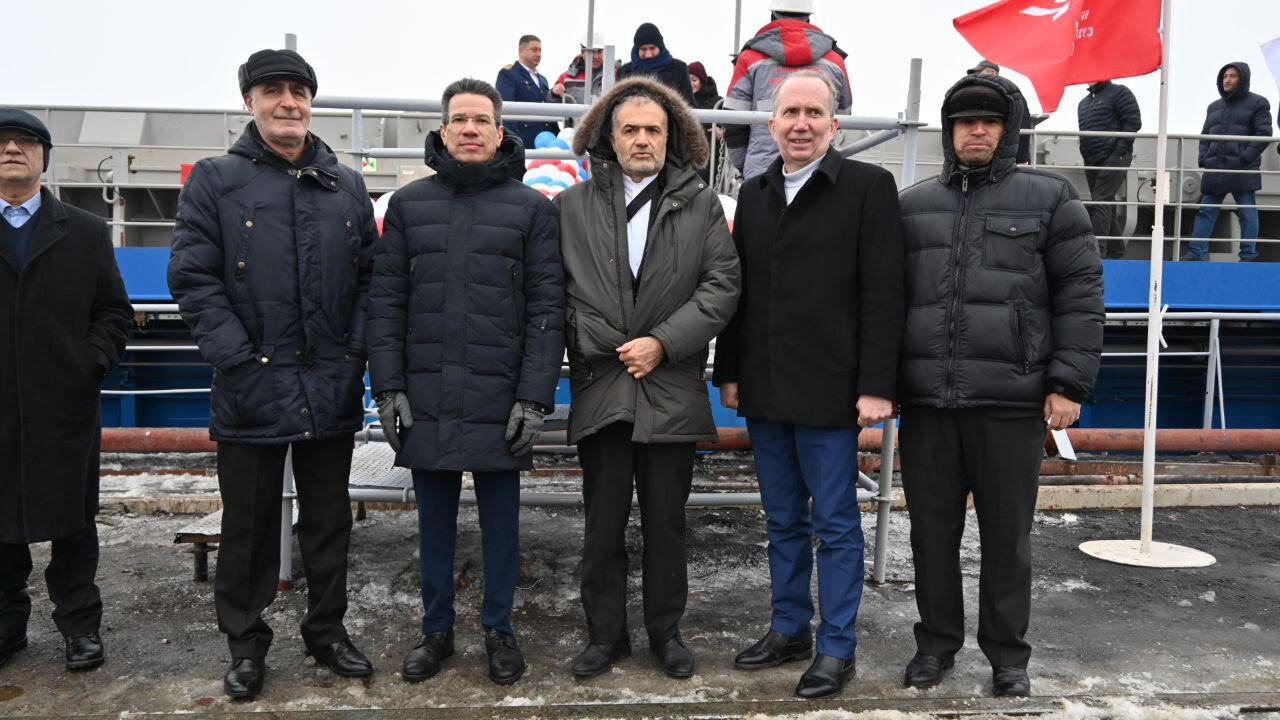
TEHRAN- A 7,200-ton cargo vessel named "Sahel-e Khazar" was handed over to the Islamic Republic of Iran Shipping Lines (IRISL)'s fleet in an official ceremony held in the Lotus Special Economic Zone in Russia's Astrakhan region.
The cargo ship "Sahel-e Khazar," with a carrying capacity of 7,200 tons, was built by the Lotus Shipbuilding Company and will operationally join the fleet of the Khazar Shipping Company.
Attending this program were Kazem Jalali, Iran's Ambassador to Russia; the delegation of the Islamic Republic of Iran Shipping Lines, led by Modares Khiabani; Igor Babushkin, Governor of Astrakhan Region; Ahmad Heydarian, Consul General of the Islamic Republic of Iran in Astrakhan; the Chairman of the Astrakhan City Council; the Minister of Foreign Relations; a representative of the Russian Ministry of Foreign Affairs' office in Astrakhan; the CEO of the Shipping Organization; technical managers of the shipbuilding company; and members of the accompanying delegations from both countries.
At the vessel delivery ceremony, several officials from Iran and Astrakhan Region, including the Governor of Astrakhan Region, the Ambassador of the Islamic Republic of Iran in Moscow, the CEO of the Islamic Republic of Iran Shipping Lines, and the technical managers involved in the ship's construction, delivered speeches. Referring to the growing trend of economic and industrial cooperation between Iran and Russia, they emphasized the development of collaboration in shipbuilding, maritime transport, and maritime logistics in the Caspian Sea region.
Furthermore, the technical documents related to the ship were signed in the presence of officials from both sides, and the parties agreed on the continuation of technical and engineering cooperation in future projects.
Following the official handover ceremony, the delegations from both countries visited the ship and held meetings and discussions with the Iranian captain and officials, as well as the managers of the Solyanka port. This ceremony was held within the framework of ongoing maritime and trade cooperation between Iran and Russia and was completed as one of the joint industrial projects of the two countries in the field of maritime transport.
Iranian ambassador in Moscow emphasizes strategic Iran-Russia maritime cooperation
At the ceremony for the delivery of the 7,200-ton cargo vessel "Sahel-e Khazar" in the Lotus Special Economic Zone in Russia's Astrakhan region, the Ambassador of the Islamic Republic of Iran to Russia described this event as a practical manifestation of Tehran-Moscow relations entering a new phase of economic cooperation.
Kazem Jalali, appreciating the participation of local Astrakhan officials and the Khazar Shipping Company management led by Modares Khiabani in the delivery of this vessel, stated: "With the development of relations in various dimensions, the relations between the two countries have now entered an unprecedented period, and there is a serious determination from the leaders of both countries to expand cooperation, with the development of economic relations being the top priority." He considered the Caspian Sea a significant asset for the economic connection between the two countries and described the expansion of the Islamic Republic of Iran's shipping fleet in this sea as one of the most important manifestations of this resolve. The Ambassador of the Islamic Republic of
Iran also regarded the strengthening of the Caspian shipping fleet in recent years as a practical sign of the progress in bilateral cooperation.
Additionally, Modares Khiabani, CEO of the Islamic Republic of Iran Shipping Lines, while pointing out the importance of developing maritime transport corridors, thanked the cooperation of the Embassy and Consulate General of the Islamic Republic of Iran and the Iranian managers of the Solyanka port in Astrakhan for facilitating shipping and port cooperation with the Russian Federation. He considered the delivery of this vessel, coinciding with the National Day of the Islamic Republic of Iran, as a good omen. He viewed this event as a sign of the strategic relations between the two countries and appreciated the efforts of Iran's Ambassador in Moscow to strengthen cooperation and participation in the development of Astrakhan port.
According to him, the capacity of the Islamic Republic of Iran Shipping Lines' fleet in the Caspian Sea has increased from 95,000 tons to 120,000 tons in recent years. With the addition of the "Sahel-e Khazar" vessel, with a capacity of over 7,200 tons, to the fleet, and the addition of two other vessels being built by Iranian shipbuilding companies by the end of 2026, it is predicted that the transport capacity of the Islamic Republic of Iran Shipping Lines' fleet in the Caspian Sea will reach 150,000 tons.
The head of the Shipping Organization, emphasizing the importance of the North-South Transport Corridor, stated that increasing maritime transport capacity is a prerequisite for developing this strategic route. He announced that the Islamic Republic of Iran Shipping Lines, as the world's 17th largest container company, is striving to increase its role in strengthening the economic relations between the two countries. He also expressed hope that with the development of port infrastructure in the Iranian and Russian ports on the Caspian Sea, the volume of trade exchanges will increase, and with the commissioning of the Chabahar-Zahedan railway by the end of 2026, the trade capacity along this corridor will grow even further.
At the conclusion of the ceremony for the delivery of the 7,200-ton cargo vessel "Sahel-e Khazar" in the Lotus Special Economic Zone of Astrakhan region, Kazem Jalali, Ambassador of the Islamic Republic of Iran to Russia, gave interviews with local media, including the TV channel Astrakhan 24, the Volga Astrakhan newspaper, and an internet news blog. He described this project as a practical step towards developing maritime and trade cooperation between Iran and Russia and a sign of the deepening economic relations between the two countries.
In this interview, the Iranian Ambassador highlighted the following points:
* Shipbuilding in Russia has a long history spanning 300 years and has seen significant progress since the time of Peter the Great.
* Visiting the Lotus complex and other shipbuilding centers shows that Russia is one of the world's leading countries in this field.
* The gas pipeline project is in the contract drafting stage, and there is no obstacle or problem from Iran's side. With the signing of the contract, the project will enter the implementation phase, and the construction and pipeline laying stages will take between 2 to 3 years.
* Astrakhan's shipbuilding capacity has increased thanks to the valuable efforts of specialists. The only consideration relates to the price of the vessels, and it is expected that cooperation in this area will continue.
* The "Sahel-e Khazar" vessel is positioned along the North-South Corridor and also the communication route between the five Caspian Sea littoral states; therefore, the economic outlook for this project is bright and promising.
* Russia needs to develop its Caspian ports on the Caspian Sea and develop and resolve issues related to the Volga Canal. The waiting time for ships at the entrance to the Volga Canal shows the necessity of focusing on streamlining operations, removing obstacles, and increasing economic efficiency.
* Russia is currently the largest foreign investor in Iran's oil fields and has invested in several oil fields. In the gas sector, projects have also been proposed to the Russian side, and it is expected that the parties will reach an agreement.
* Regarding the Lukoil company, Iran's readiness to facilitate the company's investment in the country was announced.
The Ambassador of the Islamic Republic of Iran also emphasized that the "Sahel-e Khazar" vessel will operationally join the Caspian shipping fleet within the next two weeks, and this project is a practical example of the strategic maritime and industrial cooperation between Iran and Russia.
MA
Leave a Comment