Isfahan launches university partnership to restore Chehel Sotoun Palace after airstrike damage
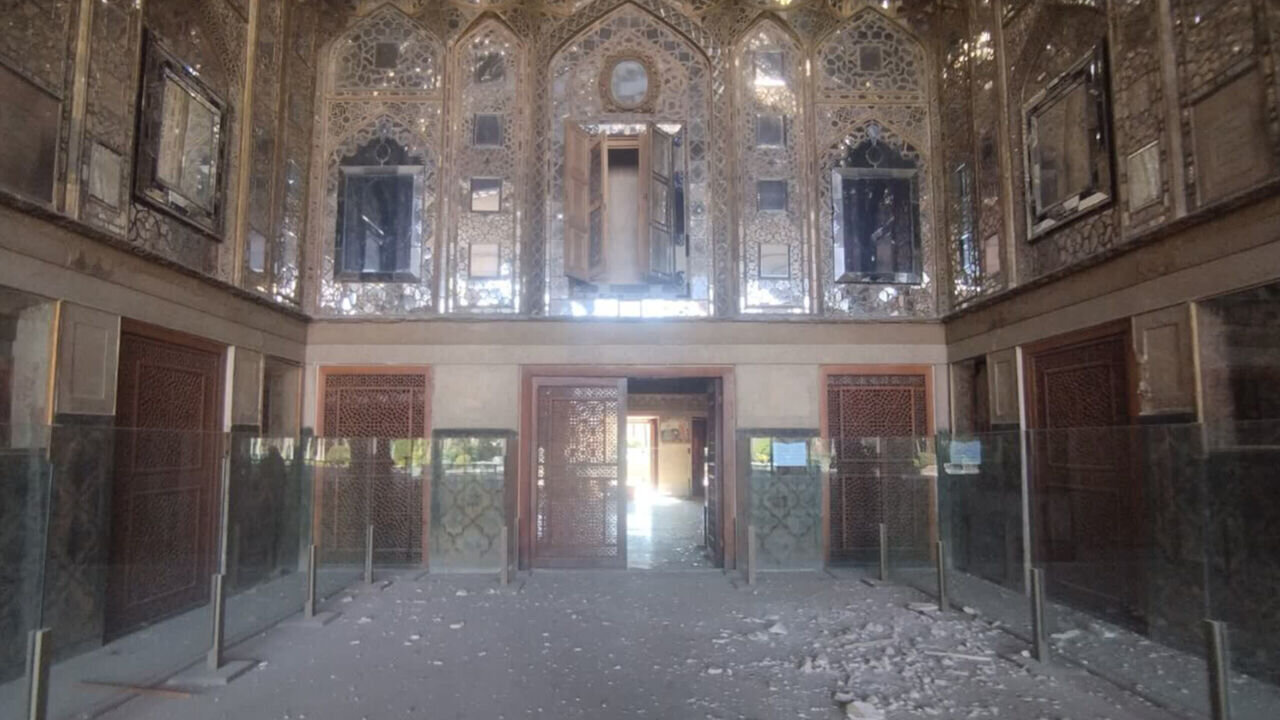
TEHRAN – Iranian cultural heritage authorities have begun a joint initiative with Art University of Isfahan to advance research and restoration work at Chehel Sotoun Palace, officials said, as damage to the historic monument continues to worsen following nearby airstrikes.
Mostafa Hadipour, director of the Chehel Sotoun World Heritage site, said a memorandum of understanding had been signed to draw on the university’s academic and research capacity to support the preservation and revival of traditional architectural structures, particularly the Safavid-era pavilion.
Speaking to ISNA, Hadipour said the second technical working group meeting for the site was held with participation from university professors and students, focusing on structural vulnerabilities, potential instabilities and damage attributed to what he described as recent U.S.-Israeli attacks.
He said academic teams had conducted monitoring and analysis of the palace structure and presented findings aimed at improving conservation strategies.
“One of the key proposals is the use of advanced seismic sensors for continuous monitoring of the structure,” Hadipour said, adding that the devices would enable precise recording and analysis of structural vibrations and movements.
The sensors could also measure environmental parameters such as humidity and light exposure, capabilities associated with modern “smart” engineering systems that can play a significant role in protecting historic buildings, the official added.
Hadipour said the implementation of the sensor system would depend on approval by the provincial technical council and allocation of funding.
He added that the initiative also seeks to direct postgraduate research at Isfahan Art University toward the study of Chehel Sotoun’s traditional structure, allowing academic work to contribute directly to conservation efforts.
The agreement further includes cooperation on developing a new museum content plan for the palace, with the aim of improving the presentation of artifacts and enhancing the site’s appeal to visitors.
Separately, provincial heritage officials said the condition of the palace has deteriorated in recent weeks due to the lingering effects of shockwaves from nearby bombardments.
Amir Karamzadeh, director-general of cultural heritage, tourism and handicrafts for Isfahan province, told IRNA that the scale of damage had increased compared with earlier assessments conducted about a month ago.
“The ongoing evaluations indicate that some of the damage is progressive,” he said, noting that decorative elements of the monument continue to fall.
Karamzadeh said the severity of the impact had proven more serious than initially estimated and stressed that comprehensive scientific studies must be completed before restoration begins.
Chehel Sotoun, meaning “Forty Columns,” was built in the 17th century during the reign of Shah Abbas II and historically served as a venue for royal receptions. The palace, now a museum, stands within a Persian garden listed by UNESCO as part of the “Persian Garden” cultural landscape.
AM
Leave a Comment