A strategic review of South Korea’s conduct during Iran war
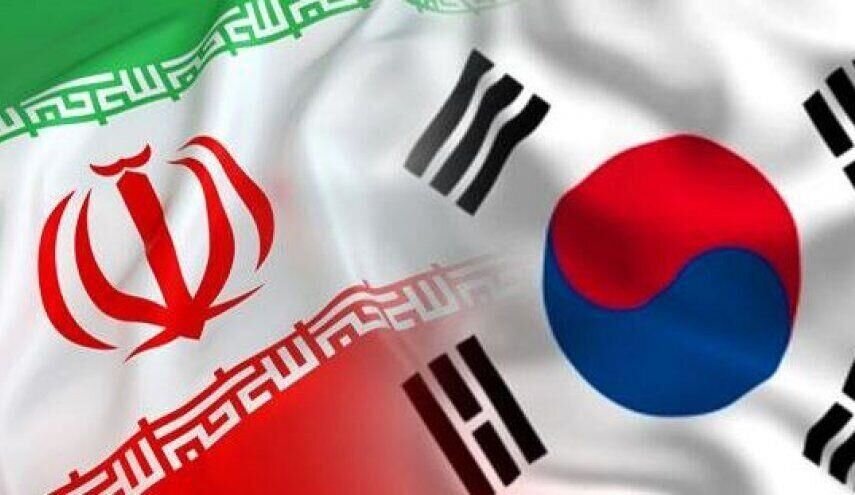
TEHRAN– Humanitarian aid and dispatching a special envoy to Tehran were only a few important signs of South Korea’s positive and constructive approach toward Iran during the recent 40-day war.
During the recent aggressive attacks by the United States and the Zionist regime on Iranian territory, South Korea’s conduct was notable in that it sought to establish a cautious balancing act between American pressure, energy security considerations, humanitarian concerns, and the necessity of maintaining a channel of engagement with Tehran.
In this crisis, South Korea, unlike some of Washington’s Western allies, did not confine itself to taking political stances; it put in place a series of practical measures and political signals—from allocating $500,000 in humanitarian aid to Iran through the International Committee of the Red Cross, to dispatching a special envoy to Tehran for consultations on the safety of ship movements in the Strait of Hormuz and beyond.
The significance of this approach becomes clearer when one considers that the Hormuz crisis has directly affected maritime security and the East Asian energy chain, and, according to reports, dozens of vessels linked to South Korea, along with their crews, became trapped in this waterway. Under such conditions, Seoul, rather than relying solely on the military pressure expected by Trump, also activated a channel of direct dialogue with Iran.
Accordingly, South Korea’s conduct can be regarded as a form of positive yet cautious agency; an agency that can be analysed at three levels: first, humanitarian actions and peace-oriented positions; second, direct engagement with Tehran and attention to Iran’s role in the security of Hormuz; and third, refraining from hastily entering into a military confrontation with Iran, even at a time when the United States had asked its allies to play a role in securing the Strait of Hormuz.
Seoul’s humanitarian and peace-oriented action: From aid to Iran to an emphasis on de-escalation
The first sign of South Korea’s positive mechanism toward Iran can be observed at the level of humanitarian measures and peace-oriented positions. In the midst of the war waged by the United States and the Zionist regime against Iran, Seoul did not confine itself to issuing general and cautious stances; it announced that it was allocating $500,000 in humanitarian aid to Iran—aid that is to be channelled through international bodies, including the International Committee of the Red Cross, to alleviate the humanitarian consequences of the war.
This action is significant because South Korea counts among America’s strategic allies, yet in this dossier, it endeavoured not to define itself solely as a political companion to Washington and, at least at the humanitarian level, to distinguish between the Iranian people and the logic of military pressure.
Moreover, the importance of this aid lies more in its political and moral message than in its financial amount. At a time when the continuation of attacks and military pressure has increased the human and social costs of the war, the announcement of humanitarian aid by Seoul showed that South Korea is not pursuing the Iran crisis solely from the perspective of energy security or commercial interests, but has also shown sensitivity to its humanitarian consequences.
Alongside this measure, the official positions of South Korea’s president are also noteworthy. Lee Jae-myung, the country’s president, reacting to the continuation of the crisis, called for “a courageous step toward peace” and stressed the need to reduce tension. At the same time, the South Korean government, mindful of the war’s impact on oil prices, the supply chain, and East Asia’s economic security, endeavoured to frame the need to end the crisis not merely as a regional demand but as a demand linked to global stability. In other words, at this juncture, Seoul presented peace as a practical necessity for curbing the humanitarian, economic, and security consequences of the war.
Another dimension of this axis is the South Korean president’s human-rights-related positions on the Zionist regime’s conduct toward the Palestinians. Although his remarks comparing the behaviour of Israeli soldiers to historical crimes became controversial and drew a reaction from Tel Aviv, in reality, they showed that within the South Korean political space, there exists a keenness to Israel’s anti-human actions and that Seoul, at least at the discursive level, was ready to distance itself from a narrative framework fully aligned with Tel Aviv. South Korea’s Foreign Ministry later explained that this stance was put forward from the angle of concern for universal human rights.
Direct engagement with Iran and acceptance of Tehran’s role in regional security
Another sign of South Korea’s positive agency toward Iran is the choice of direct engagement with Tehran for managing the maritime and energy security crisis. During the 40-day war waged by the United States and the Zionist regime against Iran, the Strait of Hormuz became one of the main flashpoints of concern for energy-importing economies, including South Korea.
Under such conditions, Seoul, instead of relying exclusively on coordination with Washington, dispatched its special envoy to Tehran to consult with Iranian officials on the safe passage of ships, the situation of Korean crew members, and the preservation of maritime route security. The importance of this move lies in the fact that South Korea, despite its strategic alliance with the United States, effectively accepted that security in the Strait of Hormuz cannot be managed without dialogue with Iran.
From a strategic perspective, dispatching a special envoy to Tehran can be seen as a sign of Seoul’s diplomatic realism. At this juncture, South Korea sought on the one hand to safeguard its economic and security interests, particularly in the energy and shipping sectors, and on the other hand to keep the communication channel with Iran open.
The South Korean envoy’s emphasis on the necessity of safe passage for ships and the hope for a return to a path of dialogue and peace shows that Seoul did not view the crisis strictly from the angle of military pressure, but also regarded a diplomatic solution as essential.
Cautious balancing against U.S. pressure and the avoidance of militarism
Another aspect of South Korea’s positive conduct during the 40-day war waged by the United States and the Zionist regime against Iran can be observed in its avoidance of hastily entering into a military confrontation with Tehran. After Donald Trump asked America’s allies to play a greater role in securing the Strait of Hormuz and energy routes, Seoul, contrary to certain expectations, did not adopt an immediate military stance aligned with maximum pressure.
South Korean officials stated that they were carefully examining the request and assessing various options within the framework of ensuring the security of energy routes—a phrasing that, in diplomatic language, signals caution and time-buying more than it announces readiness for direct entry into military operations.
South Korea is a security ally of the United States on the one hand, and heavily dependent on energy imports and the security of maritime routes on the other. Seoul, therefore, could not openly stand against Washington, but at the same time, direct military entry into the Hormuz crisis could have put the country’s economic and security interests at risk.
This very situation led South Korea to adopt a middle-of-the-road policy: maintaining apparent coordination with America without entering into a military confrontation with Iran. Reports even emerged that Trump was dissatisfied with the insufficient backing of some allies, including Seoul, on the Hormuz issue—a matter that indicates South Korea’s caution was plainly perceptible from Washington’s vantage point as well.
From a strategic perspective, this behaviour can be regarded as a conservative but meaningful form of balancing. South Korea neither intended to call its alliance with the United States into question nor was it willing to pay military, economic, and diplomatic costs in an aggressive war that it did not directly start. Particularly at a time when the Hormuz crisis was interwoven with energy prices, supply chains, and maritime security, Seoul preferred to pursue the path of review, consultation, and risk management rather than immediately joining a military alliance. In practice, this approach worked in favour of reducing tension, as it prevented South Korea from becoming part of an operational coalition against Iran.
Outlook: Managing limited opportunities within the framework of mutual interests
In the outlook ahead, South Korea’s cautious behaviour can be assessed more as a limited but manageable opportunity for Iran’s foreign policy than as a sign of a strategic shift by Seoul. South Korea continues to operate within the framework of its security alliance with the United States, and it is natural that it does not disregard Washington’s considerations in regional crises; yet the experience of the recent war showed that Seoul also seeks to maintain a minimum level of contact with Iran, manage tension, and prevent damage to its economic and maritime interests.
From this angle, Iran can, with a calculated approach, use the capacity for dialogue on maritime security, energy, consular support for foreign nationals, and humanitarian aid to create a more stable communication channel with South Korea—a channel built not on maximalist expectations but on practical, realisable interests for both sides.
From the observers’ perspective, Tehran’s strategic priority should be transforming Iran’s geopolitical position into a language of responsible diplomacy. By underscoring its role in the stability of the Strait of Hormuz and the security of energy routes, Iran can convey to Seoul and other Asian powers the message that regional security is not secured through military pressure and the exclusion of Iran, but requires direct engagement, mutual respect, and an understanding of the legitimate concerns of all parties.
Within this framework, proposals such as regular dialogue between political and maritime officials, the creation of a consultative mechanism in crisis conditions, cooperation with international institutions for humanitarian relief, and the separation of humanitarian and economic issues from security tensions can help reduce misunderstandings. Such an approach has the advantage for Iran of presenting an active, rational, and responsible image of Tehran’s regional policy without retreating from its principled positions.
Conversely, if South Korea wishes to preserve its long-term interests in West Asia, it too has no choice but to move away from a purely reactive policy and play a more active role in crisis management. Seoul can, while maintaining its strategic relationship with the United States, keep dialogue channels with Tehran open, elevate humanitarian aid from a symbolic level to a more regular mechanism, and, on issues such as shipping security, energy, and the protection of its nationals, strengthen diplomatic and technical pathways instead of complete reliance on military frameworks.
Leave a Comment