Health ministry launches campaign to equip NICUs damaged in war
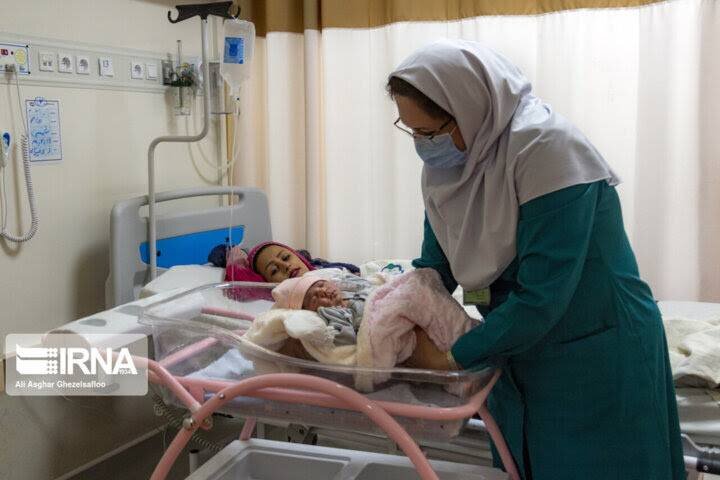
TEHRAN – The health ministry has launched a national campaign to help repair and equip the neonatal intensive care units (NICUs) of hospitals that were damaged during the US-Israeli war against the country.
Titled ‘Minab’s rebirth’, the campaign, which kicked off on the occasion of the International Day of the Midwife, May 5, aims to commemorate students martyred in Shajareh Tayyebeh elementary school in Minab, Hormozgan province, on February 28, the very first day of the war.
The school became the site of a devastating massacre by the United States missile attacks, which led to the martyrdom of some 170 innocent boys and girls, aged 7 and 12, their teachers, and parents.
Throughout the campaign, the national Midwifery Student Association (MIDSA), in collaboration with midwifery scientific associations across the country, will collect funds that were intended for celebrating Midwife Day, as well as individual donations, to equip NICUs in hospitals targeted by the aggressors and in deprived areas.
Established in 1992 by the International Confederation of Midwives, the International Day of the Midwife is observed annually on May 5.
The day celebrates and raises awareness about the midwifery profession, and acknowledges the contribution that all midwives make to women, their families, and the community.
The theme for International Day of the Midwife 2026 is One Million More Midwives. Midwives provide essential sexual, reproductive, maternal, newborn, and adolescent health services worldwide.
They support women and gender diverse people before, during, and after birth. They provide contraception, comprehensive abortion care, breastfeeding support, and ongoing care across the life course. Yet globally, there are not enough midwives, and many of the ones we do have are not enabled to work to their full scope of practice.
Strengthening Maternal Health Services
In October 2025, the United Nations Population Fund (UNFPA), in collaboration with the Office of Health in Disasters of the Ministry of Health and Medical Education (MoHME), and with the support of the Korea International Cooperation Agency (KOICA), procured and delivered essential medical devices for the provinces of Tehran, Alborz, Golestan, and Isfahan to enhance maternal and reproductive health service delivery.
The procured equipment includes gynecological beds, fetal heart rate (FHR) monitoring devices, resuscitation devices, delivery kits, and other critical medical supplies required for the prevention, early detection, and management of maternal and neonatal complications. These devices are essential for ensuring safe pregnancies and childbirth, particularly in high-risk and disaster-prone settings.
The medical devices were delivered to the Ministry of Health’s central warehouse to be distributed to designated health facilities in close coordination with MoHME. The medical equipment was expected to cover the needs of 67 health centers in the 4 provinces.
Through this intervention, UNFPA and its partners reaffirmed their commitment to protecting the health and well-being of women and newborns, strengthening the resilience of maternal health services, and ensuring that no woman is left behind in accessing safe and quality reproductive health care.
MT/MG
Leave a Comment