The siege that turned Iran into a transit hub
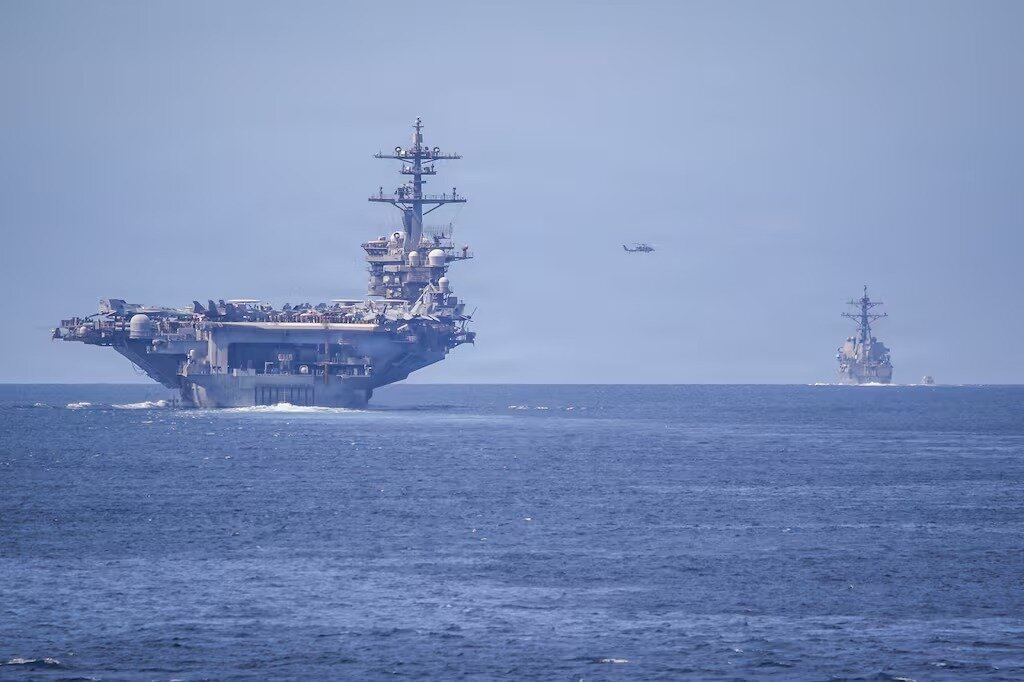
TEHRAN - The US Navy blockaded Iranian ports, but Pakistan opened six land routes. A new 89‑km corridor has cut travel time to Iran from 18 hours to just a fraction of that. Iran, which once conducted 90% of its trade by sea, now moves 40% of it on rails — and China and Central Asia are now part of the equation.
While the conflicts and the US blockade in the Persian Gulf are an unpleasant reality that Iran must overcome, and while they hurt the economy, in the long run, it is not Iran that will be grounded — it is the United States. The proof lies in Iran’s vast land area and its non‑maritime borders with neighbors that serve as windows connecting the country to the East and West.
In fact, the conflict in the Persian Gulf did not merely cut off maritime arteries. It accelerated a strategic shift in regional logistics: a gradual transfer of cargo from the tense waters of the Persian Gulf to land routes through Iran. What was once a long‑term plan has become an operational necessity and an immediate response to the blockade. But this transformation vividly exposes America’s weakness on land.
Just as the Fifth Fleet locked down Iran’s ports, Islamabad took a rare step and officially opened six land routes for shipping goods to Iran. According to Al Jazeera, the “Goods Transit through Pakistan 2026” directive was implemented urgently, connecting three major Pakistani ports (Karachi, Port Qasim, and Gwadar) to two Iranian border crossings at Gabd and Taftan.
An agreement that gathered dust for 18 years — suddenly revived
The intriguing part is the story of the agreement itself. Two informed Pakistani sources told The National that Washington was “not consulted” about the decision. Even more interesting: the routes were activated under an agreement signed by Iran and Pakistan in 2008 — one that was never supposed to be implemented due to political and economic disagreements. A Pakistani diplomat told The National that Iran itself, after the outbreak of the war, approached Islamabad to negotiate its implementation.
The decision has infuriated the US president. In Florida, Trump likened American soldiers to “pirates,” saying: “We are acting like pirates.”
The 89‑km Highway — from oil tankers to trucks
The shortest of these routes is only 89 kilometers long. Using this coastal corridor, trucks can deliver goods from the strategic port of Gwadar to the Iranian border in just two to three hours — compared to 16‑18 hours from Karachi Port. Pakistani officials estimate that this route has reduced the cost of shipping goods to Iran by 45‑55%.
Nor was this move exclusive to Pakistan. Al Jazeera reported on “confidential documents” showing that Iran was negotiating with neighboring countries to create alternative corridors, and in the same context, it is also exporting energy via Iraq and Syria.
Revolution on rails — from China, Kazakhstan to Turkmenistan
On the eastern front, rail trade has accelerated to an unprecedented level. Statistics show a notable rise in freight train traffic:
- Trains from China: A freight train from Xi’an to Tehran, which previously ran once a week, now runs every three to four days, and the May schedule is fully booked — a dramatic increase. According to Iran’s Railway Administration, over 40 freight trains from China have entered Iran since the beginning of the year, whereas in the seven years before that, only seven trains had traveled that route.
- Kazakhstan and Turkmenistan: The 925‑km Kazakhstan‑Turkmenistan‑Iran railway, inaugurated in February in the presence of the three countries’ leaders, has an annual cargo capacity of three to five million tons.
- 20‑million‑ton agreement: In spring 2026, a comprehensive agreement was signed between Iran and Turkmenistan, aiming for 20 million tons of goods per year (with a medium‑term target of 16 million tons by 2028) and the establishment of a joint free zone at the Sarakhs market.
Outlook — Chabahar awaits a new deal
The lockdown of Jebel Ali Port in the UAE has posed a major threat, but it has also created unprecedented opportunities for Iran’s Chabahar Port and for China. A multi‑lane north‑south project (INSTC), now the most important alternative, has been given high priority, and the Chinese government has invested billions of dollars to modernize Iran’s rail infrastructure and build missing links.
In the meantime, the biggest strategic victim of this development is India. The US sanctions waiver for Chabahar Port has expired, and Washington has refused to renew it. India, which has already invested $120 million in the port, is now considering transferring its shares to an Iranian company to evade sanctions — effectively being sidelined from the region’s great transit game.
Where does America’s weakness lie — and its army far from home?
America deploys its warships in Persian Gulf waters, but its blockade has failed to prevent the activation of land‑based supply chains. Relying on 1.5 million square kilometers of land, over 1.5 billion tons of port capacity, and corridors linking Asia to Europe, Iran has shown it is impervious to maritime blockades. The US can block ships, but trains and trucks can break through by other paths. This transformation reveals the fundamental conundrum and challenge of blockade strategy and points to a vision of the future: Iran’s geography is a trump card that no blockade can neutralize. This geopolitical advantage is among the most important assets that enable Iran, despite all the hardships, to outlast an enemy and its soldiers — who are thousands of kilometers away from home, stranded in third countries or adrift at sea — and to turn over winning cards. The equation of resilience — of Iran’s soldiers and people — shifts in Iran’s favor against America and its soldiers far from home, and against an American populace that has only recently tasted sanctions and inflation.
Leave a Comment