Eurovision faces existential crisis over historic boycotts
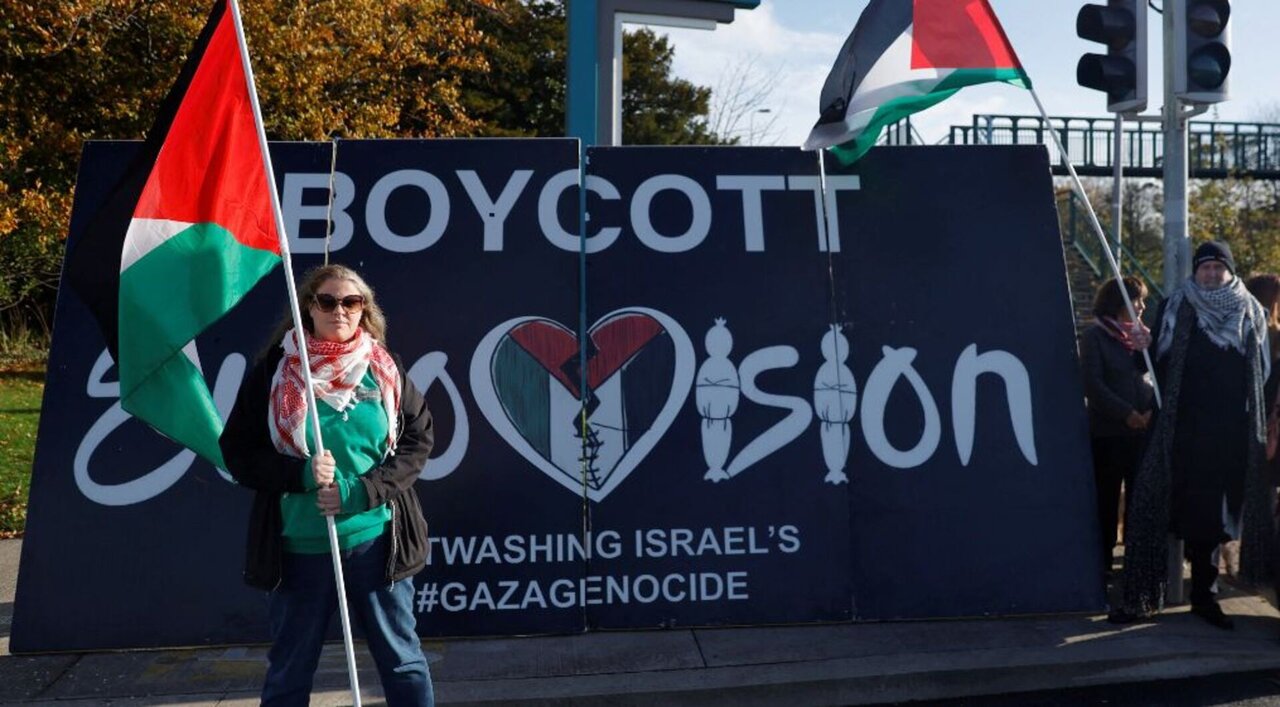
TEHRAN — As the 70th anniversary of the Eurovision Song Contest reaches its grand final in Vienna, the high-gloss television spectacle has been thoroughly consumed by an unprecedented wave of global boycotts and massive street protests.
Five nations, Spain, Ireland, the Netherlands, Iceland, and Slovenia, have pulled out of the competition entirely, delivering a historic rebuke to organizers and shattering the event’s manufactured image of political neutrality.
The synchronized withdrawals represent the largest organized walkout in the contest’s history, driven by intense international revulsion toward Israel’s genocidal military campaign in the Gaza Strip.
While the death toll in Gaza has surpassed 72,000, broadcasters from the boycotting countries made it clear that taking the stage alongside Israel was morally unconscionable.
Defending his country’s decision to skip the event, Spanish Prime Minister Pedro Sánchez delivered a scathing critique of Western complacency.
Sánchez declared that Spain would not stay silent in the face of an “illegal war and genocide,” emphasizing that the principles used to bar Russia following the Ukraine war must apply equally to Israel. “There can be no double standards,” Sánchez stated, asserting that Spain’s absence reflects a deep commitment to human rights.
This profound outrage has reverberated far beyond Vienna, where audience booing heavily disrupted live broadcasts inside the arena.
Over the weekend, the backlash converged with massive Nakba Day solidarity demonstrations in major global centers.
In central London, tens of thousands of marchers flooded the streets. Among them, a bloc organized by activists explicitly urged a total boycott of the broadcast, denouncing the European Broadcasting Union for allowing Israel to use the cultural platform to launder the reputation of a regime accused of mass atrocities through the language of diversity.
This artistic resistance was amplified by the “No Music for Genocide” campaign, backed by over 2,100 prominent figures such as Brian Eno and Massive Attack.
Meanwhile, in New York City, massive crowds blocked major thoroughfares and staged emotional rallies near the United Nations headquarters.
Activists linked the Eurovision stage to broader Western complicity in ongoing atrocities that have expanded into Lebanon and Iran.
By treating a regime accused of systematic ethnic cleansing as a standard participant, critics argue that Eurovision has transformed a celebration of unity into a grim testament to institutional hypocrisy, proving that music cannot be separated from the blood on the stage.
Leave a Comment