Trump’s top general seeks ‘off-ramp’ as Iran war exposes limits of US military power
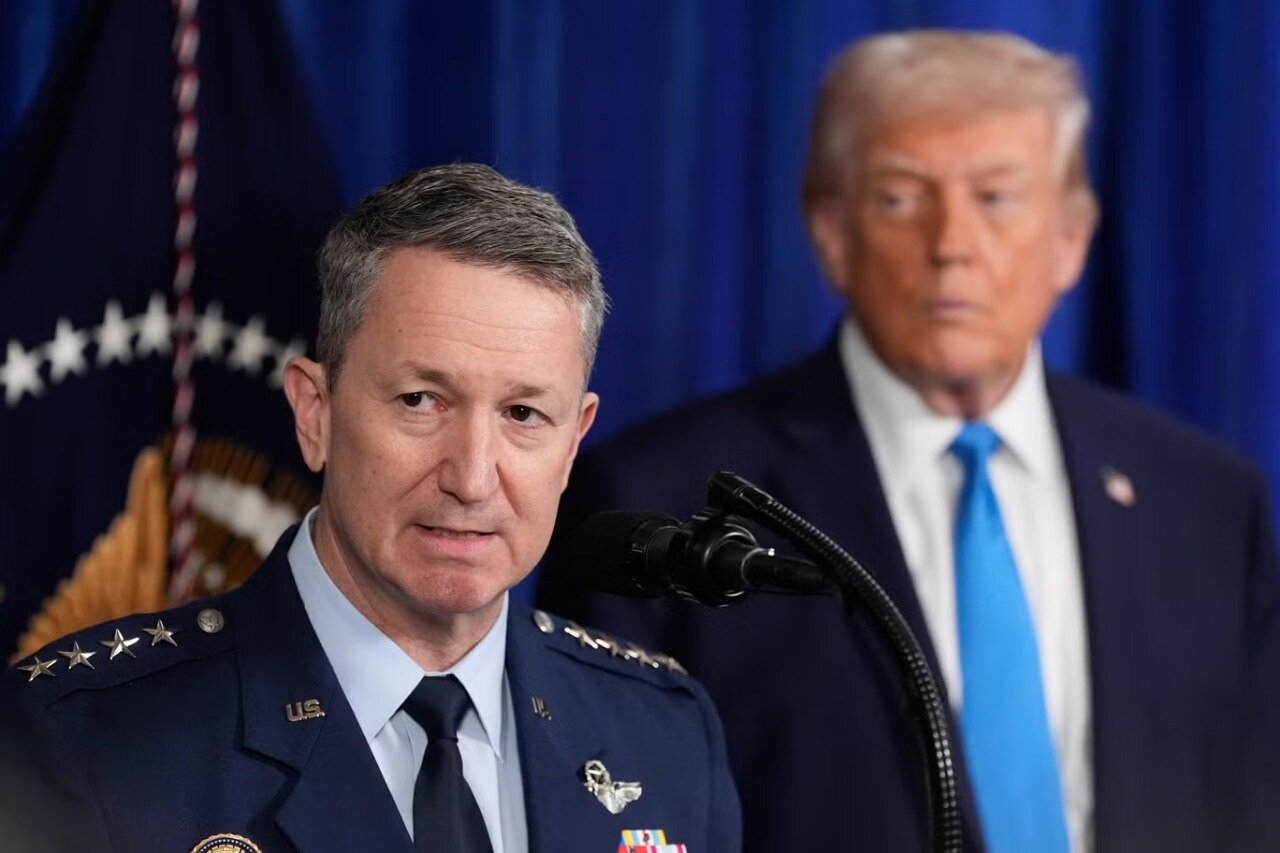
TEHRAN - US Chairman of the Joint Chiefs of Staff Gen. Dan Caine has privately warned senior White House officials that Washington needs to find an “off-ramp” from its war with Iran, acknowledging that further military escalation could backfire and that airpower alone is unlikely to achieve President Donald Trump’s stated objectives, according to a report by CNN.
The revelation, based on interviews with three sources familiar with the discussions, offers a striking picture of the difficulties facing the United States nearly six months into a war that Washington initially presented as a campaign capable of crippling Iran’s military capabilities and forcing Tehran to accept US demands.
Caine has reportedly discussed his concerns with other senior officials, including CIA Director John Ratcliffe, Secretary of State Marco Rubio and Vice President JD Vance. According to the American media outlet, the meetings were intended to coordinate the administration’s position and make clear the limitations and potential consequences of the military options available to Trump, including options that would not involve deploying US ground troops.
The US general’s reported position is particularly significant because it contradicts the image of an Iran that Washington had repeatedly portrayed as having been decisively weakened by months of military operations. Instead, the assessment emerging from inside the Trump administration is that there is no easy military solution to a conflict that has increasingly exposed the limits of US airpower.
Caine has reportedly told lawmakers publicly that “airpower has its limits,” while privately making the case that bombing alone is unlikely to deliver the political outcome Trump wants.
That assessment comes as the United States faces increasingly difficult choices over how to continue the war without becoming further entangled in a conflict that has already placed enormous pressure on its military resources.
Trump has consistently resisted deploying American ground troops in Iran and has instead appeared to believe that sustained airstrikes could force Tehran to agree to a deal on Washington’s terms. But according to CNN’s sources, Caine and other senior officials privately regard such an outcome as unlikely.
The problem is that the alternatives are even more dangerous.
A major ground operation against Iran could require a massive military commitment and potentially cost thousands of American lives. While Pentagon planners have considered such scenarios, CNN reported that no one in the administration is currently advocating such a drastic step.
That leaves Washington facing a strategic dilemma: escalation could produce consequences that are difficult to control, while reducing the intensity of the campaign risks exposing the failure to achieve the objectives for which the war was launched.
The dilemma became particularly clear in late July, when Trump was prepared to initially approve what he described as a “massive” new operation against Iran. Several of his senior officials, however, were concerned about the likely consequences of another escalation.
According to CNN, the only elements strongly supporting the operation were parts of the US Central Command, while Israel also broadly backed an escalation.
Trump eventually stepped back after consultations with Middle Eastern allies, who reportedly warned him that Iran could retaliate against their energy infrastructure. The possibility of Iranian retaliation has become a major concern for Persian Gulf states, particularly as American stockpiles of key munitions have continued to decline.
The United States therefore finds itself in the unusual position of contemplating a major escalation while simultaneously worrying about its ability to sustain the campaign and protect its regional partners.
CNN reported that dwindling stocks of advanced American munitions have become a factor in Washington’s calculations. Persian Gulf officials have also reportedly warned US officials that shortages of high-end American air-defense systems could undermine their ability to defend themselves against Iranian retaliation if Washington chooses to intensify the war.
Trump has repeatedly threatened to strike Iran’s energy infrastructure. Yet even within his administration, there are doubts that such attacks would force Tehran to capitulate.
Instead, according to sources cited by CNN, attacks on Iran’s energy infrastructure could provoke retaliatory strikes against the energy facilities of US allies in the Persian Gulf. Such attacks could also further strengthen Iranian public resistance rather than turn the population against the government.
The conflict began with the United States and Israel betting that overwhelming military force could rapidly weaken Iran and compel Tehran to accept their demands. But Iran’s continued ability to resist, retaliate and preserve its core military capabilities has complicated those calculations.
Instead of producing a quick victory, the campaign has developed into a prolonged confrontation in which Washington must continually weigh the military benefits of escalation against the possibility of a much wider regional war.
The reported concerns of Caine also reveal the pressure that the conflict has placed on the US military. Before the war, American military leaders had reportedly warned Trump that a prolonged campaign could put pressure on US weapons stocks, particularly supplies needed to support Israel and Ukraine.
Now, according to a source cited previously by CNN, senior US commanders believe American munitions stocks are “dangerously low.”
For Iran, the developments underline the importance of its ability to withstand a prolonged campaign by a vastly more powerful military force. Washington’s own internal assessments now appear to acknowledge what Tehran has maintained throughout the conflict: military strikes alone cannot easily compel Iran to surrender its national interests or dictate its political decisions.
The unfolding crisis also raises questions about the strategy promoted by Israeli Prime Minister Benjamin Netanyahu, whose long-standing approach has relied heavily on military pressure against Iran. Rather than delivering the decisive outcome envisioned by Israel, the war has left the United States facing depleted munitions, growing regional risks and increasingly difficult military choices.
What was presented as a campaign designed to break Iran’s resistance has instead exposed the limits of American and Israeli military calculations.
The reported search by Trump’s top general for an “off-ramp” is therefore more than an internal disagreement over tactics. It is a sign that Washington is confronting the strategic consequences of a war whose promised quick victory has failed to materialize — leaving Trump increasingly caught in a widening quagmire created by a strategy heavily influenced by Netanyahu’s plans that, at least so far, have fallen flat.
Leave a Comment