Journalists are silent victims of war
US and Israel are not held accountable based on international law for killing journalists
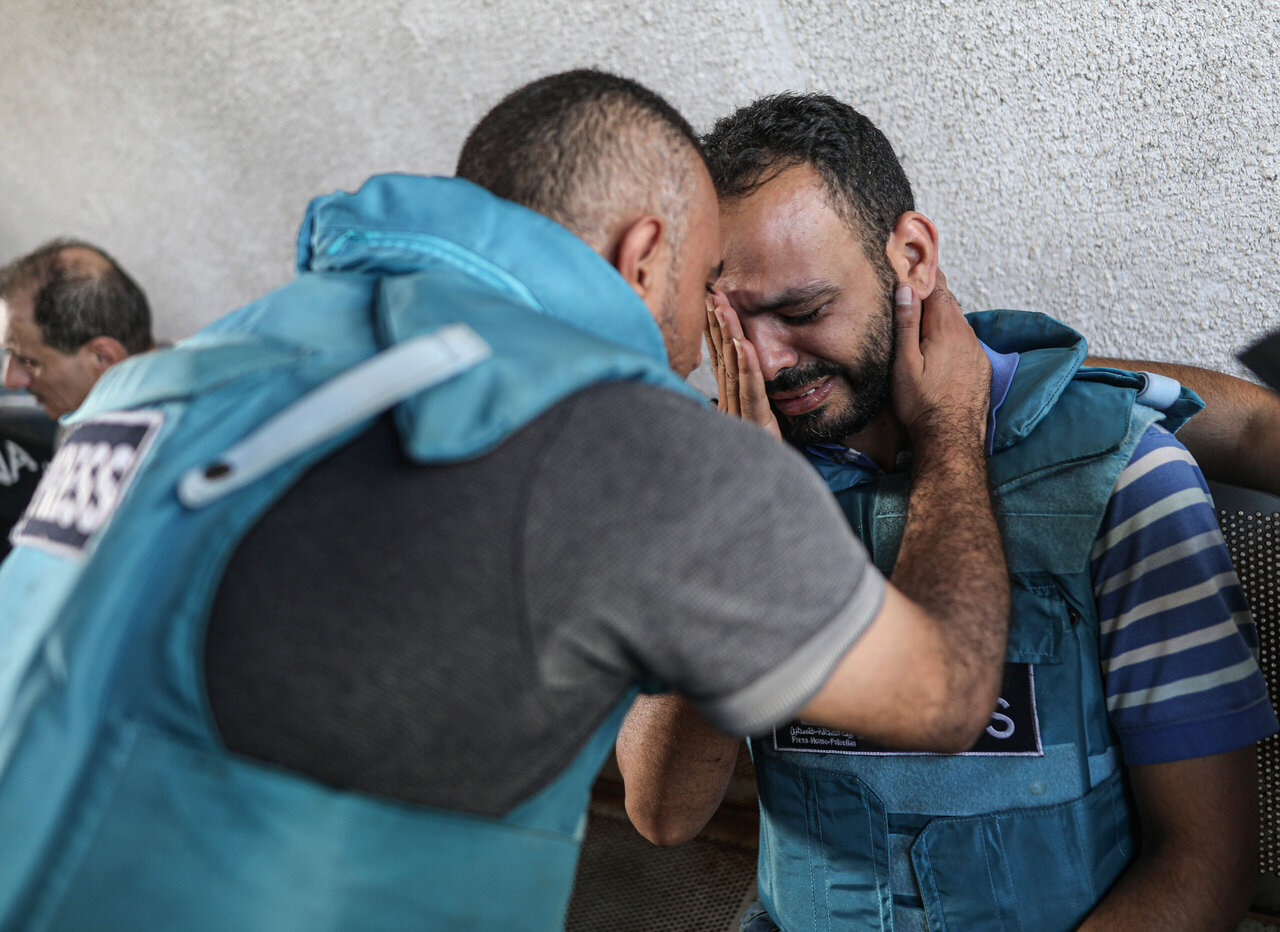
The killing of journalists in wars has, regrettably, become part and parcel of the grim reality of contemporary armed conflicts. What makes the situation today even more alarming, however, is not simply the growing number of journalists killed, but the fact that, in many cases, those responsible for these killings will never be held accountable.
A UNESCO report on the safety of journalists, published on November 2, 2026, shows that a total of 189 journalists lost their lives worldwide in 2024 and 2025, representing a 20 percent increase compared with the preceding two-year period. Of these, 127 were killed in areas affected by armed conflict. Meanwhile, the global impunity rate in cases involving the murder of journalists has reached 86 percent. In other words, approximately six out of every seven journalist killings worldwide have failed to result in effective judicial accountability.
Figures from the Committee to Protect Journalists (CPJ) also paint a deeply disturbing picture of the situation in 2025. According to the organization's report, of the 129 journalists and media workers killed worldwide, 86 cases—roughly two-thirds of all recorded fatalities that year—were attributed to Israeli military actions. The overwhelming majority of these victims were Palestinians reporting from Gaza. It should be noted, however, that this figure also includes media workers, and not all the cases can necessarily be classified as deliberate killings or the direct targeting of journalists. In its report, the CPJ placed 47 cases in the category of deliberate killings linked to journalists' professional activities and also found Israel's share of this category to be very high. This distinction is essential to prevent documented statistics from being treated as definitive judicial findings.
These figures raise a serious question for the international community: How is it possible that, in a world where numerous rules have been established to protect civilians and journalists, so many journalists are killed while a substantial proportion of these cases remain without effective accountability?
Answering this question requires looking beyond the conduct of those who directly carry out the attacks. It also requires examining the role of states that contribute to creating and perpetuating this situation through military involvement, arms supplies or political support. In this regard, the Israeli regime, which is responsible for a significant proportion of the recorded journalist fatalities, and the United States, as its foremost military and political supporter, come first.
From Gaza to Tehran: The media in the crosshairs of war
Gaza has become one of the deadliest places for journalists in contemporary history. Despite extremely difficult conditions, the destruction of communications infrastructure and severe restrictions on access for international media, Palestinian journalists have continued to carry out their duty of reporting on developments on the ground.
The CPJ has reported 39 deaths of journalists and media workers in incidents involving drone attacks in 2025, 28 of which were attributed to the Israeli military in Gaza. UNESCO has also reported that 50 journalists were killed in drone attacks in conflict zones during the two-year period of 2024–2025. These figures demonstrate that, alongside the growing operational capabilities of armed forces, new military technologies have created additional dangers for journalists.
It is worth noting that on June 16, 2025, the building of the Islamic Republic of Iran Broadcasting (IRIB) in Tehran was also targeted in an Israeli airstrike. According to the CPJ, Nima Rajabpour and Masoumeh Azimi, two IRIB employees, were killed in the attack and attained martyrdom.
The Israeli military made an astonishingly false and implausible claim that the target had been a communications center used by Iran's armed forces. However, neither the state ownership of a media outlet nor its publication of political material, in itself, provides grounds for attacking its premises. Even if the military use of part of a media facility were established, the principles of proportionality and precaution would still have to be observed, and the potential harm to civilians would still have to be taken into account.
Under Articles 48, 51 and 57 of Additional Protocol I to the four Geneva Conventions of August 12, 1949, adopted on June 8, 1977, concerning the protection of victims of international armed conflicts, the principles of distinction, the prohibition of direct attacks against civilians and the obligation to take all necessary precautions must be observed in military operations. Journalists, too, enjoy the general protection afforded to civilians as long as they do not directly participate in hostilities. The mere publication of news or political analysis does not deprive them of this protection.
It should be noted, however, that Iran and the United States have signed Additional Protocol I but have not ratified it, while Israel is not a party to it. Accordingly, its provisions should not be treated indiscriminately as direct treaty obligations binding on all three states. Nevertheless, the fundamental principles of distinction, proportionality and precaution, as well as the protection of journalists, are also recognized under customary international humanitarian law.
US: political backer or responsible partner?
In examining the role of the United States, the issue should not be reduced to Washington's political support for Israel. American support has much broader dimensions, ranging from military and arms assistance to diplomatic backing and even direct participation in military operations.
According to a report by the Congressional Research Service (CRS), total U.S. assistance and funding for Israel's missile defense systems from 1946 through fiscal year 2025 amounted to approximately $174.9 billion. The sheer scale of this support illustrates the strategic and military dimensions of the relationship between the two countries.
At a time when numerous reports have documented violations of international humanitarian law by Israeli forces, the continued transfer of weapons raises an important question about the legal obligations of the supplying state. The significance of this issue lies not merely in the volume of military assistance, but also in the potential responsibility of the supplying state for the way in which the weapons and equipment it provides to a party to an armed conflict are used.
The U.S. role does not end there. On several occasions, Washington has used its veto power in the UN Security Council to block draft resolutions concerning a ceasefire in Gaza. Among these were the draft resolutions put to a vote on February 20 and November 20, 2024, and on June 4 and September 18, 2025, all of which failed to pass because the U.S. vetoed them.
Although the exercise of the veto falls within the Security Council's legal framework, its political and institutional consequences are open to criticism and scrutiny, particularly when it limits the international community's ability to respond effectively to a humanitarian crisis. Of course, exercising the veto does not, in itself, amount to legal participation in the commission of war crimes or the killing of journalists. Nevertheless, its impact on the functioning of the collective security system and the prospects for international accountability cannot be ignored.
Moreover, in the second war against Iran, which began during the holy month of Ramadan (Feb. 28) earlier this year, the United States was no longer merely acting as Israel's supporter. The U.S. Central Command (CENTCOM) officially announced the launch of American military operations. During this campaign, U.S. forces and their allies carried out military strikes against targets inside Iran. Thus, in addition to providing Israel with military and political support, the United States itself became directly involved in military operations against Iran.
In its report on this war, the CPJ documented cases of journalists being killed, damage to media facilities and restrictions on the dissemination of information. According to the report, published on March 19, 2026, and updated on April 10, nine journalists were killed, seven were injured, and nine media outlets or media facilities were damaged in airstrikes in connection with the war.
State responsibility: from direct commission to aiding and abetting violations of international law
Under international law, state responsibility for unlawful attacks against journalists and media facilities is not limited to the conduct of those who directly carry out the attacks. A distinction must be drawn between the responsibility of the state that commits the attack and that of states which, through their aid or assistance, contribute to the commission of internationally wrongful acts.
In the first case, if an unlawful attack against journalists or media facilities is carried out by military forces or other bodies a state, and a breach of that state's international obligations is established, its international responsibility may be invoked. In such circumstances, a distinction must be made between the responsibility of the state and the potential criminal responsibility of natural persons, including commanders and those who carried out the attack.
On the other hand, Article 16 of the International Law Commission's Articles on Responsibility of States for Internationally Wrongful Acts, adopted in 2001, provides an important legal basis for examining the responsibility of a state that assists another state. Under this article, a state that assists another state in committing an internationally wrongful act, with knowledge of the circumstances surrounding that act and for the purpose of facilitating it, may incur international responsibility, provided that its assistance effectively contributes to the commission of the wrongful act. This is also conditional on the act in question constituting a breach of an international obligation binding on the assisting state had it committed the act itself.
This provision is particularly relevant to an examination of U.S. arms support for Israel. However, the mere provision of weapons or the existence of strategic relations is not sufficient to establish responsibility. The conditions stipulated in Article 16 must be demonstrated, including knowledge of the circumstances surrounding the wrongful act, the purpose of facilitating it and an effective connection between the assistance provided and the wrongful conduct.
Furthermore, Common Article 1 of the four Geneva Conventions obliges state parties to respect and ensure respect for the provisions of the Conventions in all circumstances. In its interpretation of this obligation, the International Committee of the Red Cross (ICRC) emphasizes that states must refrain from transferring weapons when there is a clear risk that they could be used to violate international humanitarian law. Such an assessment must take into account the type of weapons involved, the recipient state's record of conduct and the actual circumstances of the armed conflict.
Alongside state responsibility, the criminal responsibility of individuals is also of importance. Under Article 8 of the Rome Statute, intentionally directing attacks against civilians or civilian objects may constitute a war crime, provided that the legal elements of the offence are met. Accordingly, when examining attacks against journalists, a distinction must be drawn between the international responsibility of the state and the potential criminal responsibility of commanders and those who carried out the attacks. It should be emphasized, however, that defining an act as a war crime under the Rome Statute does not, in itself, mean that the International Criminal Court (ICC) has jurisdiction over every incident or every state. The Court's jurisdiction must be assessed separately in accordance with the conditions laid down in the Statute.
When power pushes accountability to the margins
The main problem facing international law today is not a shortage of rules designed to provide protection; it is that these rules are not enforced equally against all states.
The veto power enjoyed by the permanent members of the UN Security Council, the jurisdictional limitations of international judicial bodies and the difficulties involved in enforcing their decisions are among the factors that stand in the way of holding powerful states accountable.
Article 41 of the International Law Commission's Articles on Responsibility of States for Internationally Wrongful Acts is also significant in this regard. Under this article, when there is a serious breach of an obligation arising under a peremptory norm of international law, states are obliged to cooperate, through lawful means, to bring the unlawful situation to an end. They must also refrain from recognizing that situation as lawful or from providing assistance in maintaining it.
The application of this article, however, is conditional on the requirements set out in Article 40 of the same Articles being met. In other words, the breach must concern an obligation arising from a peremptory norm of international law and must be serious in nature, meaning that it involves a gross or systematic failure to fulfil that obligation. Therefore, not every violation of international humanitarian law, or every form of political support, can fall within the scope of Article 41 without first establishing that these conditions have been met.
Conclusion: The safety of journalists as a measure of the credibility of international law
UNESCO statistics and reports by specialized organizations show that the safety of journalists is facing a serious crisis. In its 2025 report, the CPJ attributes a particularly troubling share of journalist and media-worker deaths to Israeli military actions. In addition to providing Israel with military and political support, the United States has also directly participated in military operations against Iran.
These realities make it necessary to examine the responsibility of both states, albeit on different legal grounds and subject to the conditions required to establish such responsibility. Arms supplies, direct military involvement and the use of political influence must each be assessed in light of the relevant rules governing state responsibility. The mere existence of strategic relations cannot substitute for establishing the legal elements of responsibility.
Ultimately, the protection of journalists must not depend on their nationality, organizational affiliation or the political orientation of the media outlets for which they work. A journalist killed in Gaza, Iraq, Lebanon, Tehran or anywhere else in the world is, first and foremost, a civilian human being whose right to life and security must be protected.
If states are able to evade accountability by relying on their military power, the support of their allies or their political influence, international law will be reduced to a body of rules whose enforcement depends more on the power of states than on rights and justice.
Media freedom has no meaning or genuine guarantee without the safety of journalists. And unless international law succeeds in holding the powerful accountable, it will fail in its most important mission: restraining power.
Hassan Garousi, PhD, was the chair of the First National Conference on Law and Media.
Leave a Comment