A beat written in blood across Gaza, Lebanon, Yemen, and Iran
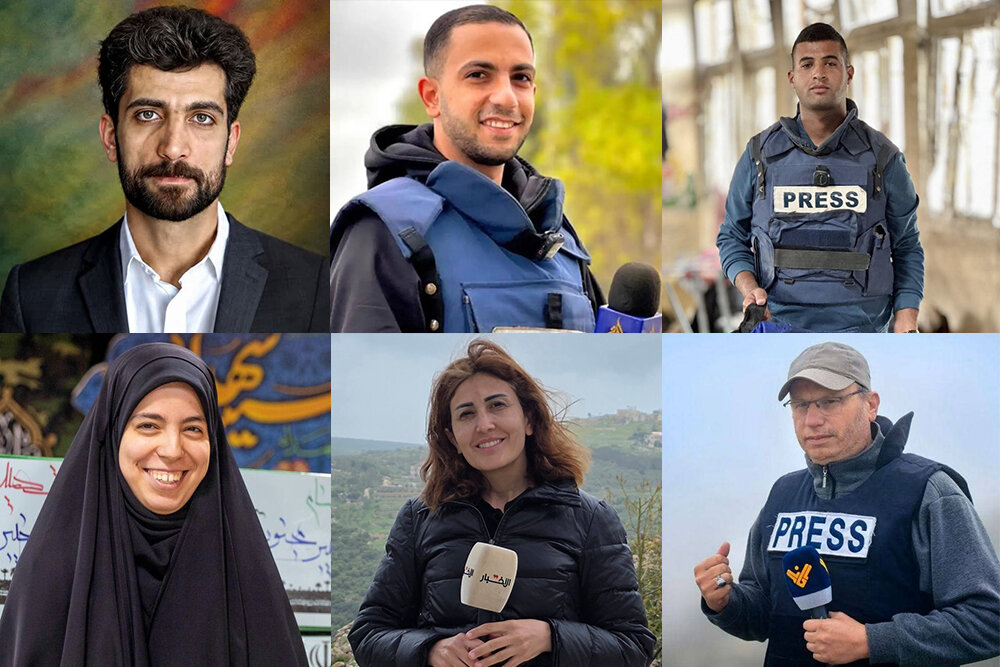
TEHRAN — 28 years ago today, Iranian reporter Mahmoud Saremi radioed his newsroom from the Iranian consulate in Mazar-i-Sharif as Taliban fighters came through the gate. He identified himself, reported that the city had fallen, and asked what he should do next. Hours later he was dead, along with eight Iranian diplomats.
Iran has marked August 8 as Journalists’ Day ever since, a date built around one man’s last dispatch. This year it does not need to reach back three decades to find its meaning. The years since October 2023 have supplied enough.
The deadliest beat on earth
Gaza has become, by any independent count, the most dangerous place on the planet to hold a camera or a notebook, inside Israel’s continuous genocidal campaign of aggression.
The Committee to Protect Journalists puts the regional toll above 260 journalists and media workers, more than 200 of them Palestinians killed in Gaza alone, making Israel responsible for more journalist deaths than any government CPJ has recorded since 1992.
Anas al-Sharif kept filing from the north until a strike near Al-Shifa Hospital killed him and five colleagues inside a tent marked Press.
Hossam Shabat died in his car in Jabalia. Ismail al-Ghoul and cameraman Rami al-Rifi, Saeed al-Taweel, Ahmed Shehab and his children, Mariam Abu Daqqa: the list runs past 200 names, and Israel disputes a startling number of them as militants first, reporters only incidentally.
A “ceasefire” has technically held in paper since October. 18 Palestinians were killed in a single day this week regardless.
Lebanon’s ledger keeps growing
Lebanon’s newest entry arrived this week. On Thursday, Human Rights Watch, Amnesty International and the Beirut-based Legal Agenda published a joint investigation into the killing of Amal Khalil, the Al-Akhbar correspondent known across the south simply as its voice.
She died in April when a strike hit the house where she and photographer Zeinab Faraj had taken shelter after their car came under fire.
Investigators found Israeli drones tracking the two women and stun grenades fired at the Lebanese Red Cross crew trying to reach them.
The military’s account, that it had been “hunting two Hezbollah fighters,” convinced no one who read the file. Khalil was the ninth journalist Israel killed in Lebanon this year, after Ali Shoaib of Al-Manar and the siblings Fatima and Mohammad Ftouni of Al-Mayadeen died together when a drone hit their marked press car near Jezzine in March, and Ghada Dayekh and Suzan Khalil not long after that.
The newsroom that never printed again
Yemen absorbed the single heaviest blow of the entire war: 31 journalists and media staff, among them Jamal al-Adhi and Ali al-Aqel, killed in one September morning when Israeli jets hit the offices of the 26 September and Al-Yemen newspapers in Sanaa mid-production, burying editors, layout hands and decades of archive under concrete.
This week, Israeli soldiers fired stun grenades at journalists, including Press TV’s Naqqa Hamed, and beat another covering a raid on the Qalandiya refugee camp in the occupied al-Quds (Jerusalem). The campaign against the region’s press just changes its dateline.
Reaching Tehran and the impossibility of burying the truth
In June 2025, the killing crossed into Iran. Israel’s war minister impudently announced that the “propaganda mouthpiece” was “about to disappear,” and struck the national broadcaster’s Tehran headquarters live on air.
Anchor Sahar Emami held her seat as the glass came down around her; editor Nima Rajabpour and secretariat worker Masoumeh Azimi died in the wreckage below.
12 Iranian media workers were martyred across those twelve days, among them Fereshteh Bagheri who was killed with both parents on the war’s opening day; Ali Tahmasbi, 25, pulled from rubble after three days with his body crushed; and Fatemeh Salehi, a professor and journalist still compiling a record of Israeli strikes when the one that killed her landed.
Mohammad-Moein Nazari, Ehsan Zakeri, Ramazan-Ali Choubdari, Amirhossein Tavousi and Mohammad-Javad Alvandi completed the list.
Then, on February 28, 2026, Washington and Tel Aviv opened a far larger war, one that killed Iran’s Leader and dozens of senior officials within its opening hours.
Media workers died in that same wave: Masoud Salimi, a former Tasnim bureau chief in Qom; Mohammad-Ali Saadat and Mohammad-Hossein Hosseinali, both tied to Iranian cultural and media organizations; and photographer Mohammad-Hossein Azizi, killed alongside his mother in their home.
Transmission towers fell with them, cutting millions of Iranians off from the news in the middle of a war being fought partly over what they were allowed to see.
None of it worked as planned. Saremi’s warning outlived the men who killed him. So did Rajabpour’s final broadcast, Khalil’s last dispatch, and Bagheri’s own writing on a culture of sacrifice she ended up joining herself.
A bloodthirsty regime can level a studio, silence a transmitter, seal a border. It cannot reach backward and unwrite what its victims had already filed before the missile landed.
28 years after Mazar-i-Sharif, Iran buries its journalists the way it buried Saremi, in grief, and in the certainty that whatever they recorded is already out in the world, already read, and already beyond anyone’s power to take back.
(Image) Top row, from left: Mahmoud Saremi, Anas al-Sharif, and Hossam Shabat. Bottom row, from left: Fereshteh Bagheri, Amal Khalil, and Ali Shoaib.
Leave a Comment