Maliki offers ‘containment’ for Iraqi resistance
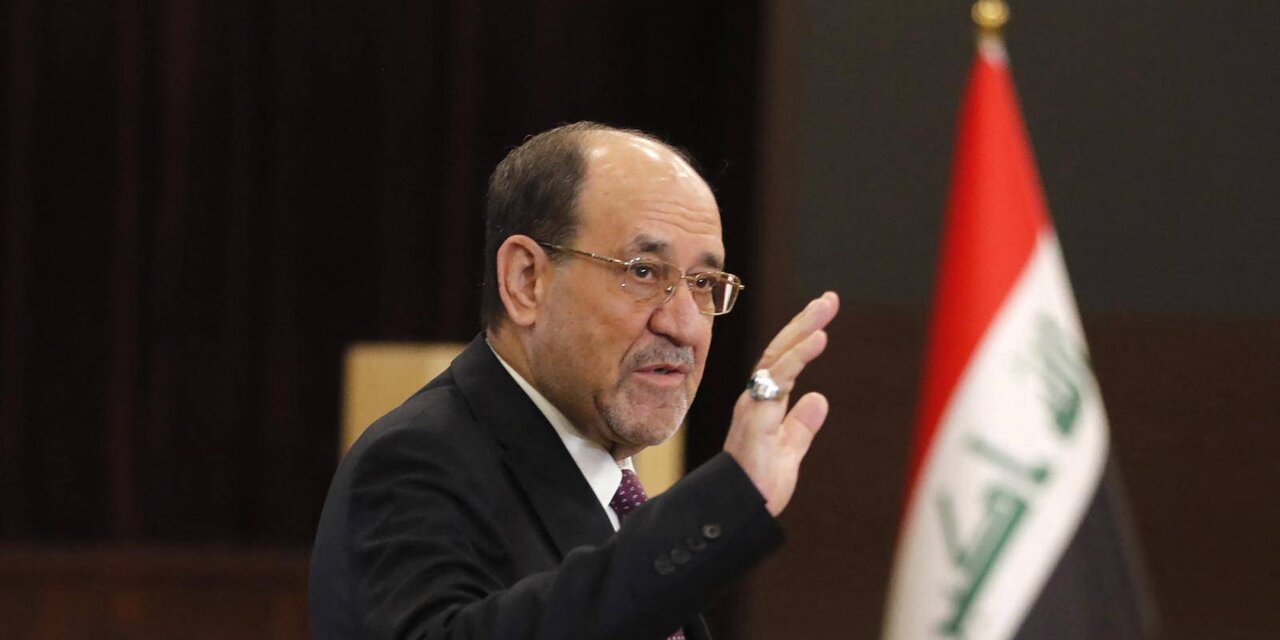
TEHRAN – Former Iraqi Prime Minister Nouri al-Maliki has rejected the disarmament of resistance factions, proposing “containment” as an alternative to stripping them of their weapons.
In a TV interview, Maliki, who leads the State of Law Coalition and serves on a key three-member committee tasked by the Shia Coordination Framework with negotiating with the resistance movements, argued that the very language of “disarmament” is counterproductive.
He stated that the term creates significant “political and psychological resistance” among the factions, noting that the terminology of disarmament is not used because being described as “disarmed” carries a great psychological impact. He further elaborated that referring to a resistance faction as “disarmed” carries both a psychological and a practical weight that makes the term unworkable in negotiations.
Instead, Maliki proposed a fourth term for the issue of weapons: “containment,” adding it to a list that has included “disarmament,” “restriction,” and “regulation”. He stressed that the goal should be an “organizational step, not a retaliatory one,” and that the era of “challenge, threats, and intimidation” is over because “threats do not yield results”.
“The language that was prevalent- challenge, threat, and intimidation- has ended, because threats do not produce results,” he said.
“Calls for conflict, attacks on headquarters of the factions, and attacks on the government do not produce results. The government is not weak to be attacked, nor is it in the government’s interest to attack the factions.”
Maliki framed these realities as the foundation for a new approach. He noted that these are the first facts that have now become established, which have opened the door and the field for him and others interested in national affairs and the safety of the internal situation to find an opportunity for deliberation and dialogue. This, he argued, can help resolve the matter without exposing itself to a state of collision.
Central to Maliki’s argument was the assertion that the continued possession of light and medium weapons by resistance factions is a “necessity” to protect Iraq in the face of any future challenges.
He revealed that a joint committee is actively discussing distinctions between the weapons of the Iraqi resistance. “There is a distinction between heavy weapons, medium weapons, and light weapons,” Maliki said. “This is one of the issues being raised: Does keeping or containing weapons include everything? Or only the type of weapon that is considered a weapon for targeting internally and externally? This is what the committee formed with the factions will resolve.”
Maliki, who was nominated for prime minister in January but ultimately failed to secure the position, used only his second televised interview since then to draw a clear line between the Popular Mobilization Forces (PMF) and other armed groups.
“The Popular Mobilization Forces are a state military institution formed by a cabinet decree; its arms are the state’s arms, and its command is under the state’s authority,” he stated.
The veteran Iraqi politician insisted that the organization of arms must be carried out through the Popular Mobilization Forces law and by integrating groups within the legal framework. By emphasizing the PMF as an integrated state entity whose weapons, funding, and military operations are formally subject to government authority, he appeared to be offering a model for other groups to follow, while simultaneously resisting any move to dismantle their military structures.
Maliki also pushed back against American threats of sanctions or harsh measures. “Our goal is to agree on a specific framework for managing the crisis, not to surrender under the pressure of threats,” he said. He emphasized that all political groups and religious authorities agree on the need to organize arms, but that this must be done through legal and institutional channels rather than coercion.
Throughout the interview, Maliki also took time to praise the resistance factions, emphasizing that the Iraqi nation should never forget their sacrifices during the dark days of the al-Qaeda and Daesh eras.
Terrorist groups, such as al-Qaeda and Daesh, emerged as a result of the 2003 U.S. invasion of Iraq.
He called for honoring the historical sacrifices of anti-terror and resistance fighters by integrating their capabilities within official state defense and security institutions. In his view, these factions played a decisive role in defeating Daesh and protecting the country when its formal security forces were overwhelmed, and their contributions must be recognized rather than erased through disarmament.
His comments come just weeks before the September 30, 2026, the deadline for the complete withdrawal of U.S.-led coalition forces, a date the Iraqi government has declared as “Sovereignty Day.”
Prime Minister Ali al-Zaidi has affirmed that September 30 is the final and irrevocable deadline for ending the U.S.-led coalition’s military presence in Iraq.
Iraq and the United States had agreed in 2024 to end the military presence, which many Iraqis view as an occupation, but this was delayed by Washington. Resistance factions have threatened the U.S. occupation forces, vowing to take action should they fail to withdraw from Iraqi soil by the end of September 2026.
The slated withdrawal has come amid ongoing and intense U.S. pressure on Baghdad to rein in the armed factions. America views the deadline as a key moment to consolidate state authority over all arms. The U.S. administration has demanded the full disarmament of all resistance factions.
Despite this pressure, powerful parties, backed by figures like Maliki, are determined to hold onto their weapons. U.S. officials have made clear that they expect the Iraqi government to assert full control over all armed groups operating within its borders as a condition for continued security cooperation.
However, resistance leaders believe “disarming would serve the Zionist regime and the United States,” further complicating efforts to resolve the crisis before U.S. forces depart.
The government initially hoped September 30 would mark both the departure of U.S. forces and the transfer of resistance weapons to government control, but negotiations between the Coordination Framework and resistance groups now appear to have passed the first step without U.S. involvement and interference.
As the deadline approaches, the gap between Washington’s demands and Baghdad’s political realities remains wide, with Maliki’s intervention signaling that any resolution will likely require compromise, and that outright disarmament is off the table.
Leave a Comment