Aoun’s dilemma: When diplomacy fails to change reality on the ground
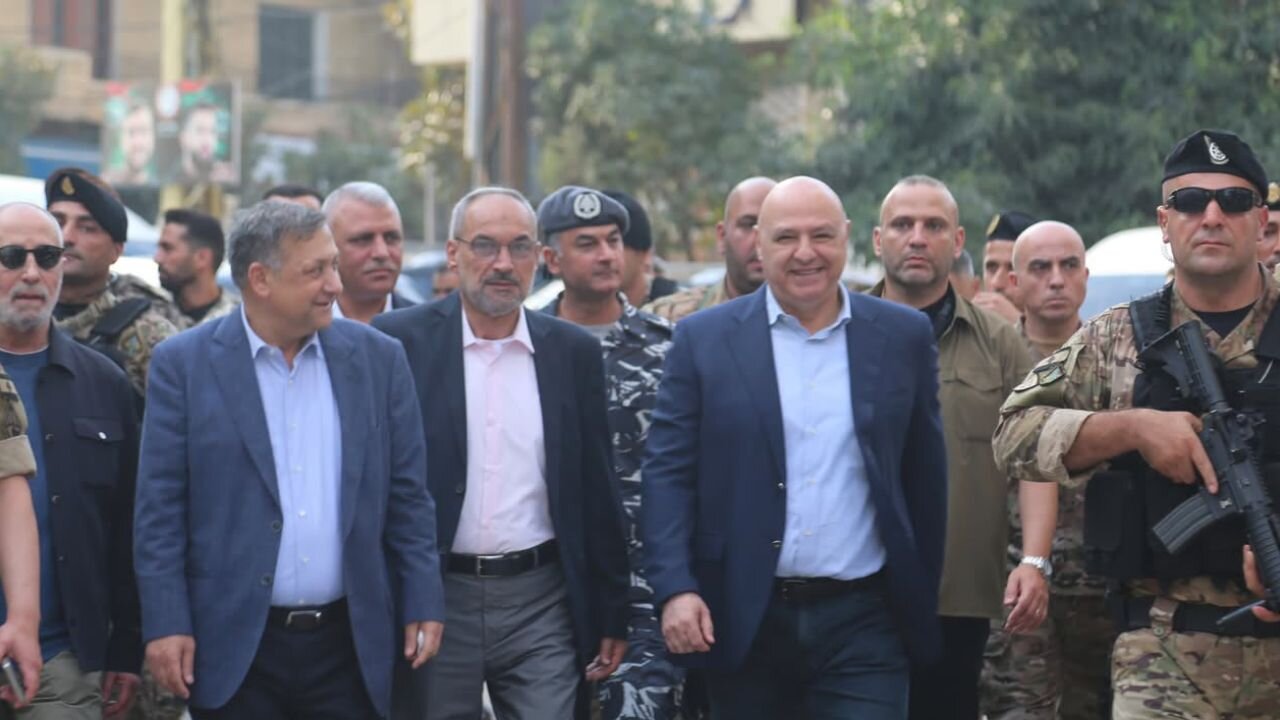
TEHRAN — Lebanese President Joseph Aoun’s visit to Nabatieh was intended to convey a powerful political message: the Lebanese state stands with the people of the south.
The other half of Aoun’s message was that the state remains committed to restoring national sovereignty, securing the withdrawal of Israeli occupation forces (IOF), bringing back displaced civilians and prisoners, and rebuilding the areas devastated by the IOF aggression.
Yet for Aoun’s critics, the visit illustrates precisely the problem they have been highlighting for months. They argue that the Lebanese president has become increasingly effective at describing what Lebanon wants, but far less successful at changing the conditions that prevent those objectives from being achieved.
Their central criticism is therefore not simply that Aoun is “doing nothing.” It is more specific: Lebanon has entered a diplomatic process that has imposed expectations and obligations on Beirut without producing an effective mechanism capable of compelling the IOF to withdraw or end its aggression.
This is the fundamental weakness of Aoun’s approach.
The U.S.-brokered “framework agreement” signed between the Lebanese and Israeli governments in Washington on June 26, 2026, was presented as a pathway toward ending the state of war and restoring stability. It was supposed to facilitate the withdrawal of the IOF, strengthen Lebanese state authority in the south, allow displaced civilians to return, and create the conditions for reconstruction.
But the reality that followed has made critics in Lebanon and beyond question whether the agreement has achieved its most basic purpose.
The IOF has continued to maintain positions in southern Lebanon, while the regime’s aggression and civilian massacres have continued. Homes and infrastructure have been destroyed, agricultural land has been damaged, and civilians remain displaced.
For Aoun’s critics, that creates an obvious contradiction.
If the purpose of the agreement was to restore Lebanese sovereignty and end the IOF aggression, why does the regime continue to execute its war crimes on Lebanese territory with impunity?
This question goes to the heart of the criticism.
Aoun has repeatedly called for an IOF withdrawal. He has condemned Israeli attacks. He has appealed to the broker of the “framework agreement,” the United States and the international community, to pressure the regime. He has described withdrawal, the return of displaced people, and reconstruction as national constants.
But none of those declarations, however legitimate, constitutes leverage.
The distinction matters
A government can issue statements demanding that an occupying force withdraw. It can appeal to international organizations. It can negotiate through intermediaries. But if the other side continues to occupy territory, wage war crimes, and set conditions for withdrawal, the diplomatic strategy must ultimately be judged by its ability to alter those facts.
By that measure, Aoun’s approach has been a disaster.
The problem of an unequal bargain
The sharpest criticism concerns the structure of the framework itself.
Israel has made clear that it does not intend to withdraw unless it believes the threat from Hezbollah has been sufficiently addressed. That effectively connects the occupying regime’s withdrawal to Hezbollah’s military status.
This creates an unequal bargain.
Lebanon is being asked to consolidate state control, deploy its army, and address Hezbollah’s armed resistance, while the IOF retains military positions and continues to act militarily inside Lebanon.
The result is a political equation in which Lebanon is expected to dramatically change an unrealistic situation in the south while the IOF retains the ability to determine when conditions are sufficient for its own withdrawal.
That is precisely what opponents object to.
They argue that Lebanese sovereignty cannot depend on whether the occupation regime considers Lebanon’s internal security arrangements satisfactory. A sovereign state should not have to meet conditions imposed by an occupying power before that power leaves its territory.
This is where the framework’s critics believe Aoun has failed to establish a sufficiently strong Lebanese negotiating position.
The “framework agreement” becomes even more complicated because Hezbollah’s weapons are now intertwined with the question of the IOF’s withdrawal.
Hezbollah rejects the idea of disarming while the IOF remains on Lebanese territory and continues conducting aggression. The Israelis, meanwhile, refuse to withdraw while Hezbollah, Lebanon’s strongest asset against occupation, maintains its military capabilities.
This produced a natural deadlock:
The regime says it will not withdraw while Hezbollah remains armed.
Hezbollah says it will never disarm while an occupying enemy force remains on Lebanese territory.
The Lebanese state says both the IOF withdrawal and exclusive state authority are necessary. Critics argue that Aoun’s diplomacy has not broken this cycle.
Indeed, they contend that the framework risks placing Lebanon in the weakest position of all: the Lebanese government is being pressured to resolve the Hezbollah question while lacking an effective instrument for forcing an occupying regime to fulfil its side of the bargain.
This is why the criticism comes from opposing political camps.
Hezbollah and its allies accuse Aoun of negotiating with Israel while the IOF remains on Lebanese soil. From their perspective, diplomacy risks weakening Lebanon’s ability to resist Israeli aggression.
Meanwhile, critics who favor exclusive state authority over weapons can make an entirely different argument: if the Lebanese state is going to replace Hezbollah as the guarantor of security in the south, then it must demonstrate that state authority can actually protect the population and secure the withdrawal of the regime’s forces.
In other words, Aoun is being judged by two competing standards, but both ultimately lead back to the same question: where is the tangible result?
Why the visit to Nabatieh has become politically significant
Against this backdrop, Aoun’s surprise visit to Nabatieh on Saturday carries a significance beyond a routine presidential tour.
Standing alongside the country’s military and security leadership, Aoun sought to demonstrate that the Lebanese state is present in the south.
His message was one of solidarity: the state stands with residents, will provide services, and remains committed to restoring their rights.
But this symbolism exposes rather than resolves the underlying problem.
A visit by the president does not stop an IOF drone strike. A statement demanding withdrawal does not remove the occupying forces. A pledge to rebuild does not allow a displaced family to return if its home has been destroyed or the surrounding area remains unsafe.
This is why the accusation of “talk without action” resonates.
The criticism is not that Aoun should necessarily launch a military confrontation with the Israeli regime. Most Lebanese understand the enormous cost that another war could impose on a country already burdened by economic and political crises.
The argument is instead that if military confrontation is not a viable option, then the diplomatic strategy must be considerably more forceful and produce enforceable guarantees.
Critics want to know what the Lebanese authority can actually do when the regime’s occupying forces refuse to withdraw.
What happens if IOF attacks continue?
What happens if displaced civilians cannot return?
What happens if reconstruction is repeatedly undermined by renewed aggression?
And, most importantly, what consequences does the regime face as it repeatedly violates the “framework agreement”?
Without convincing answers to those questions, the agreement risks becoming a mechanism for managing the regime’s occupation rather than ending it.
Diplomacy cannot become a substitute for results
Aoun’s defenders argue that Lebanon is militarily weaker than the Israeli regime, and another full-scale war could be catastrophic. Diplomacy may therefore be the only realistic path available to the Lebanese state.
But this defense does nothing to answer the criticism.
The issue is not whether diplomacy is preferable to war. It is whether the diplomacy being pursued is strong enough to protect Lebanon’s interests.
Diplomacy without leverage can become an exercise in issuing demands that the other side has little incentive to accept.
There is a considerable gap between Aoun’s rhetoric and the situation in southern Lebanon.
He speaks of sovereignty, while the IOF remains.
He speaks of the return of displaced people, while many remain unable to return safely.
He speaks of reconstruction, while destruction continues.
He speaks of the importance of the “framework agreement”, while implementation remains contested.
And he speaks of international pressure, while the occupying regime continues to exercise freedom of military action.
This is not a communications problem. It is a strategic problem.
The real test of Aoun’s presidency
Ultimately, the controversy surrounding Aoun is not about whether he has been active. He clearly has been active diplomatically.
The question is whether his diplomacy has given Lebanon greater control over events or given Lebanon a formal process within which events continue to be determined by others.
That is the central argument in Lebanon.
The Lebanese are asking Aoun to demonstrate that Lebanon is not simply negotiating over the terms under which the IOF will remain in the south, but negotiating for an actual end to the regime’s military presence there.
They want to see an enforceable withdrawal timetable, credible international guarantees, effective protection for civilians, the safe return of displaced residents, and a reconstruction process that cannot be repeatedly undermined by renewed Israeli attacks.
Until those things happen, repeated presidential declarations will inevitably sound hollow to people living in the affected areas.
Aoun’s visit to Nabatieh, therefore, presents the president with both a political opportunity and a political liability.
It demonstrates that he recognizes the suffering of southern Lebanon and understands the importance of restoring sovereignty. But it also places his promises directly against the reality experienced by the people he visited: that reality is the ultimate measure.
The question is no longer whether Aoun can articulate Lebanon’s demands. The question is whether he can turn those demands into facts on the ground.
Until an IOF withdrawal is secured, civilians can return safely, and reconstruction can proceed without the threat of renewed aggression. His opponents will continue to argue that Lebanon has gained a surrender document, and not the sovereignty and security that it was supposed to deliver.
Perhaps the answer lies in the fact that this “framework aggression” was signed in the U.S., as the guarantor, and it is Israel’s staunchest ally in the world and protects it regardless of how unlawfully the regime behaves.
Leave a Comment