Bab el-Mandeb under Ansarallah’s control as oil crisis deepens
MADRID — In 2011, during the so-called "Arab Spring," the grievances of the Yemeni population reached a critical point, triggering mass protests demanding the resignation of President Ali Abdullah Saleh, who had ruled the country for more than thirty years.
Following Saleh's resignation, Saudi Arabia backed Abdrabbuh Mansur Hadi as the country's new leader. Ansarallah rejected this appointment and launched a military campaign against the new government.
Since 2015, Ansarallah has controlled the capital, Sana'a, as well as most of the Red Sea coast, and has developed a foreign policy centered on hostility towards the Western presence in the region, particularly against the United States and Israel.
This brings us to the current regional situation, in which everything changed with the United States and Israel's attack on Iran this past February. In July, the Ansarallah government allowed an Iranian plane to land at Sana'a airport, effectively breaking the air blockade imposed on the country by Saudi Arabia. The escalation began after the Saudis struck Sana'a International Airport in retaliation.
Then came Ansarallah's response. Since announcing, on July 20, a maritime blockade targeting Saudi Arabia, Ansarallah has attacked eight ships in the Red Sea and forced at least thirty others to turn back to avoid the strategic Bab el-Mandeb Strait. On August 4, it also sank an Indian vessel. The new scenario has caused a sharp 28% drop in maritime traffic in the area, as well as a steep rise in marine insurance costs.
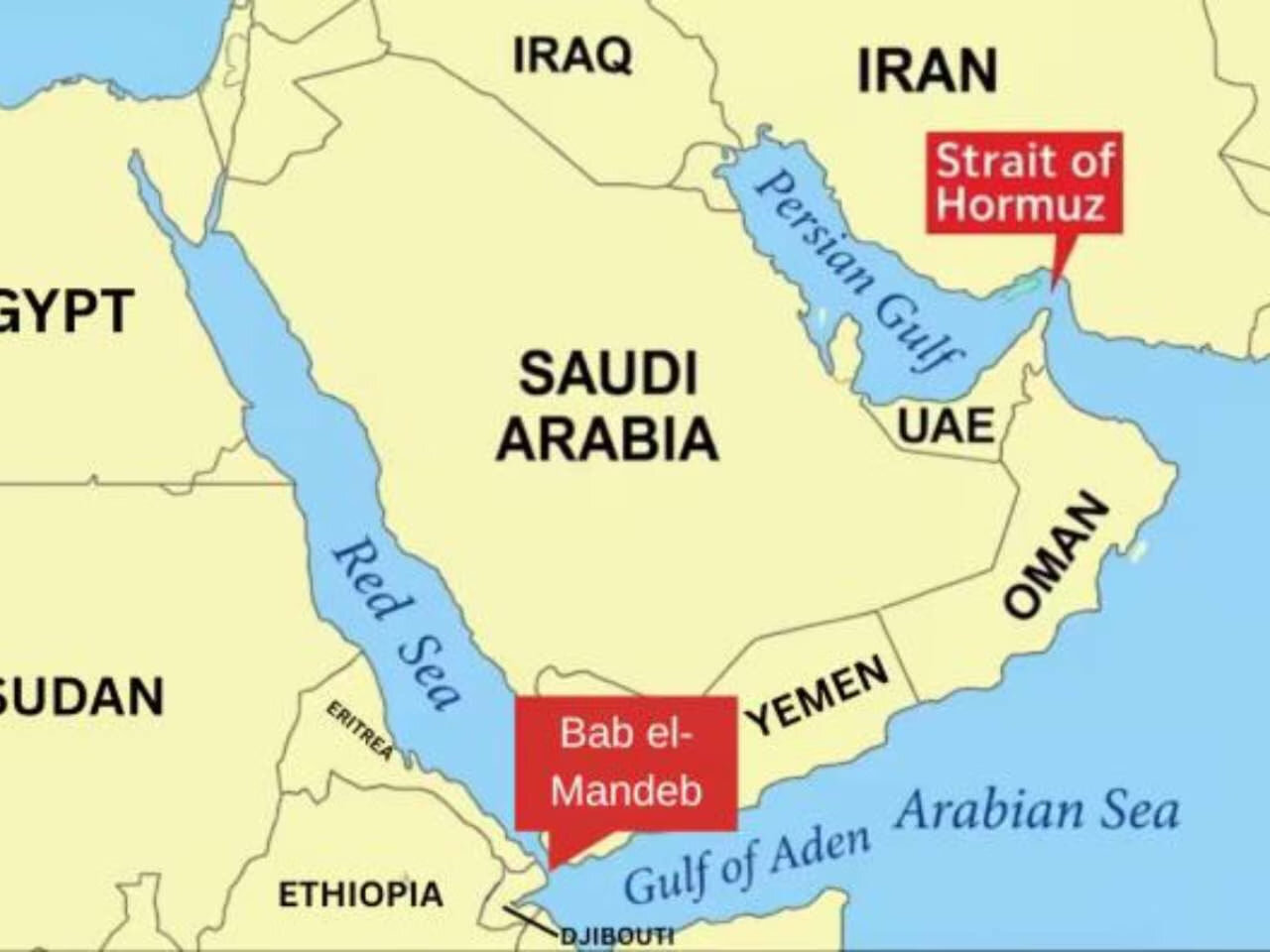
In the current geopolitical landscape, Yemen's geography has become even more relevant to the region and to global economic flows. The country sits directly across from the Bab el-Mandeb Strait.
Known in Arabic as the "Gate of Tears" due to its history of shipwrecks, the strait lies at the southern end of the Red Sea and connects it to the Gulf of Aden, in the Indian Ocean. It is roughly 100 kilometers long and barely 30 kilometers wide at its narrowest point. It separates Yemen, on the Arabian Peninsula, from Djibouti and Eritrea, in the Horn of Africa. As the Red Sea forms part of the maritime route linking Europe and Asia, the strait is typically one of the most heavily trafficked shipping points in the world. Oil tankers and cargo ships use it to reach the Mediterranean via the Suez Canal, shortening journeys between Asia, Europe and North America by thousands of kilometers.
The strait has always been a vital route for global oil supply. In 2023, for example, 12% of the world's seaborne oil transited through it. With Iran's closure of the Strait of Hormuz, Bab el-Mandeb became a vital alternative.
Saudi crude shipments from the Red Sea port of Yanbu surged after the start of the Iran war, averaging some 3.8 million barrels per day between March and July — roughly five times pre-war levels, according to estimates from the commodities data firm Kpler.
In daily terms, that figure amounted to around 4.5% of the crude processed by refineries worldwide in 2025.
However, shipments fell sharply to 1.5 million barrels per day in August, after Ansarallah resumed attacks on Saudi maritime transport in the Red Sea in July.
With limited oil storage capacity, Saudi Arabia has been forced to cut production. Crude exports fell to some 3.1 million barrels per day in August, down from 5.1 million barrels per day in July, according to Kpler — the lowest level since at least 2013.
Kpler's preliminary data put exports at 2.44 million barrels per day during the first nine days of September.
Strategically, Saudi Arabia has moved from mass bombings in Yemen — which contributed to the deaths of hundreds of thousands of Yemenis through violence, hunger and disease, without achieving any of its political objectives — to negotiation. Since 2022, it has sought to manage the conflict through negotiations, hoping to keep calm on the kingdom's southern border.
Riyadh's approach in recent years has been essentially one of containment. But Ansarallah concluded that Saudi Arabia was far more vulnerable, more reluctant to take risks and less willing to return to a large-scale war.
For now, the Saudis appear to favor a gradual response. Rather than immediately launching a sustained air campaign, Riyadh is letting pro-Saudi Yemeni forces take the initiative on the ground, providing them with advanced weaponry, intelligence, and defensive and maritime support. But in recent hours, the pro-Saudi mercenary troops have suffered considerable defeats, putting Riyadh's strategy at risk.
On Sept. 10, Ansarallah took control of Mocha, on the country's western coast, giving the movement greater control over Bab el-Mandeb while at the same time expanding its hold on the Red Sea coast. Moreover, a diplomatic solution is, at this moment, very difficult for the Saudis. Ansarallah now demands that Saudi Arabia withdraw completely from Yemen, stop financing and supporting the mercenary troops, and pay compensation for its military intervention.
At the same time, Iran — which had previously sought to reduce tensions — has shifted its position over the past year. In the context of its broader confrontation with the United States, Tehran sees real benefits in fresh disruptions to the oil market stemming from attacks in Bab el-Mandeb.
And there is this, too: Saudi Arabia has a bilateral security pact with Pakistan and a trilateral security pact with Pakistan and Turkey. If the Saudis request direct military intervention under the collective security clause, Pakistan would find itself in a very delicate position. If Pakistan bombs Ansarallah, its carefully built détente with Iran, constructed through its mediation efforts, could collapse.
Ansarallah was already able to disrupt maritime traffic before gaining greater control over access to Bab el-Mandeb. But territorial control changes the equation. The current situation, which shifts by the minute, gives it greater operational flexibility to regulate one of the world's most important maritime corridors.
Washington's reluctance to re-engage in a major confrontation with Ansarallah points to an uncomfortable conclusion: the previous US campaign failed to establish sustainable deterrence. In a meaningful sense, Ansarallah succeeded in creating its own equation of deterrence with Washington. The Trump administration does not want another open-ended war in the Middle East, and Ansarallah understands that limitation.
More importantly still, what we are witnessing is directly related to the broader failure to establish deterrence against Iran. Both the Islamic Republic and Yemen have concluded that the current moment offers an opportunity to change the regional strategic map, rather than merely survive within it.
Leave a Comment