Over 8,000 healthcare workers ready to provide services voluntarily: MP
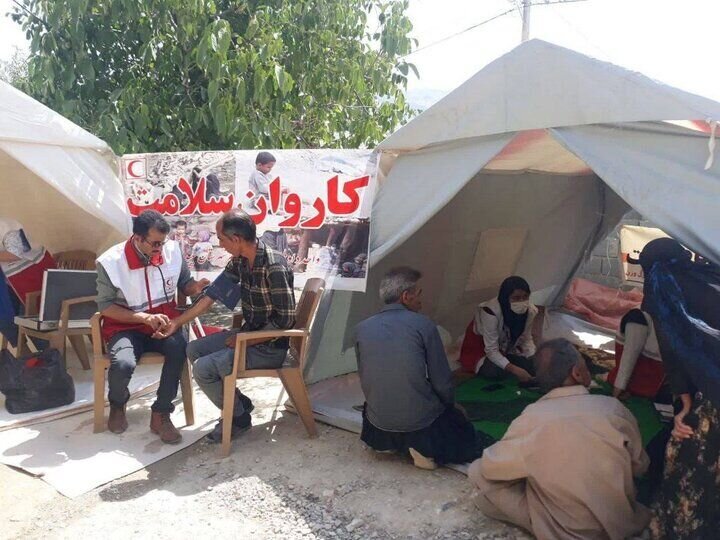
TEHRAN - More than 8,000 healthcare workers have announced their readiness to provide relief and medical services voluntarily, an MP has said.
This issue indicates the spirit of sacrifice and high responsibility of the country's medical staff, IRNA quoted Fatemeh Mohammadbeigi as saying.
Referring to the widespread presence of health professionals during the recent war, she said: “During this period, in addition to the field presence of health personnel, all costs of treating the wounded were also covered free of charge, which is an important feature of the health system's performance in war conditions.”
Emphasizing the need to compensate for the damage to health infrastructure, she added: "Damaged ambulances and medical centers, and other facilities must be reconstructed as soon as possible. In addition, improving the resilience of the health system and preparing to face possible future crises are serious priorities."
On March 16, the Welfare Organization announced that it had organized a network of some 20,000 volunteers to help provide a wide range of services, particularly medical and welfare services, to people affected by the U.S.-Israeli aggression.
The network includes ordinary people, medical specialists, psychologists, and social workers, IRNA reported. Over the past few months, particularly during the recent war, public participation and volunteering have noticeably developed.
The Welfare Organization has held several meetings with the volunteers in different provinces of the country to plan and coordinate their activities, and derive maximum benefits from their high capacity.
The result has been great, and the volunteers provide services to different strata of society. The network of volunteers helps to deliver generous donations faster and more targeted to the needy.
Apart from medical and essential supplies, volunteers have helped repair damaged houses. President Masoud Pezeshkian has called on international health organizations and doctors worldwide to respond to what he described as a “crime against humanity” following attacks on medical facilities in Iran.
“What message does attacking hospitals, pharmaceutical companies, and the Pasteur Institute (of Iran) as a medical research center in Iran convey?” Pezeshkian wrote on X.
“As a specialist physician, I urge WHO, the Red Cross, Doctors Without Borders, and physicians worldwide to respond to this crime against humanity,” he added.
In a separate statement, Foreign Ministry spokesman Esmaeil Baghaei condemned the strike as “heartbreaking, cruel, despicable, and utterly outrageous.”
“The American-Israeli aggressors have attacked the Pasteur Institute of Iran — the oldest and most prestigious research and public health center in Iran and the entire Middle East, founded in 1920 through an agreement between the Pasteur Institute of Paris and the Iranian government,” Baghaei said on X.
In addition to the Pasteur Institute of Iran, other health infrastructures were destroyed during illegal strikes. The Delaram Sina Psychiatric Hospital sustained significant damage due to a strike on 29 March, and the Tofigh Daru pharmaceutical facility, which produced medicines for treating cancer and multiple sclerosis, was damaged in another attack on 31 March. No casualties were reported from these incidents.
Since March 1, WHO has verified over 20 attacks on health care in Iran, resulting in at least nine deaths, including that of an infectious disease health worker and a member of the Iranian Red Crescent Society.
Attacks on health have also been recorded outside Tehran, including on March 21, when an explosion nearby Imam Ali Hospital in Andimeshk, Khuzestan province, led to the facility’s evacuation and cessation of services.
The conflict in Iran and the region is impacting the delivery of health services and the safety of health workers, patients, and civilians present at health facilities. Peace is the best medicine.”
The scale of civilian casualties and the humanitarian impact of the U.S.-Israeli war of aggression against Iran is deeply shocking, Vincent Cassard, the head of the International Committee of the Red Cross (ICRC) delegation in Iran, has said, describing images from the strikes as heartbreaking.
The toll on civilians and the destruction of essential services they depend on is deeply distressing, Cassard said in an exclusive interview with IRNA in March.
He noted that images of the ruined girls’ school in Minab and the coffins of numerous children had left a profound emotional impact on him.
The ICRC official said that although he has so far witnessed the situation directly only in Tehran, the reports he receives from both his team and the Iranian Red Crescent Society (IRCS) on casualties, damage and devastation are extremely alarming.
Cassard stressed that civilians must be protected from attacks, and that vital services such as hospitals must remain off-limits to strikes, adding that international humanitarian law is unequivocal on this point.
He praised the IRCS for its nationwide emergency response since the start of the escalation on February 28, describing their round-the-clock efforts as remarkable.
Leave a Comment