"Driven to End Malaria: Now We Can. Now We Must."
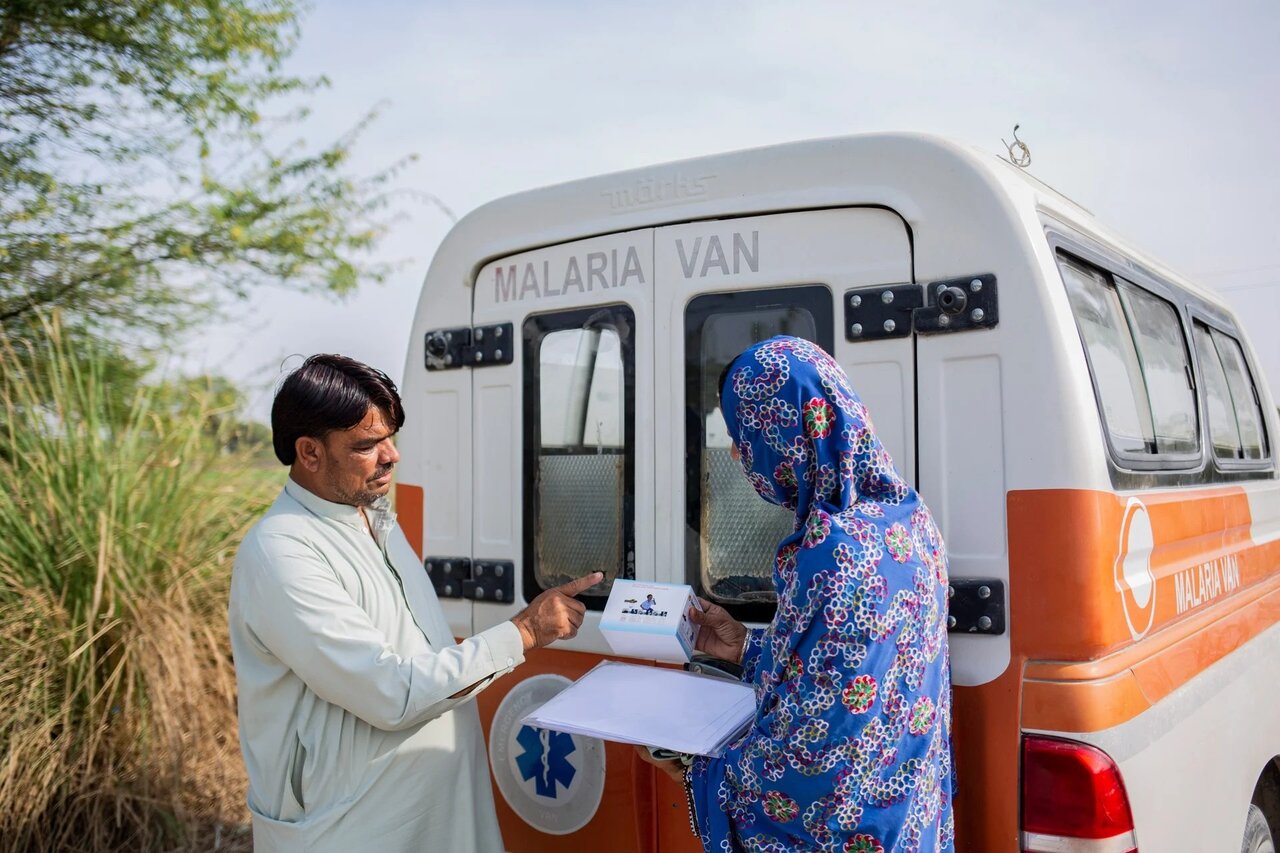
TEHRAN - Science is advancing faster than ever. For the first time, ending malaria in our lifetime is a real possibility. New vaccines, treatments, malaria control tools and pioneering technologies - including genetic modification of mosquitos and long-acting injectables - are in development.
Already, 25 countries are rolling out malaria vaccines to protect 10 million children a year. Next-generation mosquito nets now make up 84% of all new nets distributed. Nationally-led programmes are driving change. The possibility has never been greater.
Malaria is a mosquito-borne infectious disease that affects humans and other animals; the disease is most commonly spread by an infected female Anopheles mosquito. The mosquito bite introduces the parasites from the mosquito's saliva into a person's blood.
It causes symptoms that typically include fever, tiredness, vomiting, and headaches. In severe cases, it can cause yellow skin, seizures, coma, or death. Symptoms usually begin ten to fifteen days after being bitten by an infected mosquito.
On World Malaria Day 2026, April 25, the World Health Organization joins partners to launch the campaign: "Driven to End Malaria: Now We Can. Now We Must." This is a rallying cry to grasp the moment—to protect lives now and fund a malaria-free future.
Progress is real and measurable
Since 2000, 2.3 billion cases and 14 million deaths have been averted. To date, 47 countries have been certified malaria-free (of which two in 2024 and three in 2025), while 37 countries reported fewer than 1000 cases in 2024. Success is possible, even in tough areas: The Greater Mekong Subregion proves elimination is achievable, with cases falling by nearly 90% despite long-standing drug resistance.
Between 2000 and 2024, the number of malaria-endemic countries fell sharply, dropping from 108 to 80. Over the same period:
* Countries with fewer than 10 000 cases rose from 27 in 2000 to 46 in 2024.
* Countries with fewer than 100 indigenous cases increased from 6 to 26.
* Countries with fewer than 10 indigenous cases increased from 4 to 24.
But the global situation is stalling: In 2024, there were an estimated 282 million cases and 610,000 deaths—a slight increase from 2023.
Biological challenges:
o Drug resistance: Artemisinin partial resistance is confirmed in four African countries (Eritrea, Rwanda, Uganda, United Republic of Tanzania,) and spreading. This is a critical danger to the main treatments for malaria.
o Insecticide resistance: Resistance to pyrethroids (the main chemical on bed nets) is widespread, confirmed in 48 out of 53 reporting countries.
o Diagnostic failure: pfhrp2 gene deletions, which can make rapid diagnostic tests fail, are spreading and now reported in 46 endemic countries.
o Invasive mosquitoes: Anopheles stephensi, an urban-dwelling, insecticide-resistant mosquito, is expanding its range in Africa, posing a new threat to cities.
Systemic challenges:
o A massive funding gap: 2024 funding (US$ 3.9 billion) was less than half of the US$ 9.3 billion 2025 target. A projected shortfall of US$ 5.4 billion leaves the response dangerously under-resourced.
o Fragility of aid: Recent cuts in global health aid have disrupted health systems, surveillance, and campaigns, demonstrating how quickly progress can be undone.
* Humanitarian & environmental challenges: Climate change, conflict, and humanitarian crises continue to drive malaria resurgence and disrupt essential services.
Despite the challenges, several interventions are being successfully scaled up and showing impact:
* New-Generation nets: In 2024, 84% of nets shipped to Africa were the more effective PBO or dual active ingredient nets, up from just 10% in 2019.
* Vaccines: A major breakthrough. To date, vaccines are rolling out in 25 countries, protecting millions of children.
* Chemoprevention: Seasonal malaria chemoprevention (SMC) now reaches 54 million children. Perennial malaria chemoprevention (PMC) is also expanding.
* Improved treatment of children: More febrile children are being diagnosed and treated with effective medicines (ACTs) than in the past.
To make a malaria-free future a reality, we must:
* Sustain & scale funding, with efficiency: Commit to sustained, diversified financing—both international and domestic. In an era of real financial constraints, every dollar must work harder. We must prioritize high-impact, data-driven interventions and deliver optimized responses that maximize value and minimize waste. Funding is what gets new vaccines, treatments, and tools out of labs and into the communities that need them most.
* Champion country leadership: Support nationally-led programmes that are driving change and tailor interventions to local needs for maximum impact. Strong national ownership is the foundation of an efficient and sustainable response.
* Ensure consistent partner support: Progress depends on predictable, aligned, and consistent support from all partners. Sustainable gains are built not on sporadic commitments, but on reliable collaboration that allows countries to plan and implement for the long term.
* Accelerate innovation: Continue to invest in research and development for new generations of tools, including those to beat insecticide, diagnostic and drug resistance.
* Empower communities: Engage and resource communities as protagonists in their own health, everyone has a role to play.
WHO, Japan help Iran combat malaria
The project, entitled Reinforcing Malaria Elimination as Humanitarian Assistance in the Islamic Republic of Iran, was implemented throughout 2024. WHO implemented the project with the Iranian Ministry of Health and Medical Education, WHO website reported.
Sistan-Baluchestan was hit by heavy rainfall and flooding in February 2024. Cross-border population movement is constant in the south-eastern border provinces of the Islamic Republic of Iran. These and other conditions may further drive local transmission of malaria. As such, it is critical to put prevention and control measures in place.
Jaffar Hussain, the former WHO Representative and Head of Mission to the Islamic Republic of Iran, stressed the vital importance of collaborative action with the Government of Japan: “The financial support provided by the people of Japan arrives at a critical juncture, following recent heavy rains and floods in Sistan-Baluchestan province in late February 2024.
Through concerted efforts and sustained investment, WHO and its international and local partners remain steadfast in their commitment to combat malaria and safeguard public health in the Islamic Republic of Iran and beyond.”
Leave a Comment